 By
By 
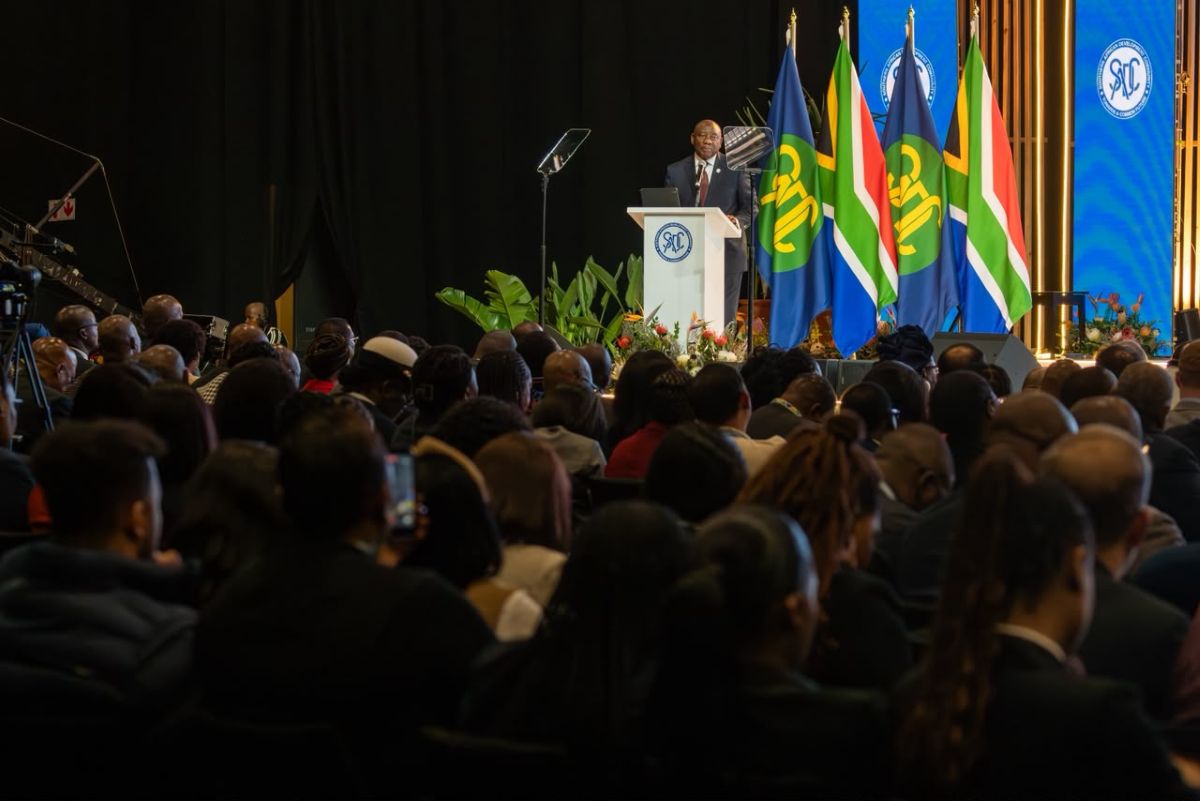
ETHEKWINI, SOUTH AFRICA — President Cyril Ramaphosa officially assumed the chairmanship of the Southern African Development Community (SADC) on Monday, pledging to anchor South Africa’s tenure in economic integration, regional security, and consensus-building across the 16-member bloc.
Accepting the mantle during the 46th Summit of SADC Heads of State and Government in Durban (eThekwini), Ramaphosa framed South Africa’s leadership not merely as a diplomatic milestone, but as a historical obligation rooted in the region’s anti-apartheid legacy.
“On behalf of the Government and the people of South Africa, we accept the honour of being elected Chairperson of SADC with great humility and a deep sense of responsibility,” Ramaphosa told attending heads of state, diplomats, and international dignitaries. “As a nation, we owe a debt of gratitude to the members of SADC and its predecessor, the Southern African Development Co-ordination Conference, for their contribution to the achievement of democracy in our country.”
A Focus on Trade and Resilient Growth
Outlining the core priorities of South Africa’s chairship, Ramaphosa underscored the urgent need to accelerate the implementation of SADC’s Vision 2050 and the Regional Indicative Strategic Development Plan (RISDP). Central to this agenda is the push for cross-border trade, infrastructure development, and industrial resilience.
“We will seek greater integration of our economies, building ties of trade and investment that drive resilient, sustainable and inclusive industrialisation,” he stated.
The call for deeper economic collaboration comes at a critical juncture for Southern Africa, as the region navigates global trade disruptions, climate vulnerabilities, and energy deficits. Ramaphosa’s emphasis on inclusive industrialization signals an effort to shift the region from relying on raw material exports toward localized manufacturing and intra-regional value chains.
Peace and Consensus at the Core
Addressing regional stability, Ramaphosa emphasized that economic progress remains contingent on security. While avoiding direct reference to specific regional security flashpoints, the President highlighted peace as an indispensable foundation for development.
“Working together with all Member States, we will promote peace, security and stability in our region, which are essential conditions for the well-being and development of our people,” he noted.
Ramaphosa reaffirmed South Africa’s commitment to multilateralism within the bloc, stressing that Pretoria’s leadership will prioritize sovereign equality and mutual respect.
“During our Chairship of SADC, we pledge to work closely with every Member State, guided by the principles of sovereign equality, mutual respect and consensus building,” Ramaphosa said.

Transition of Leadership
The South African President acknowledged the outgoing SADC Chairperson, Zimbabwean President Emmerson Mnangagwa, thanking him for his stewardship over the past year. He also commended the SADC Secretariat, led by Executive Secretary Elias Magosi, and acknowledged the presence of key continental leaders, including African Union Commission Chairperson Mahmoud Ali Youssouf.
Closing his address, Ramaphosa grounded South Africa’s upcoming term in the historical solidarity of the region.
“As the Government and the people of South Africa, we are determined that through our Chairship and through our continued participation in SADC, we will be worthy of the struggles that were fought by the members of this Community for the achievement of our freedom,” he concluded.
South Africa assumes the chairship at a crucial juncture, with regional partners expecting Pretoria to leverage its diplomatic weight and economic capacity to drive SADC’s developmental agenda forward.