 By
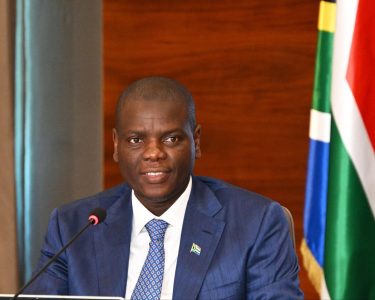
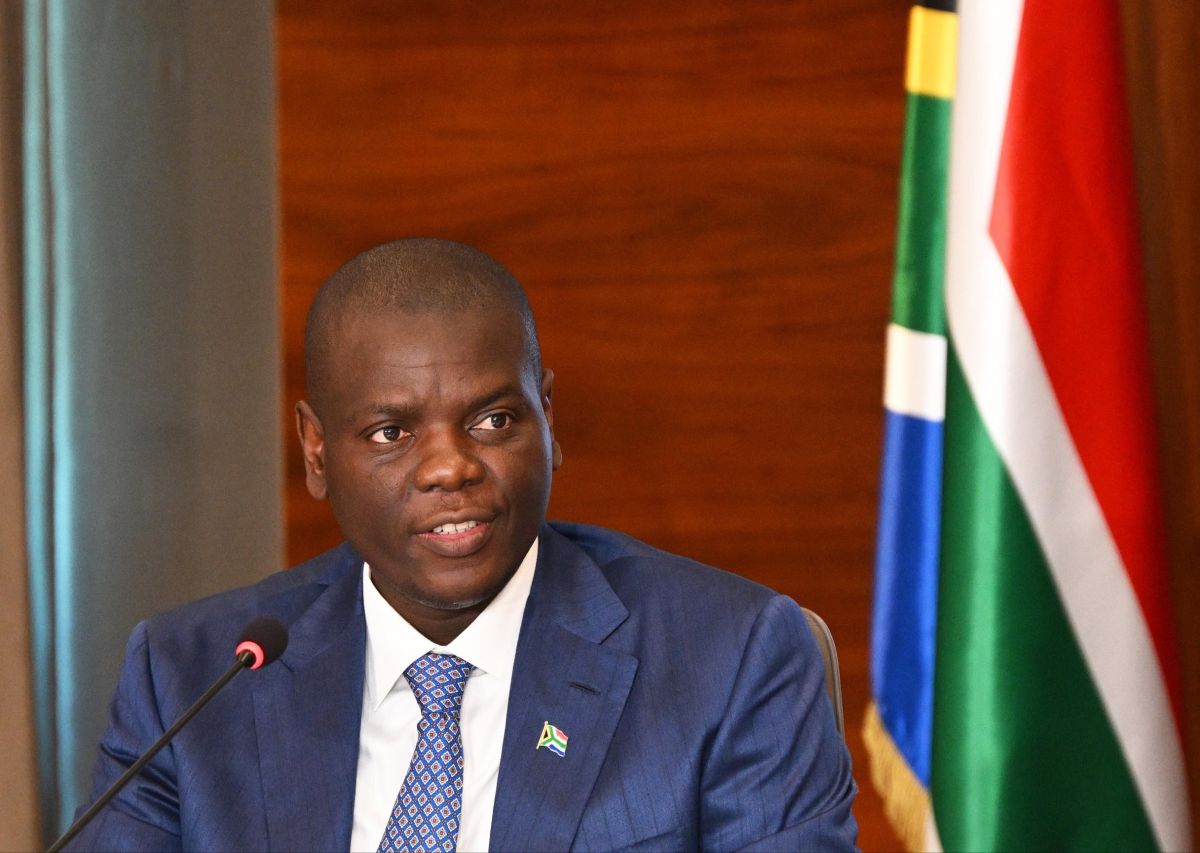
JOHANNESBURG — In a wide-ranging address at the University of the Witwatersrand, Minister of International Relations and Cooperation Ronald O Lamola warned that the international community is navigating an increasingly volatile “world disorder,” characterized by eroding multilateral norms, mounting global inequalities, and intensifying geopolitical competition.
Delivering the keynote address at the official launch of the Global Africa Research Initiative (GARI) on Tuesday, October 28, 2026, Lamola outlined South Africa’s strategic foreign policy posture, emphasizing that the African continent refuses to remain a passive bystander in a shifting global matrix.
A Combustible International Order and Global Injustice
Lamola painted a stark picture of contemporary international relations, pointing to a global military expenditure that has skyrocketed to US$ 2.9 trillion while nations struggle to mobilize adequate developmental financing.
He noted that unipolar impulses persist amidst advancing multi-polarity, citing the unilateral imposition of tariffs, sanctions, and unprecedented attacks on international judicial bodies, such as the sanctioning of International Criminal Court judges.
The Minister underscored that these geopolitical tensions are underpinned by profound economic and systemic disparities. With the wealthiest 10 percent of the global population owning approximately 75 percent of global wealth—and the poorest half holding a mere 2 percent—inequality remains a defining crisis of the era.
Crucially, Lamola drew attention to deep-seated structural exclusions in global governance voice and representation.
“Africa constitutes a quarter of UN member states and a fifth of humanity but has no permanent seat on the Security Council,” Lamola stated. “This injustice is even more glaring considering the reality that between 2016 and 2026, conflicts on our continent constituted 80% of the UN Security Council’s resolutions.”
Reclaiming Agency: Debt, Minerals, and Regional Resilience
Rather than merely reacting to external shocks, Lamola emphasized that African nations are actively asserting agency across economic, environmental, and security landscapes:
- Tackling the Debt Crisis and the “Prejudice Premium”: Highlighting a UN Trade and Development report, Lamola noted that 65 percent of Africa’s population lives in countries where public debt interest payments outstrip spending on health or education. He criticized the “prejudice premium,” which forces African states to borrow at significantly higher costs than developed economies, noting that closing this gap could free up US$ 500 billion annually. South Africa has endorsed the April 2026 establishment of a Borrowers’ Platform and supports Africa’s first credit rating agency to counter opaque international rating practices.
- Resource Sovereignty and Industrialisation: Ten of the Southern African Development Community’s (SADC) sixteen member states have adopted regulations to facilitate mineral processing at source and technology transfer. Lamola stressed that South Africa has leveraged its G20 Presidency to shift the global conversation around critical minerals—such as platinum, cobalt, manganese, and lithium—toward domestic beneficiation and job creation.
- Climate and Regional Security: Through the SADC Humanitarian and Emergency Operations Centre (SHOC) in Mozambique, the region is institutionalizing coordinated responses to extreme weather events exacerbated by climate change. Furthermore, as Chair of the African Union High-Level Ad Hoc Committee on South Sudan (C5), South Africa continues to support the nation toward its foundational post-independence elections.
Multilateral Partnerships and Strategic Pragmatism
Addressing South Africa’s diplomatic alignments, Lamola reaffirmed the importance of traditional and emerging alliances. While trade relationships with key partners like the United States remain vital for domestic employment, South Africa is actively preparing for any eventualities concerning the African Growth and Opportunity Act (AGOA).
Simultaneously, the Minister positioned the BRICS bloc as a crucial vehicle for diversifying economic partnerships and advancing the priorities of the Global South. Representing 4.1 billion people and 40 percent of global GDP, BRICS has seen intra-bloc trade surge past US$ 1.17 trillion.
Lamola noted that South Africa is working closely with its partners to address internal trade imbalances, promote local currency settlements, and leverage the New Development Bank—which is already funding vital domestic infrastructure like bulk water projects and a Polokwane tertiary hospital.
Four Core Provocations for the Global Africa Research Initiative
Turning to the academic community, Lamola challenged GARI to bridge the gap between rigorous scholarship and the lived realities of ordinary citizens. He posed four foundational provocations to guide the initiative’s research agenda:
- Bridging the Integration Gap: How to articulate a compelling vision of African integration that overcomes rising anti-immigrant sentiments—which Afrobarometer surveys show affect large segments of the population—while translating massive intra-continental migration and frameworks like the African Continental Free Trade Area into tangible public benefits.
- Taking IR Beyond the Ivory Tower: How to connect international relations and global supply chain shocks directly with the everyday experiences of vulnerable workers in sectors like agriculture, textiles, and automotive manufacturing.
- Safeguarding Democratic Sovereignty: How intellectual communities can maintain space for robust domestic democratic critique while firmly defending national sovereignty against external meddling and foreign interference.
- Balancing National and Collective Interests: How Africa’s 55 individual states can harmonize their immediate national priorities with long-term continental unity to prevent exploitation by external global powers.
In concluding his address, Lamola congratulated Justice Navi Pillay on receiving the 2026 Nobel Peace Prize, citing her lifelong advocacy for international law and human rights as a reflection of South Africa’s core foreign policy convictions. With these charges laid before scholars, diplomats, and civil society, the Global Africa Research Initiative was formally declared open.