 By
By 
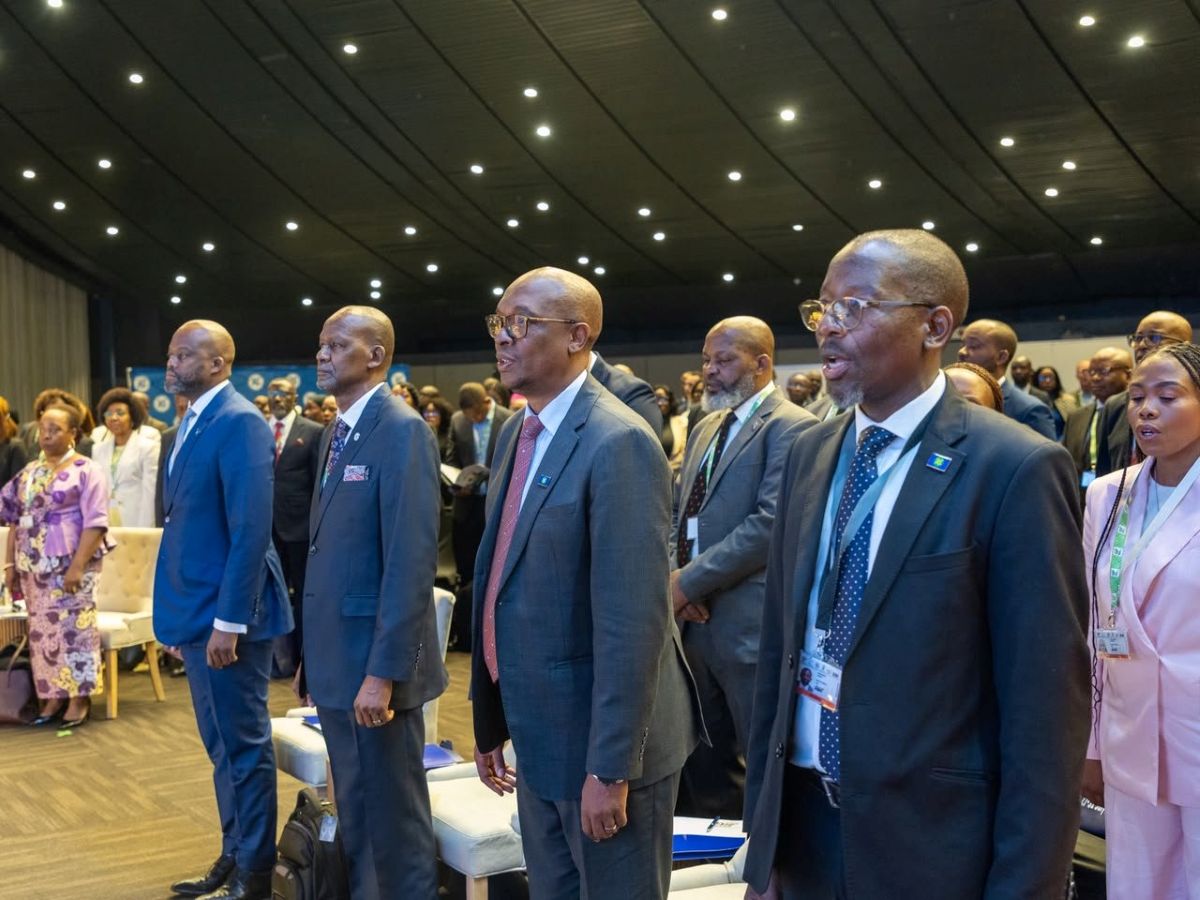
DURBAN — As global supply chains face mounting pressures from geopolitical fragmentation, rapid technological shifts, and climate impacts, Southern Africa stands at a crucial crossroads. Addressing policymakers, business executives, and regional leaders at the Inkosi Albert Luthuli International Convention Centre (Durban ICC) on Monday, Minister of Trade, Industry and Competition Parks Tau declared that industrialisation in the region can no longer remain a distant aspiration—it is now an urgent, real-time test.
Opening the 9th SADC Industrialisation Week, Minister Tau delivered a clear message to the 16-member Southern African Development Community: economic recovery without structural transformation is failing to address the region’s most pressing challenges—stubbornly high unemployment, deep-seated poverty, and missed opportunities for its youth.
Moving Beyond the Extraction Trap

For decades, Southern Africa’s economic story has been defined by a persistent vulnerability: exporting raw commodities at low prices and importing costly finished goods. The minister emphasised that this extractive model has systematically limited domestic job creation, capped industrial growth, and drained long-term value from national economies.
With the global demand for critical minerals accelerating, SADC holds a powerful strategic asset. However, capturing that value requires a decisive pivot.
The path forward hinges on transforming raw extraction into localized beneficiation, advanced manufacturing, and integrated regional value chains. Rather than acting merely as primary suppliers to foreign markets, Southern African nations must develop the local capacity needed to process critical minerals, manufacture high-value components, and retain wealth within the continent.
Rethinking Funding and Regional Strategy
While the foundational framework—the SADC Industrialisation Strategy and Roadmap—was adopted in 2015, implementation progress has been stubbornly slow. A key bottleneck highlighted during the keynote address is the region’s historic reliance on external donor funding.
Over-dependence on foreign aid has often tied regional initiatives to donor-driven priorities rather than Southern Africa’s self-defined industrial goals. To overcome these limits, SADC states must take direct control of their development agendas, building commercial partnerships specifically structured to support value-addition and beneficiation at the source.
Macroeconomic Recovery vs. True Transformation
Economic indicators across the SADC block show signs of steady recovery. Regional growth ticked up from 3.2% in 2024 to 3.4% in 2025, with projections anticipating a further rise to 3.9% in 2026. Improved rainfall patterns across agricultural belts and firmer commodity prices have provided much-needed macroeconomic relief.
Yet, the Minister cautioned that cyclical rebounds should not be mistaken for permanent structural change. Unlocking true economic resilience will require deeper, frictionless regional integration.
Though intra-SADC trade reached 20.2% in 2025, it still trails far behind international trading blocs. Unlocking the vast potential of both SADC and the broader African Continental Free Trade Area (AfCFTA) requires immediate, pragmatic steps:
- Removing Non-Tariff Barriers: Dismantling administrative and regulatory hurdles that stall goods across borders.
- Streamlining Customs: Simplifying documentation and modernising border post procedures to improve logistics efficiency.
- Expanding Regional Chains: Capitalising on industrial hubs—such as KwaZulu-Natal’s Port of Durban, Port of Richards Bay, Dube TradePort SEZ, and Richards Bay IDZ—to efficiently connect internal markets to global trade routes.
Strategic Vulnerabilities: Health, Agriculture, and Supply Chains
Global disruptions in recent years have exposed strategic vulnerabilities in essential supply networks. In response, the SADC roadmap places heavy emphasis on building regional self-reliance in vital sectors:
- Pharmaceutical Sovereignty: Lessons from global healthcare disruptions underscore the need for local production of essential medicines, diagnostic tools, and vaccines to secure public health independent of foreign supply chains.
- Agro-Processing & Food Security: Recent Foot and Mouth Disease outbreaks demonstrated the necessity of expanding veterinary capabilities and vaccine manufacturing—particularly across South Africa and Botswana—to safeguard livestock industries and international agricultural exports.
- Bankable Infrastructure: Generating a robust pipeline of investment-ready infrastructure projects across logistics, energy, and digital connectivity to enable cross-border trade.
A Developmental Mandate for Shared Growth
The theme for this year’s forum—Resilient, Sustainable and Inclusive Industrialisation through Infrastructure Development, Agriculture and Critical Mineral Transformation in a Just World—underscores that industrial policy cannot operate in an economic vacuum. Future growth must be tied to green energy transitions, clean technology, and equitable access for small enterprises, women, and young entrepreneurs.
Achieving these ambitious goals will require a coordinated alliance between a proactive developmental state, civil society, and private sector investors. By shifting focus from rhetoric to measurable, results-driven outcomes, Southern Africa can transform its vast comparative advantages into an enduring, globally competitive industrial reality.