 By
By 
The voice pushing for Africa to be self-reliant is getting louder by the day, as heads of states and officials call for a scaling up of continental intra-trade and industrialisation.
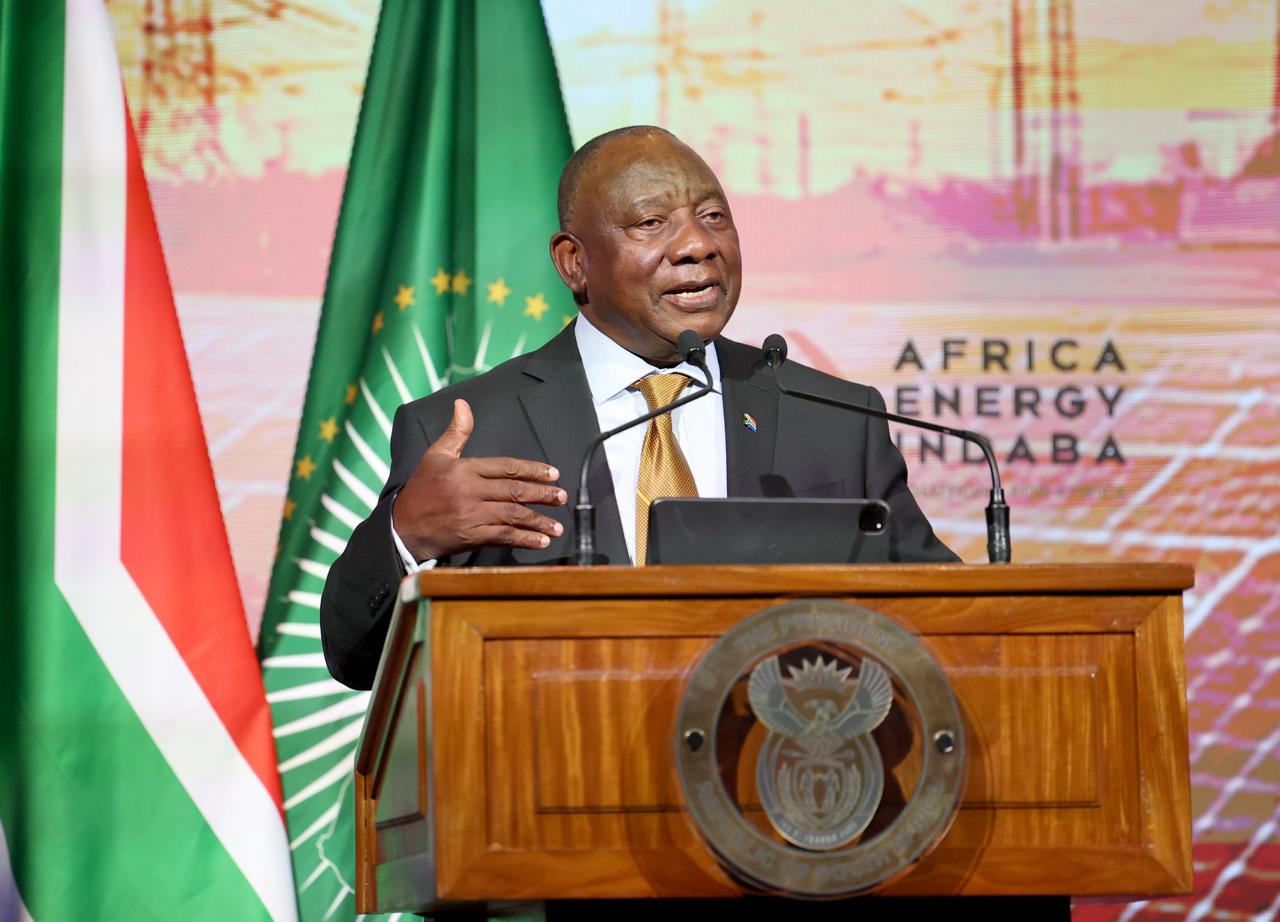
Energy plays a vital role in industrialisation, in order for Africa to achieve this, the President of South Africa H.E Cyril Ramaphosa told the Annual Africa Energy Indaba that Africa must pull together and exploit the natural resources it has to benefit the continent.
Ramaphosa told the Energy Indaba that there has never been a better time for Africa to advance its energy security, resilience and sustainability. With its abundant natural resources, the continent holds immense potential for energy generation. He said alongside substantial oil and gas reserves, Africa has abundant solar resources, wind corridors and major river systems.
The President of South Africa emphasised that Africa has the potential to compete globally and even generate its own power. He said there is an abundance of critical minerals beneath African soil that are being sought globally for technological applications, including in energy, yet, alongside this natural wealth, Africa experiences energy poverty.
“More than 600 million Africans do not have access to electricity, according to the International Energy Agency. Every day without reliable power translates into lost production, interrupted services, constrained investment and reduced opportunity.
This energy gap exists in a context of a growing continental population, rising urbanisation and renewed efforts to industrialise and integrate into the global economy. In this environment, access to reliable electricity is a competitive differentiator. Industrialisation cannot take place without secure supply chains, resilient villages, towns and cities, and reliable, affordable and scalable energy.
Historically, much of Africa’s energy infrastructure was built to serve extractive models. Power systems were developed around enclaves of production, rather than around broad-based development. This legacy still influences the geography of opportunity. It explains why, even where resources exist, the systems required to translate resources into prosperity have remained uneven,” said President Ramaphosa.
To overcome the challenge, Ramaphosa said the task now is to build a different kind of energy system, one that connects Africa to itself, and one that allows African economies to grow together rather than apart.
“Productive access enables industry, supports competitive enterprises and creates jobs at scale. Productive access that allows African economies to move beyond the export of raw materials and toward the creation of value. This is access that supports modern public services, strengthens human development outcomes and reduces the cost of doing business.
These outcomes depend on transmission and regional integration that allow power to move and resources to be shared. Across Africa, the logic of integration is already visible in the work of regional power pools and cross border interconnectors. These allow hydropower, solar, wind, gas and storage to support one another across borders and create a pathway to a more efficient continental system.
An integrated system allows resources to be used more efficiently and for variable resources to be balanced across geography. An integrated system enables a more competitive market and spreads risk. In this way, integration supports both affordability and reliability, which are essential to industrial competitiveness,” said Cyril Ramaphosa.