 By
By 
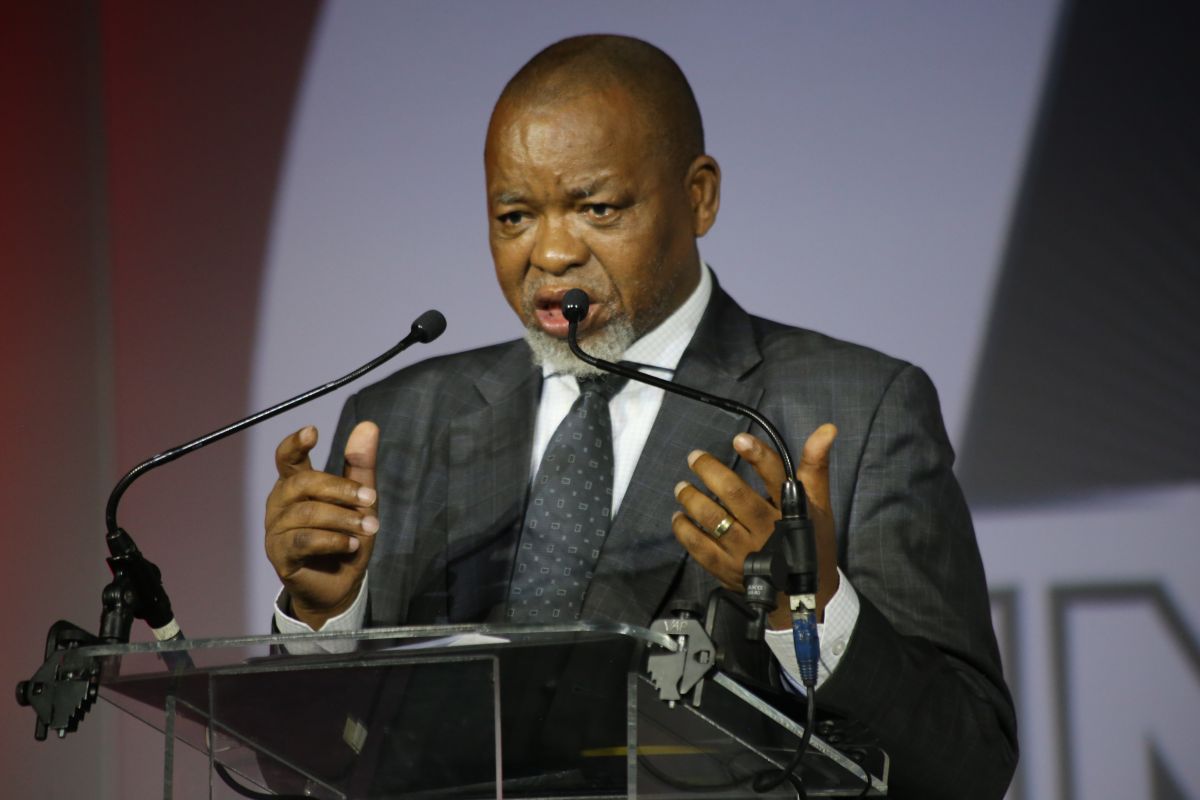
The Minister for the Department of Mineral and Petroleum Resources in South Africa Mr Gwede Mantashe, said during the Africa Energy Indaba held in Cape Town, that Africa needs to change their ways of trade and take advantage of its resources and industrialise.
Given its minerals, Mantashe said Africa needs to enter the energy revolution as the world is changing at a very fast pace on a daily bases. He says the continent has potential to compete globally on green energy; however, Africans will have to change the manner of trade currently being done.
Mantashe said in this reconfigured world, Africa is not a peripheral actor. Africa is a structural anchor in the global transition. He said without African platinum group metals, the hydrogen economy cannot achieve scale. Without African cobalt, manganese and copper, the battery revolution falters. Without African vanadium, long duration storage remains constrained. Without African uranium, the renewed global interest in nuclear energy cannot advance at pace.
“This structural reality places our continent at the centre of one of the most consequential economic transformations of our time. Yet history urges vigilance. Structural centrality does not automatically yield structural prosperity. For generations, Africa supplied the raw materials of industrial revolutions elsewhere, while value addition remained beyond our shores.
We exported resources and imported finished goods. We bore environmental costs and absorbed volatility while others consolidated industrial advantage.
Today, as industrial policy once again shapes global competition, Africa must define its own trajectory within this reconfiguration. We must ensure that the global transition does not replicate historical asymmetries under a new technological banner,” said the Minister.
“As the African Continental Free Trade Area deepens intra African trade, energy integration becomes the enabling infrastructure of industrial corridors. Manufacturing clusters, mineral processing zones, hydrogen hubs and digital economies require reliable, affordable and regionally integrated electricity systems. Energy planning and trade integration must therefore move in concert.
Africa’s mineral wealth places us at the centre of the global transition, yet minerals alone do not constitute transformation. Beneficiation is not rhetoric; it is system design. A battery precursor facility cannot operate on intermittent supply. Green steel production depends on stable hydrogen and firm baseload capacity. Electrolysers require grid resilience and advanced manufacturing demands quality, predictability and scale,” he continued.
The Minister said the energy transition goes beyond profit margins; it is about the dignity of the people and having access to energy and being connected to the grid.
“Energy justice in this decade must be understood not as a slogan but as a doctrine grounded in development.
It is about access, because more than 600 million Africans remain without electricity, and about clean cooking because millions of households continue to endure daily indignity and health risk. It is also about agency, about the sovereign right to determine our own energy pathways and to finance them at rates that reflect performance rather than prejudice.
Energy justice is therefore inseparable from continental integration. It requires that we think beyond national grids and consider the architecture of a connected African power system, capable of unlocking scale, reducing volatility and enabling industrial corridors across borders,” said Minister Gwede Mantashe.