
 By
By GENEVA — UN Secretary-General António Guterres recently issued a stark warning to the international community, condemning a rising tide of global neglect as the Democratic Republic of the Congo (DRC) grapples with an alarming surge in Ebola cases. Speaking at UN Headquarters, the UN chief cautioned that finite resources are rapidly vanishing while the epidemic continues to outpace containment efforts.

“We know how to contain Ebola, how to interrupt transmission and how to save lives,” Guterres said. “But we must also overcome another virus: the virus of indifference.”
The outbreak, caused by the Bundibugyo strain of the virus, has hit six provinces in the DRC since its onset in mid-May. Official figures show more than 5,600 cases and 2,700 deaths recorded to date. Although the World Health Organization (WHO) reports that the rate of transmission has slowed, officials emphasize that the trajectory has not yet reversed. Approximately 500 new cases are being identified each week.
Ebola Bundibugyo Outbreak in DRC: Impact at a Glance────────────────────────────────────────────────────Total Cases: > 5,600Total Deaths: > 2,700New Cases/Week: ~ 500Provinces Hit: 6Funding Level: 48%A Critical Funding Gap
Humanitarian agencies face a severe financial shortage, with the current response plan funded at just 48 percent. Guterres urged donors to step forward with an additional $1.1 billion to prevent a collapse of essential operations. Current financial reserves are projected to last only a few weeks.
“Without additional funding, vital operations will run out of money at the very moment they need to ramp up,” Guterres warned.
The crisis is exacerbated by long-standing conflict, structural poverty, and massive population displacement. In Ituri province—the epicentre of the current outbreak—over one million people are internally displaced. Across the broader region, more than 12 million individuals require protection and humanitarian aid.
Violence directly targets medical infrastructure and field personnel. More than 40 healthcare workers have been killed, and treatment facilities and medical vehicles have suffered repeated attacks. These security threats regularly block health teams from reaching isolated communities.
UN Response Deployment────────────────────────────────────────────────────WHO Experts Deployed: 260+Medical/Logistical Supplies: 330+ tonnesBurial & Community Teams: 321 active teamsBorder Screenings (IOM): > 1 million peopleCivil Society Rallies Against Misinformation
To counter mistrust and rumour, UN agencies are enlisting local leaders and cultural figures to lead community engagement efforts.
- Cultural Figures & Influencers: Prominent Congolese musician Lokua Kanza, serving as a UNICEF ambassador, launched a public campaign detailing preventive measures. Musical acts such as the Wedy duo and Drigo Eboma have released awareness tracks, while 15 social media influencers—each with over 100,000 followers—are spearheading digital outreach to younger demographics.
- Religious & Community Leaders: In Ituri, over 50 faith leaders participated in briefings on infection control and rumour management.
- Demobilized Fighters: Approximately 30 former combatants underwent specialized training on symptom detection and preventive hygiene. They have deployed to high-traffic areas in northern Ituri to inform local populations.
Regional Impact and Preparedness
While the DRC battles the core epidemic, neighbouring nations are taking steps to prevent international transmission.
In Burundi, authorities and UN partners are intensifying early-detection protocols. Though Burundi has no confirmed cases, its proximity and fluid cross-border trade put it at high risk. Preparedness initiatives include thermal screeners at border checkpoints, capacity building for local journalists and nurses, and the distribution of 30,000 educational posters translated into Kirundi, Swahili, and French.
Meanwhile, health officials declared the end of a separate Bundibugyo Ebola outbreak in neighbouring Uganda on Thursday. The announcement followed 42 consecutive days—two full incubation periods—without a single new confirmed case since the final patient was discharged on July 16. Uganda’s outbreak concluded with 20 confirmed cases, two deaths, and over 800 contacts successfully traced and monitored.
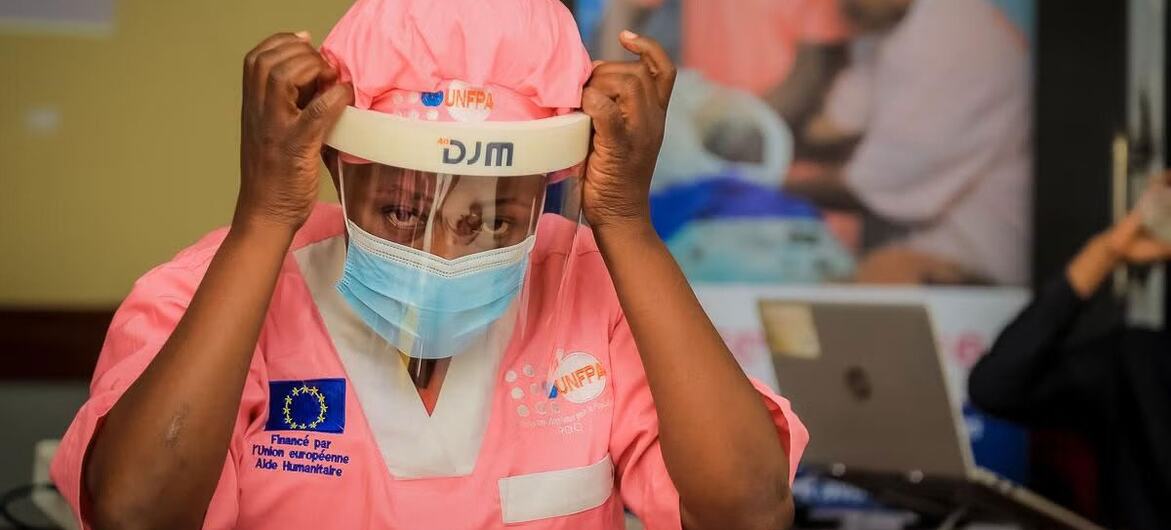
The UN and its partners—including WHO, the World Food Programme, and the International Organization for Migration—continue to scale up field operations in the DRC. Recent efforts include deploying 35 new safe and dignified burial units alongside 286 community-based teams staffed by more than 2,500 local volunteers. However, aid leaders maintain that without immediate international capital, these operations cannot be sustained.