 By
By 
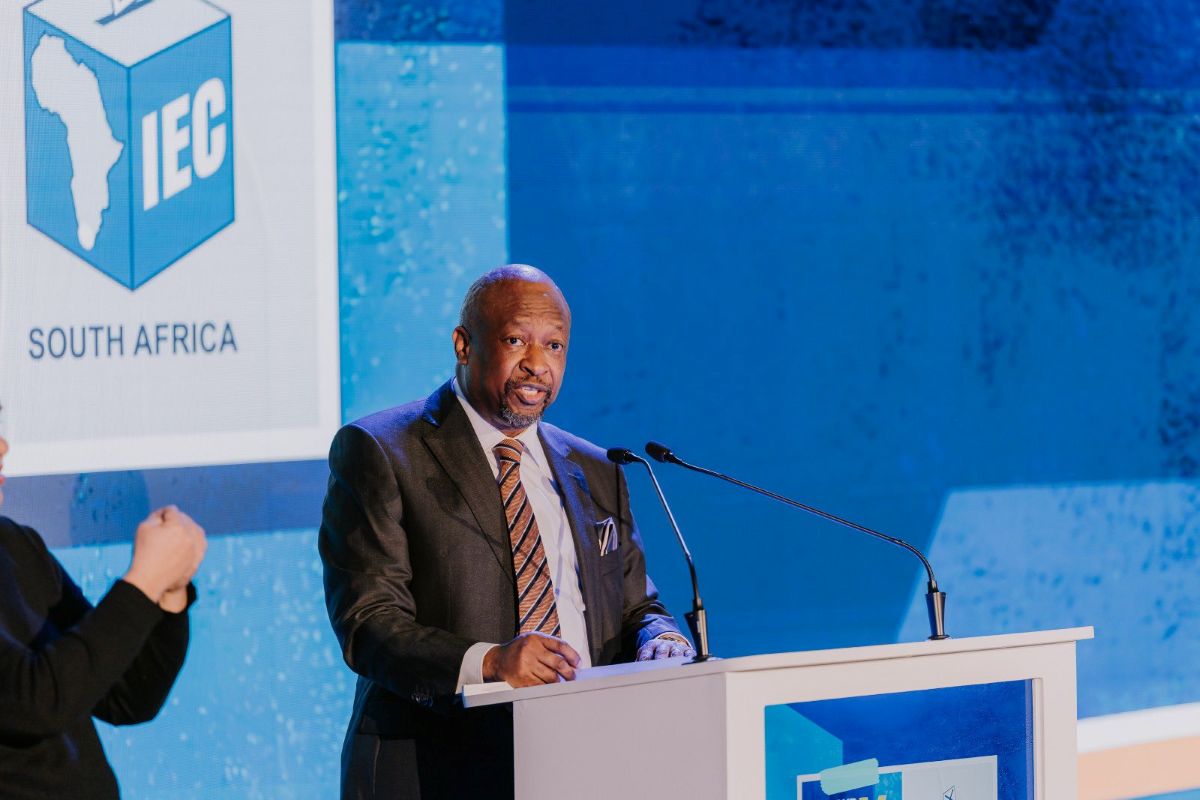
PRETORIA — South Africa’s local government elections are officially in motion. Yesterday, the Electoral Commission of South Africa (IEC) formally launched its national campaign for the 2026 Local Government Elections (LGE), setting the stage for what promises to be a high-stakes democratic showdown on 4 November 2026.
The announcement, sparked by President Cyril Ramaphosa’s recent declaration of the election date, has injected a sense of logistical certainty into a political landscape currently defined by rapid domestic and global evolution. Since the transition to democracy in 1994, the IEC has successfully steered five local government elections.
This sixth iteration, however, represents a critical stress test for the country’s municipal “theatres of civic engagement” at a time when voter apathy and technological disruption are reshaping the rules of political warfare.
Deploying its newly unveiled rallying cry—“Get Up, Show Up, Vote”—the commission is specifically targeting the elusive youth demographic, hoping to reverse years of declining turnout at the polls.
The Immediate Target: Registering the Nation
The operational phase of the election begins in earnest next month. The IEC has earmarked 20 and 21 June 2026 as the national voter registration weekend.
The scale of the undertaking is massive:
- 24,000 registration stations will open across 4,488 municipal wards.
- Stations will operate from 8:00 AM to 5:00 PM on both days.
- The Department of Home Affairs will open its doors nationwide to expedite identity document applications, the mandatory prerequisite for any aspiring voter.
A primary focus of this registration push is addressing recent adjustments made by the Municipal Demarcation Board, which altered certain ward boundaries and subsequently revised voter districts. To mitigate confusion, the IEC deployed over 800 Municipal Outreach Coordinators in May, wrapping up a massive door-to-door blitz across 99% of the country’s municipalities to inform residents of where they now fit into the electoral map.

Countering Apathy with Innovation
Faced with historical trends of dwindling voter participation, the IEC is betting heavily on technological modernization and cultural integration to bridge the gap with citizens.
In a notable statistical victory, the IEC revealed that the national voters’ roll currently boasts 27,912,415 registered citizens—a figure that surpasses the total from the 2024 general elections. This milestone was largely propelled by the commission’s real-time online registration portal, which recorded 376,140 new registrations between January and May 2026 alone, effectively outpacing an average monthly loss of 34,000 voters due to mortality.
To sustain this momentum, the commission is leaning into modern communication mediums:
- The SABC Partnership: On 3 June 2026, SABC1 will premiere “Beats for My Peeps,” an edutainment series utilizing music, culture, and digital creators to directly combat voter apathy and misinformation among the youth.
- AI-Driven Support: The IEC’s newly upgraded multi-channel Contact Centre now features Vota, an AI agent trained to handle after-hours registration queries, backing up human agents across all 11 official languages.
- The Atlas of Results: For political parties and researchers seeking a tactical edge, the IEC has released a comprehensive, map-based geospatial analysis of the 2024 election results, serving as a vital resource for campaign targeting.
Weaponized Information: The Fight Against Deepfakes and Distortion
Perhaps the most formidable challenge facing the IEC in 2026 is the preservation of information integrity. Describing social media as a “double-edged sword” that enhances political reach while simultaneously facilitating rampant manipulation, the commission is taking a harder regulatory stance.
Building on its previous partnership with civil society via the Real411 reporting platform, the IEC announced it will issue a draft Code of Conduct on Misinformation for public comment. The framework aims to erect firm institutional safeguards against fraudulent, AI-manipulated content, and deliberate disinformation campaigns designed to delegitimize the electoral outcome.
Recognizing that the media is the first line of defense against distortion, the commission is collaborating with the South African National Editors’ Forum (SANEF), SALGA, Africa Check, and others to train over 500 journalists across all nine provinces in accurate electoral reporting.
The Road to November
As the political parties begin tuning their manifestos and preparing for aggressive municipal campaigns, the institutional message from the IEC is clear: the machinery is ready, the rules are set, and the trust is on the line.
But an election is only as strong as its turnout. For South Africans looking to shape the immediate governance of their communities, the path to the November ballot boxes begins with a simple check of their status on June 20 and 21. Under current regulations, citizens will strictly only be permitted to vote at the specific station where they are registered.