 By
By 
SANDTON, SOUTH AFRICA — The directive is clear, but the execution is incredibly complex: South Africa must decarbonize its industrial sectors or risk being left behind in the global marketplace. Yet, doing so without triggering devastating de-industrialization and job losses requires a delicate balancing act—one that no single entity can pull off alone.
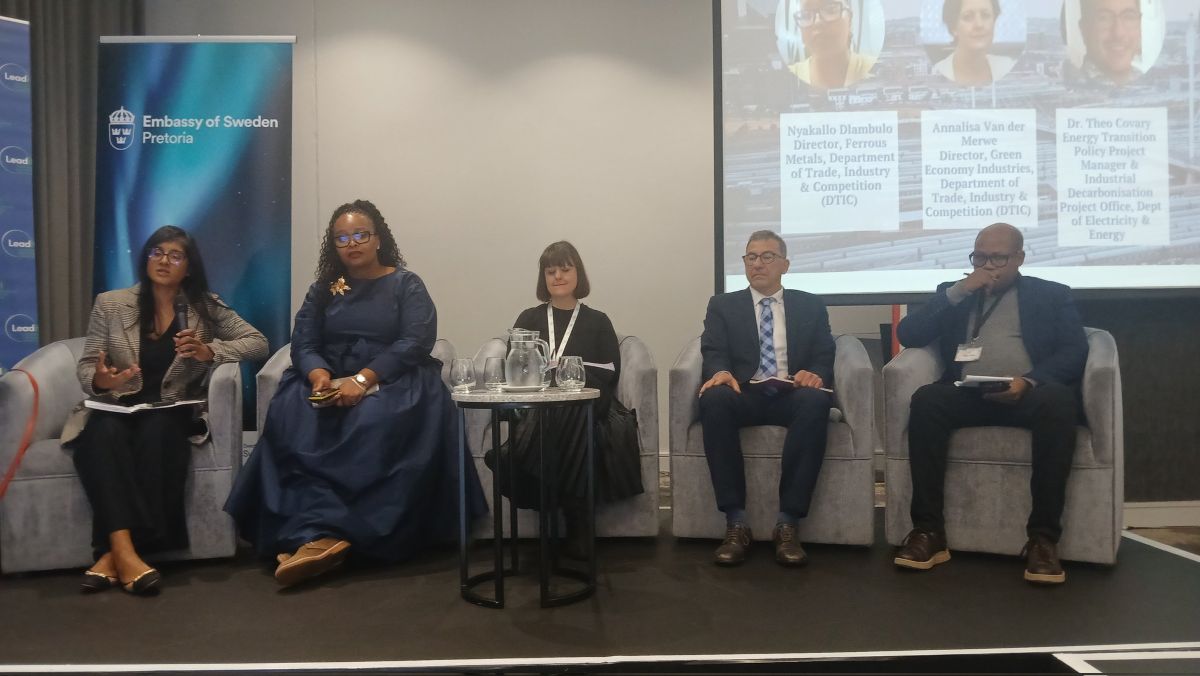
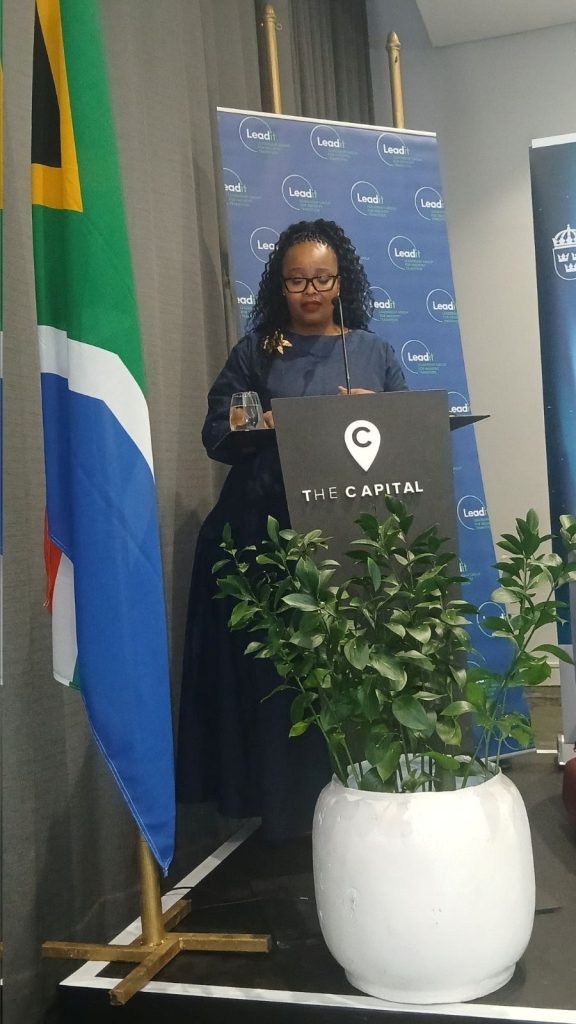
This was the central theme at a high-level multi-stakeholder summit, “South Africa’s Green Industrialisation: Steel value chains and carbon markets,” held at the Capital Hotel on the Park in Sandton. Speaking at the event, Nyakallo Dlambulo, Director of Ferrous Metals at the Department of Trade, Industry and Competition (the dtic), issued a powerful call for radical collaboration across public and private sectors to drive an inclusive, just, and equitable transition to net-zero emissions.
The summit, organized by the dtic in partnership with LeadIT—a Swedish-based public-private initiative focused on steel sector decarbonization—brought together an expansive coalition of government departments, industry giants, and labor representatives.
The Triple Mandate: Decarbonize, Diversify, Digitalize
South Africa’s industrial future has a new blueprint. According to Dlambulo, the country’s recently approved Industrial Development Strategy firmly positions decarbonization, diversification, and digitalization at the core of economic growth.
However, this strategy arrives amidst tightening global pressure. International climate commitments and shifting trade policies are fundamentally rewriting the rules of global market competitiveness.
“Export competitiveness increasingly depends on carbon intensity and environmental performance, and South Africa cannot avoid the imperative to decarbonise,” Dlambulo warned. “At the same time, [we must avoid] de-industrialisation and job losses.”
For heavy industries like steel, the threat is immediate. The sector is highly exposed to emerging climate-related trade measures, most notably the European Union’s Carbon Border Adjustment Mechanism (EU CBAM). Without a rapid pivot toward lower-carbon production, South African steel risks being taxed out of key export markets.
Turning Climate Risk into Industrial Opportunity
Despite the steep challenges, the transition is not merely a defensive maneuver; it is a massive industrial opportunity. The shift toward a low-carbon economy opens up entirely new frontiers for South African enterprise, including:
- Green Steel & Beneficiation: Manufacturing high-value, low-emissions metals locally.
- Renewables & Hydrogen: Capitalizing on the country’s vast solar, wind, and green hydrogen potential.
- The Circular Economy: Re-engineering waste streams and improving material efficiency.
- Localisation: Building local manufacturing capabilities to service the green economy.
To capture this value, the government is currently collaborating with both industry and labor to hammer out a comprehensive steel value chain roadmap. This framework will integrate technology transitions, downstream development, demand-side interventions, trade measures, and industrial upgrading.
The private sector is already moving. Industry players have begun setting their own transition targets, investing in energy efficiency, and adopting lower-carbon technologies. But individual corporate efforts will only go so far without systemic, state-led support.
SOUTH AFRICA’S GREEN INDUSTRIAL VISION
┌─────────────────────────────────────────────────────────────────┐
│ Industrial Development Strategy │
└────────────────────────────────┘│└──────────────────────────────┘
│
┌──────────────────────────┼──────────────────────────┐
▼ ▼ ▼
Decarbonisation Diversification Digitalisation
│ │ │
▼ ▼ ▼
• Green Steel • New Supply Chains • Smart Factories
• Hydrogen & Renewables • Local Beneficiation • Modernised Logistics
Creating Market Certainty
A green transition cannot succeed in a vacuum; it requires a guaranteed market. Dlambulo emphasized that government must use the levers of localisation, public procurement, and infrastructure-led demand to create absolute market certainty for locally produced, lower-carbon industrial products. If the state commits to buying green steel for rail, energy, and construction projects, it creates an immediate, viable market that justifies heavy private sector investment.
Furthermore, strategic trade measures will remain vital to stabilize vulnerable sectors like steel during this turbulent interim period, shielding domestic manufacturers from high-carbon, cheap imports while they retool their factories.
Crucially, South Africa’s energy transition must directly feed back into its domestic industrial goals. This means rapidly expanding transmission infrastructure, scaling up renewable energy generation, and ensuring the components for this new grid are manufactured locally, rather than imported.
A Coalition for the Future
The scale of the transformation means that isolated efforts are doomed to fail. “Industrial transition requires an improved coordination across stakeholders,” Dlambulo stressed, pointing to an extensive web of vital partners.
Successfully navigating the path forward requires active, daily orchestration between a vast ecosystem of stakeholders:
| Sector | Key Stakeholders & Partners |
| Government & Finance | the dtic, Department of Electricity and Energy (DEE), DFFE, National Treasury, DSTI, Development Finance Institutions (DFIs) |
| Industry Bodies | SAISI, SEIFSA, Manufacturing Circle, State-Owned Enterprises (SOEs) |
| Social & Knowledge Partners | Organized Labour, Academia, International Partners (e.g., LeadIT) |
Ultimately, South Africa’s green leap forward cannot just be about cutting emissions; it must be inherently developmental and socially just. By keeping the transition coordinated and industrially inclusive, the nation can safeguard sustainable jobs, attract fresh investment, and secure its place in a decarbonized global economy.