 By
JOHANNESBURG — Marking the 81st anniversary of the United Nations Charter, South Africa has issued a robust defence of global cooperation, framing multilateralism not as a failing bureaucracy, but as the essential vehicle for navigating a volatile geopolitical landscape.
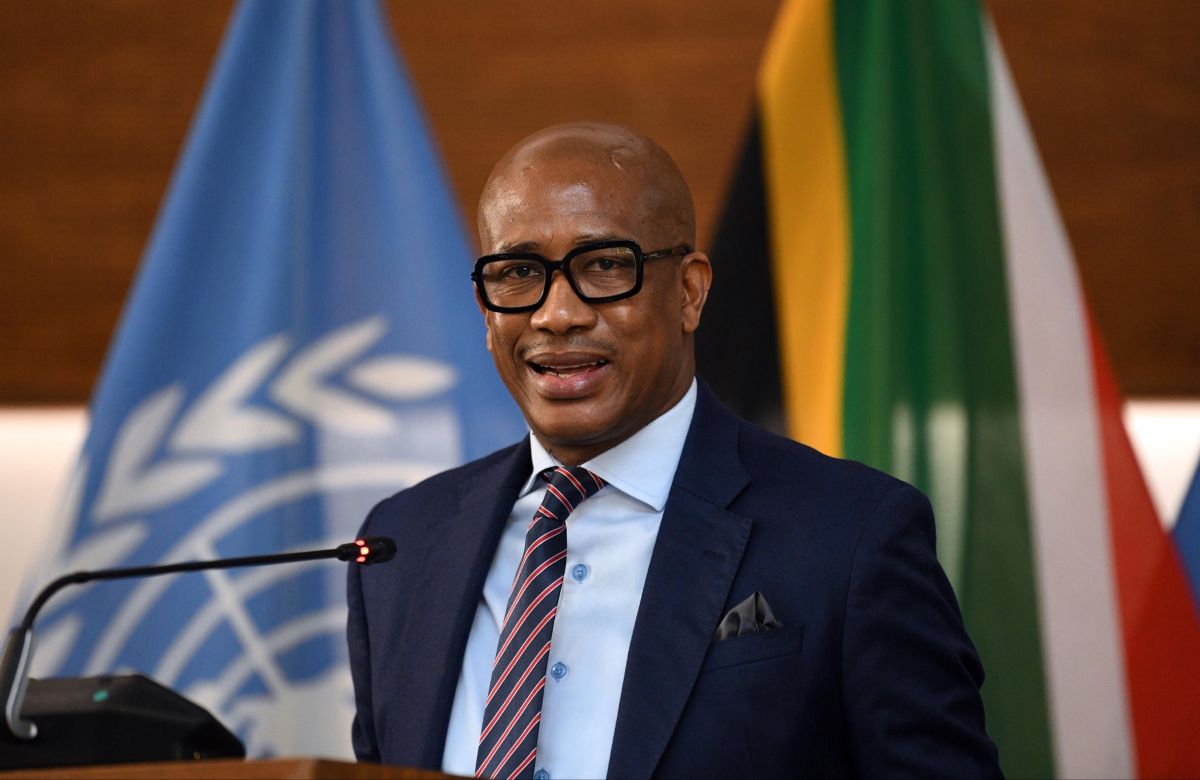
Speaking at the national United Nations Day commemorations, Deputy Minister in the Presidency Kenny Morolong delivered an address that intertwined South Africa’s historical journey away from apartheid with urgent calls for contemporary global reform.
Under this year’s global theme, “Restoring Trust, Managing Transformation: A United Nations that Delivers for All”, the government underscored that international institutions must tangibly improve lives if they are to regain public confidence.
A Rules-Based Order Grounded in Ubuntu
Rooting Pretoria’s foreign policy firmly in the philosophy of Ubuntu, international law, and dialogue, Morolong reminded delegates that South Africa’s own democratic transition was underwritten by global solidarity. Sixty years ago, the UN condemned apartheid as a crime against humanity—a historical debt that democratic South Africa continues to repay through steadfast advocacy for international justice.
“As we work for peace, we must also work for justice,” Morolong stated, emphasizing that might does not make right and that international law must apply equally to all nations, regardless of size or power.
The address reiterated South Africa’s deep concern over the erosion of international humanitarian law in ongoing global conflicts, insisting that lasting peace requires inclusive sustainable development, accountable governance, and respect for human rights rather than military coercion alone.
Financial Architecture and the Fight Against Inequality
Shifting focus to economic justice, the address linked peace directly to development. While reaffirming adherence to the 2030 Agenda for Sustainable Development and the African Union’s Agenda 2063, the government sounded the alarm over uneven progress and severe constraints facing the Global South.
Unsustainable debt burdens, limited fiscal space, and skewed access to finance continue to divert scarce resources away from human needs. To combat the extreme concentrations of wealth that undermine democratic institutions, South Africa highlighted its recent push alongside Brazil, Norway, and Spain at UNGA81 to establish an International Panel on Inequality.
Furthermore, the address positioned Africa as a vital contributor—rather than a passive consumer—in managing emerging technologies like artificial intelligence and the clean energy transition. On climate change, Pretoria reiterated that developing nations, having contributed the least to global emissions, require predictable financing and a genuine adherence to common but differentiated responsibilities.
The Imperative of UN Reform and African Representation
While throwing its weight behind the ongoing UN80 reform process, South Africa maintained that institutional evolution must address glaring structural inequities in global governance.
Highlighting that Africa represents nearly one-fifth of humanity and over a quarter of UN member states yet remains side-lined in vital decision-making bodies, the government reiterated its unwavering support for the Ezulwini Consensus. Pretoria called explicitly for permanent African representation on the United Nations Security Council equipped with all the prerogatives of permanent membership.
Concluding with a nod to the youth and the legacy of former President Nelson Mandela—who reminded the world in 1994 that millions look to the UN for peace, life, and hope—South Africa issued a collective challenge to the international community: to build a multilateral architecture that is representative, effective, and capable of delivering for all.