 By
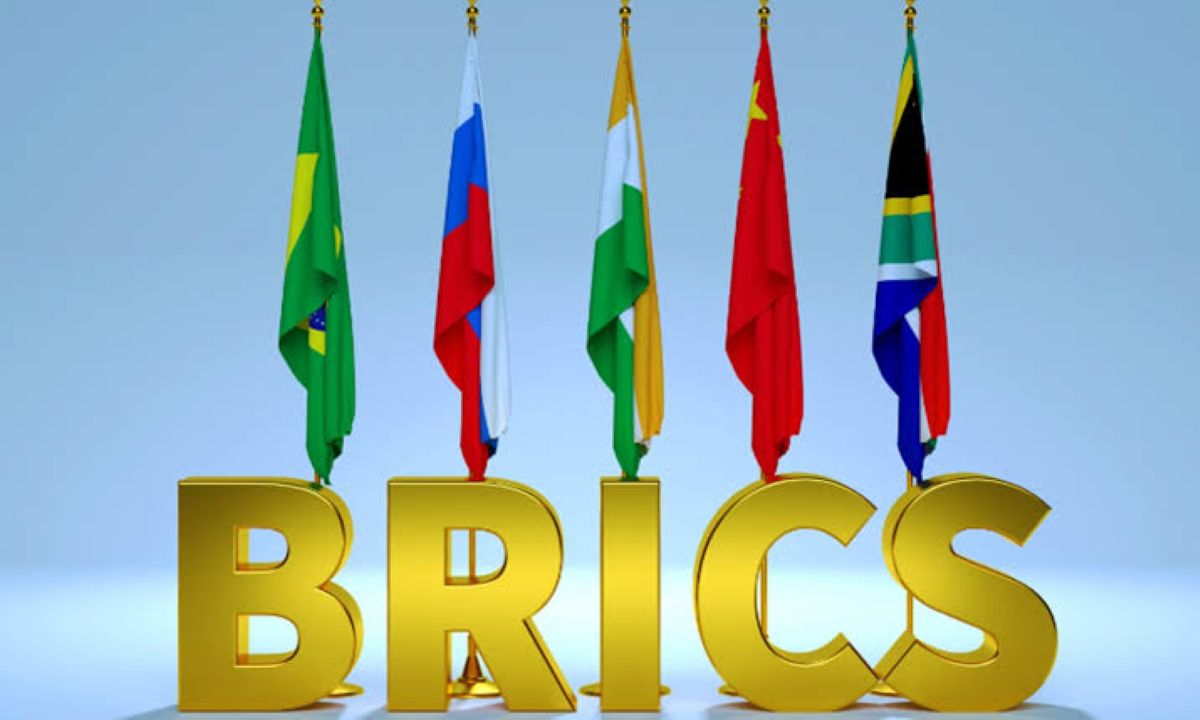
Following years of headline-grabbing enlargement, the BRICS bloc is shifting its strategic centre of gravity from adding new members to building the practical financial, technological, and supply-chain infrastructure required to move goods and capital across emerging markets.
At the 18th BRICS Summit held in New Delhi on September 12–13, 2026, leaders adopted the New Delhi Declaration, outlining a coordinated push across cross-border payment interoperability, supply-chain resilience, artificial intelligence governance, development finance, and credit access for small and medium-sized enterprises (SMEs).
While the declaration stops well short of establishing a unified currency or dismantling existing Western financial architecture, the operational focus signals a maturing economic agenda with tangible implications for multinational corporations, institutional investors, and global trade flows.
Bridging the Scale-to-Trade Gap
Since its inception in 2006 as a dialogue among Brazil, Russia, India, and China—later joined by South Africa—BRICS has evolved into a sprawling 21-country network of full members and partner nations, according to figures cited at the BRICS Business Forum in New Delhi. Indian officials estimate that the grouping now represents roughly 40% of global gross domestic product (GDP) and more than a quarter of world trade.
Data from UN Trade and Development (UNCTAD) offers a more granular breakdown of that economic footprint. In its 2026 BRICS trade study, UNCTAD estimated that the 10 core countries analysed accounted for 26.9% of global GDP in 2024 at market exchange rates, rising to approximately 39% when adjusted for purchasing-power parity (PPP).
However, internal commerce has lagged behind the bloc’s aggregate economic heft. Although intra-BRICS merchandise exports surged more than thirteen fold between 2003 and 2024—climbing from $84 billion to $1.17 trillion—internal trade still accounted for only about 5% of total global trade and roughly 20% of South-South trade in 2024. Closing that gap between macro-level scale and day-to-day commercial integration sits at the heart of the 2026 New Delhi agenda.
Pragmatism Over Rhetoric on Cross-Border Payments
Nowhere is the shift toward technical pragmatism clearer than in the bloc’s approach to financial settlement. Despite persistent speculation in global markets regarding a common BRICS currency, the New Delhi Declaration explicitly avoided proposing a unified monetary unit or a wholesale replacement for legacy messaging systems.
Instead, leaders tasked the BRICS Payment Task Force with advancing technical studies on interoperability among existing cross-border payment and messaging channels. The declaration also reaffirmed support for voluntary trade settlement and investment in members’ local currencies, while candidly acknowledging divergent national priorities and noting that no single payment model fits every member economy.
For corporate treasurers and multinational enterprises operating across these jurisdictions, incremental progress on local-currency settlement and payment interoperability carries practical weight. Even without a shared currency, streamlined cross-border clearing mechanisms can alter foreign-exchange hedging strategies, reduce dollar-liquidity bottlenecks, and reshape invoicing workflows across major developing markets.
Supply Chains and Industrial Connectivity
Alongside financial plumbing, supply-chain security emerged as a core pillar of the 2026 framework. Leaders endorsed the continued rollout of the BRICS Global Value Chain Action Plan for 2026–2030, targeting trade facilitation, industrial capacity building, physical and digital connectivity, and broader technology access.
The policy push reflects wider structural shifts in global commerce. UNCTAD noted in 2026 that geopolitical fragmentation, regionalization, and shifting trade alignments are increasingly forcing governments and corporations to rethink single-source supply dependencies. Meanwhile, the International Monetary Fund (IMF) projected global economic growth of 3.1% for 2026, cautioning that geopolitical fractures and renewed trade friction remain prominent downside risks.
Within that environment, BRICS members are positioning the bloc as a platform to diversify industrial linkages and insulate regional supply networks from external shocks.
Development Lending and SME Working Capital
While many summit commitments require lengthy technical negotiations and domestic regulatory alignment, the New Development Bank (NDB) continues to serve as the bloc’s primary vehicle for translating policy into capital deployment.
Established by the original five BRICS members in 2015, the Shanghai-based lender has expanded its membership to include Bangladesh, the United Arab Emirates, Egypt, Algeria, and Uzbekistan. To date, the NDB has approved $42.9 billion in financing across 139 projects spanning clean energy, transport, water management, and social and digital infrastructure. Recent 2026 approvals include:
- India: Energy infrastructure and affordable housing developments.
- South Africa: Municipal and regional water infrastructure upgrades.
- Brazil: Climate-resilient electricity distribution networks.
To institutionalize project execution across rotating presidencies, BRICS and the NDB launched a joint knowledge portal in September 2026 to centralize policy frameworks and infrastructure expertise. For international engineering, energy, and technology firms, the expanding project pipeline presents commercial procurement opportunities, tempered by local content rules, regulatory compliance, and international sanctions regimes.
Crucially, the 2026 summit also extended its financial focus down-market to smaller enterprises. Leaders endorsed principles aimed at improving credit assessments for export-oriented micro, small, and medium-sized enterprises (MSMEs) and initiated studies into a cross-border invoice-discounting mechanism designed to help smaller suppliers convert receivables into immediate working capital.
The Implementation Test
As BRICS moves beyond its expansion phase, its influence on the global economy will hinge on execution rather than summit communiqués. Divergent economic models, geopolitical rivalries, and uneven regulatory standards among the 21 participating nations will inevitably constrain the pace of deep integration.
Yet given the sheer demographic and economic weight of the bloc, even modest advances in payment interoperability, trade finance, and infrastructure lending stand to alter the commercial landscape across emerging markets.
For global businesses and investors, tracking concrete shifts in settlement volumes, NDB procurement, and supply-chain standards will offer a far more reliable barometer of BRICS’ economic trajectory than political rhetoric alone.