 By
By 
At a time when South Africa’s macroeconomic landscape requires aggressive structural interventions, the country’s Special Economic Zones (SEZs) are being positioned as the primary engines to convert multi-billion-rand investment pledges into tangible industrial output.
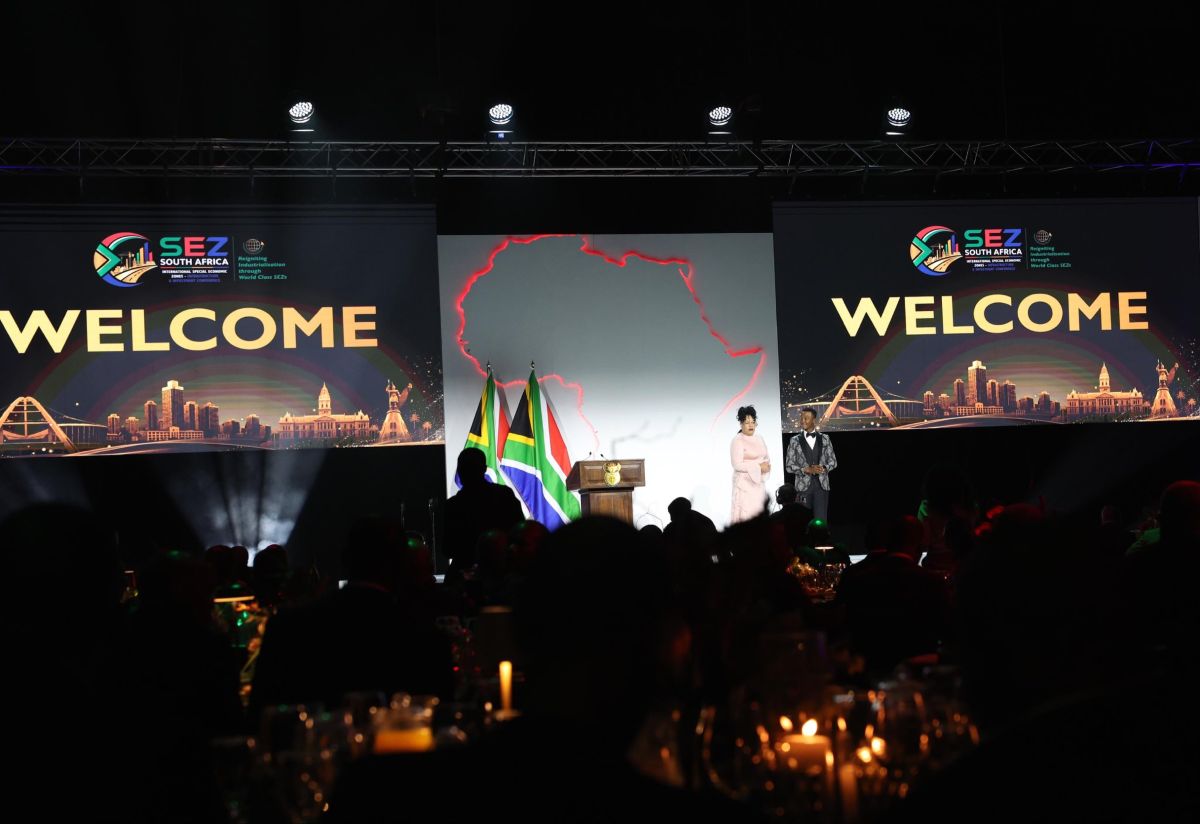
Speaking at the Second International Special Economic Zones Conference Presidential Gala Dinner and Awards Ceremony, President Cyril Ramaphosa framed industrialisation as the country’s most potent weapon against low growth and systemic unemployment.
Addressing policymakers, domestic business leaders, and international delegates, Ramaphosa emphasised that the state is moving beyond policy formulation into a phase of active, localized execution.
“Special Economic Zones are not simply designated industrial sites,” President Ramaphosa stated. “They are engines of economic transformation. They are places where policy is translated into production, where investment becomes enterprise, where innovation becomes competitiveness, and where hope becomes opportunity.”
The Quantitative Case for SEZs
For an economy striving to recover its manufacturing base, the SEZ model represents a crucial mechanism for capital formation. Investment promotion remains at the core of South Africa’s economic agenda, particularly following the Sixth South Africa Investment Conference, which secured R890 billion in investment commitments.
A substantial portion of this capital is earmarked for strategic sectors within SEZs, including renewable energy, digital technologies, and automotive manufacturing. In the automotive sector alone, approximately R12 billion of planned investment is destined for the SEZ programme.
The structural viability of this approach is already evident in key industrial corridors:
- The Tshwane Automotive SEZ: Supported by anchor investments from Ford and its component manufacturers, this zone has created over 3,000 permanent jobs. It serves as a blueprint for public-private partnerships (PPPs) in heavy manufacturing.
- Fiscal and Employment Footprint: According to a recent World Bank assessment, South Africa’s SEZs have collectively attracted over R34 billion in investment, generated R14 billion in revenue for the national fiscus, and created more than 30,000 direct jobs.
A New Industrial Blueprint
The conference coincided with the rollout of the newly adopted Industrial Development Strategy, a policy recalibration designed to reverse decades of de-industrialisation.
┌─────────────────────────────────────────────────────────────────┐
│ INDUSTRIAL DEVELOPMENT STRATEGY │
├─────────────────────────────────────────────────────────────────┤
│ 1. Decarbonising Industries │
│ 2. Diversifying Export Markets │
│ 3. Accelerating Digital Industrialisation │
└─────────────────────────────────────────────────────────────────┘
According to President Ramaphosa, this framework “responds directly to the structural challenges of low growth, de-industrialisation and unemployment”.
Complementing this macro-strategy is the Spatial Industrial Development Strategy, which redesigns the SEZ model to prevent them from becoming isolated industrial enclaves. The objective is to integrate these zones with local economies, ensuring that procurement benefits nearby small, medium, and micro enterprises (SMMEs), elevates local skills, and drives inclusive regional development.
World Bank Recommendations and Structural Reforms
While current performance metrics are encouraging, sustaining this momentum requires addressing deep-seated regulatory and infrastructural bottlenecks. The World Bank has proposed several reforms to enhance South Africa’s competitive edge, including:
- The introduction of privately owned Special Economic Zones.
- The implementation of enhanced, globally competitive investment incentives.
Ramaphosa confirmed that the government is actively considering these recommendations. In tandem, the state is executing broader regulatory and logistical reforms to lower the cost of doing business. These include accelerating approvals for environmental authorisations and water licences, modernising customs systems, and expanding the footprint of “one-stop” investor services.
Crucially, the success of these industrial hubs hinges on infrastructure reliability. While progress has been made in stabilizing the national electricity grid, the focus must now intensify on freight logistics. Upgrading rail networks, modernising ports, and securing transport corridors are vital steps to ensure manufactured goods from SEZs can seamlessly access global markets.

Leveraging the AfCFTA and Future Industries
The long-term growth trajectory of South Africa’s SEZs is inextricably linked to the broader African continent. Under the African Continental Free Trade Area (AfCFTA), South African manufacturers have an unprecedented opportunity to move away from exporting raw mineral wealth and transition toward exporting high-value beneficiated products.
Looking ahead, the government envisions SEZs playing a pivotal role in frontier green industries—such as green hydrogen, electric vehicle mobility, battery manufacturing, and advanced pharmaceutical production.
By building integrated regional value chains, South Africa and its continental partners can position Africa as a resilient, self-sustaining manufacturing hub. As Ramaphosa concluded, the pursuit of industrial excellence is not a static milestone, but a continuous effort to build a competitive, inclusive, and globally integrated economy.