 By
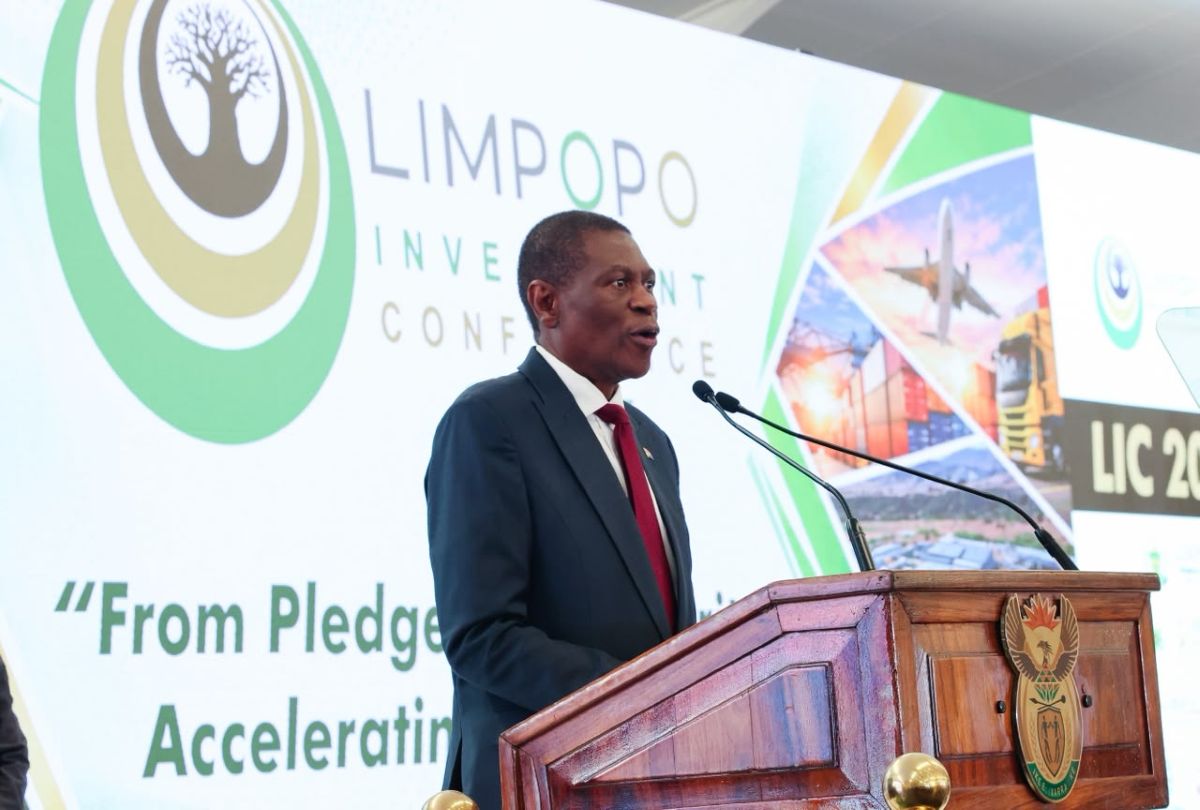
By POLOKWANE — Limpopo’s economic trajectory is shifting decisively from promise to practical delivery. Speaking at the Limpopo Investment Conference 2026 at The Ranch Resort, Deputy President Shipokosa Paulus Mashatile underscored that the province has successfully secured more than R452 billion in investment pledges, with over R71 billion already implemented.
These realized investments have directly translated into the creation of nearly 24 000 jobs, signalling a tangible turnaround for local communities and livelihoods. Guided by the theme “From Pledges to Progress: Accelerating Implementation and Unlocking Investment in Limpopo,” the conference focused heavily on converting capital commitments into operational projects.
Strategic Advantages and Regional Integration
Drawing parallels to the historical commercial brilliance of the ancient Kingdom of Mapungubwe, Deputy President Mashatile emphasized that trade, innovation, and enterprise are embedded deep within Limpopo’s identity.
Today, the province leverages an abundance of mineral resources, fertile agricultural land, and a strategic geographic positioning as South Africa’s primary gateway to the Southern African Development Community (SADC).
With the framework of the African Continental Free Trade Area opening new horizons, provincial authorities are aiming to ensure that cross-border trade moves past mere transit—stimulating local manufacturing, strengthening industrial value chains, and generating widespread employment.
However, realizing this potential requires tackling structural fundamentals head-on. The address stressed that reliable energy; water security, modern transport networks, and digital connectivity are non-negotiable prerequisites for industrial competitiveness.
Cutting Red Tape with the InvestSA One Stop Shop
Investor confidence hinges on policy certainty, efficient regulation, and seamless administrative processes. To streamline this environment, the conference featured the official launch of the InvestSA One Stop Shop in Limpopo.
Designed to act as a single point of access to government services, the facility aims to eliminate bureaucratic hurdles, lower the cost of doing business, and accelerate project execution.
“The launch of this facility sends a clear message: Limpopo is open for business. It reflects our commitment to working alongside investors as partners in development and to ensuring that Government becomes an enabler of growth rather than a barrier to it,” Mashatile stated.
Moving Beyond Raw Material Exports
A central pillar of the economic strategy outlined at the conference is industrialisation through local beneficiation. Government leaders stressed that South Africa’s long-term prosperity cannot rely on exporting raw materials alone.
Limpopo is uniquely positioned to expand local mineral beneficiation, ramp up agro-processing, and boost manufacturing output. Crucially, this industrial growth must run parallel to human capital development. Equipping the provincial youth through technical and vocational training, apprenticeships, and workplace learning is viewed as vital to preparing the workforce for a changing economic landscape.
Furthermore, inclusive growth remains a central priority. The government is pressing for deeper integration of township enterprises, small businesses, cooperatives, and emerging local suppliers into major commercial value chains to ensure that wealth filters down directly to ordinary citizens.
A Call for Accountability and Implementation
As the conference concluded its deliberations, the message from leadership was unified: the era of relying solely on announcements has passed. With capable, developmental local governance highlighted ahead of the upcoming local government elections in November, the focus remains fixed on accountability and execution.
Ultimately, delegates were reminded that behind every balance sheet and investment project lies a human story—a young job seeker, an ambitious entrepreneur, and a community looking toward a prosperous future.