 By
By 
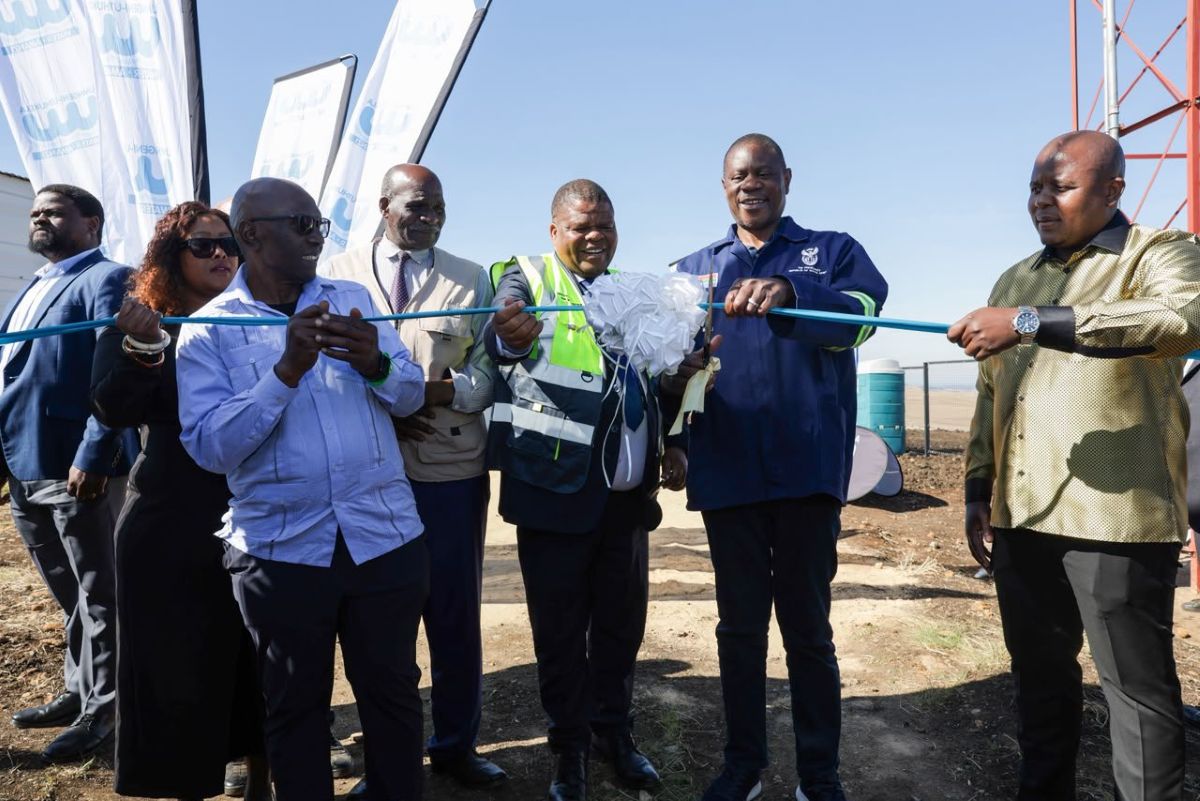
BABANANGO, KWAZULU-NATAL — Framing access to clean water as a core constitutional right and a test of South Africa’s democratic promise, Deputy President Shipokosa Paulus Mashatile officially launched the Babanango Community Water Supply Scheme on Saturday, tying the rural infrastructure milestone to Nelson Mandela’s enduring legacy.
Speaking at the Mandela Day Water Services Project Launch and Acceleration Programme in KwaZulu-Natal, Mashatile addressed a delegation of cabinet ministers, provincial leaders, traditional authorities, and local residents. He stressed that the struggle for basic services remains the central frontier in restoring dignity to historically marginalized rural communities.
“When a community has no access to clean and reliable water, it is denied more than a basic service; it is denied dignity, opportunity and the full enjoyment of its constitutional rights,” Mashatile told the gathering. “Uma umphakathi ungenawo amanzi ahlanzekile, uyaphucwa isithunzi namathuba” (When a community lacks clean water, it is stripped of dignity and opportunities).
Addressing Rural Disparities
The launch forms part of the broader National Water Access Acceleration Programme and the government’s District Development Model (DDM), an initiative aimed at breaking down inter-governmental silos to streamline service delivery.
Mashatile acknowledged the deep frustration felt by residents over delayed infrastructure development across rural South Africa.
“Yes, it has taken longer than we all thought; you have waited far too long to have reliable access to clean drinking water,” Mashatile conceded. “The completion of the Babanango Community Water Supply Scheme, however, is a milestone in the government’s efforts to extend access to basic services and improve the lives of rural communities.”
The new Babanango scheme integrates protected spring sources, a borehole backup system, a water treatment facility, reservoirs, and reticulation pipelines. The system is built to deliver up to 500,000 liters of treated potable water daily to local areas including Ngwebeni, Enkanini, Nkonjane, Nhlengile, and Nkangala.
Beyond the localized project in Babanango, the event served as a symbolic launch and handover for 27 decentralized water supply interventions across KwaZulu-Natal funded partly through the Water Services Infrastructure Grant.
National Pressures and Infrastructure Protection

The Deputy President’s remarks come at a time when South Africa’s water sector faces intense national pressure. Rapid urbanization, severe climate variability, lingering underinvestment, and systemic infrastructure failure have severely strained supply networks across multiple provinces.
Mashatile pointed to presidential structures and coordinated efforts led by the Department of Water and Sanitation and regional bulk entities—such as uMngeni-uThukela Water—as essential drivers to address localized backlogs via spring protection, rainwater harvesting, and targeted scheme refurbishments.
However, the Deputy President pivoted to highlight community accountability, warning that multi-million rand investments remain vulnerable without active civic protection against theft and infrastructure destruction.
“The sustainability of projects such as this one depends on community ownership and active participation,” Mashatile insisted. “We must protect this infrastructure against vandalism and misuse so that future generations can continue to benefit… To the people of Babanango and the surrounding communities, this project is yours. Protect it. Value it. Use it wisely. Luvikele. Lulonde. Nilusebenzise ngobuhlakani.“
The Political Horizon
By invoking Nelson Mandela’s 2008 call to action—“It is in your hands to make our world a better one for all, especially the poor, vulnerable and marginalised”—the government sought to ground its service delivery drive in liberation values.
As political pressure builds over rural development and basic service delivery, the success of interventions like the Babanango scheme will serve as a key metric for whether the state’s District Development Model can reliably translate policy rhetoric into functioning household taps.