 By
By 
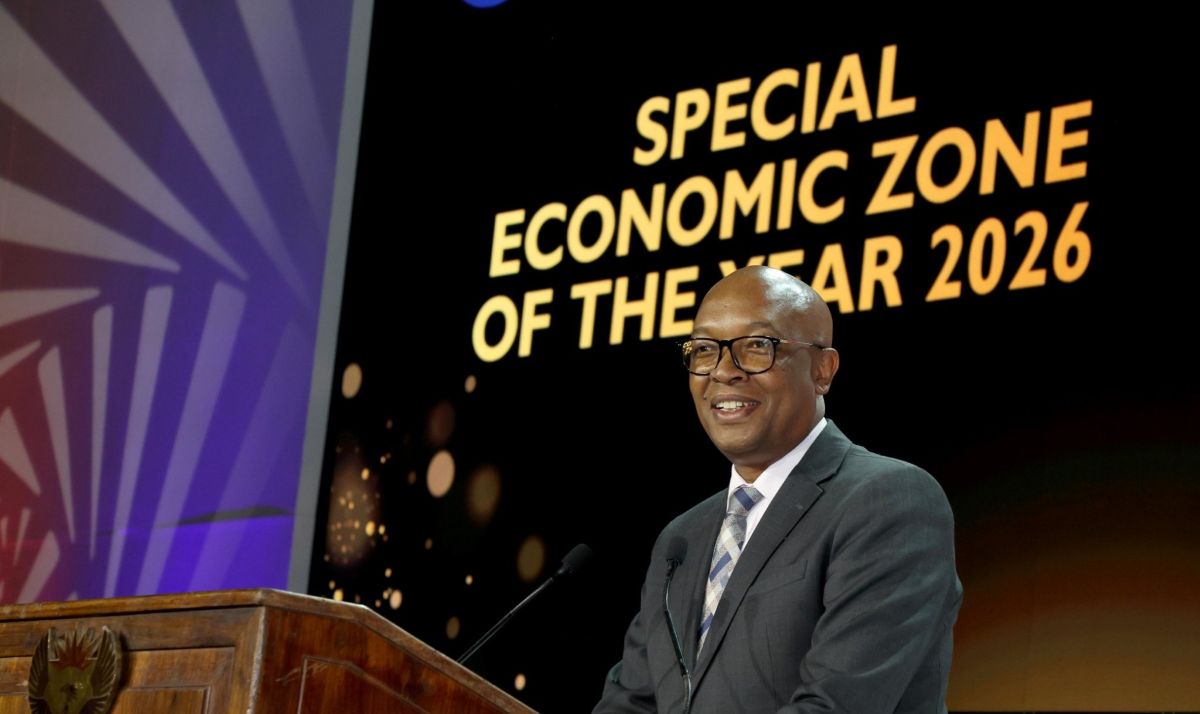
DURBAN — At the opening of the Second International Special Economic Zones (SEZ) Conference in KwaZulu-Natal, Minister of Trade, Industry and Competition Mr Parks Tau declared South Africa’s industrial zones open for a new chapter of private-sector-led growth.
Speaking at the Durban Exhibition Centre under the theme “Reigniting Industrialisation through World-Class SEZs,” Tau highlighted the tangible economic footprint of the country’s special zones while signalling major policy reforms on the horizon.
A R31.7 Billion Industrial Footprint
South Africa’s SEZ network currently comprises 13 designated zones spread across eight provinces, hosting 224 operating companies. According to Minister Tau, these businesses have collectively injected R31.7 billion into the local economy. This milestone represents a net investment increase of R17.2 billion over the past eight years, bolstered by R12 billion in state support for top structure and bulk infrastructure from the Department of Trade, Industry and Competition (the dtic) since the programme’s inception. To date, the initiative has yielded 28,821 direct jobs.
“This floor shows the policy in practice,” Tau told delegates, urging investors to look beyond high-level policy discussions to study the site readiness, incentive packages, and real-world case studies driving these headline figures.
Capitalizing on Key Industrial Wins
The Minister spotlighted three anchor projects that demonstrate the capacity of SEZs to attract massive private and multinational capital:
- Automotive Expansion: Ford’s expansion at the Tshwane Automotive Special Economic Zone (TASEZ) has successfully unlocked R16 billion in private capital, alongside R5.9 billion from co-located investors, generating 3,333 direct jobs to date.
- The Richards Bay Pipeline: Moving past its early traction challenges, the Richards Bay Industrial Development Zone has accumulated an investment pipeline of 24 potential projects valued at an estimated R247 billion.
- Mineral Beneficiation: The Nyanza Light Metals titanium dioxide project has reached a crucial financial close on its R14.5 billion second phase, a development projected to create over 800 direct jobs upon full operation.
Restructuring for the Future: The World Bank Review
Despite these successes, the South African government is preparing to systematically overhaul how these zones operate. Tau revealed that the dtic is tabling an independent World Bank review of South Africa’s SEZ Programme during the two-day summit. This review will serve as the foundation for a revised SEZ Implementation Model aimed at correcting historical inefficiencies.

The updated framework will pivot toward three key pillars:
- Increasing the integration of private-sector-developed industrial parks.
- Offering stronger non-financial incentives to lower the cost of doing business.
- Establishing a formal turnaround process specifically designed for underperforming zones.
Looking forward, the government expects to progress the formal designation of two new zones—Fetakgomo Tubatse and Vaal—while leveraging the African Continental Free Trade Area (AfCFTA) to open broader, more integrated export pathways for resident manufacturers.
With high-level political backing, including upcoming addresses from President Cyril Ramaphosa and Deputy President Paul Mashatile, the conference signals a clear message to the market: South Africa is shifting from purely state-funded infrastructure toward a dynamic, private-partnered, and export-focused industrial future.