
 By
By In a historic pivot that threatens to reshape South Africa’s political landscape, the South African Communist Party (SACP) has officially declared an independent electoral path, breaking away from its traditional ballot alliance with the ruling African National Congress (ANC) ahead of the November 4, 2026 local government elections.

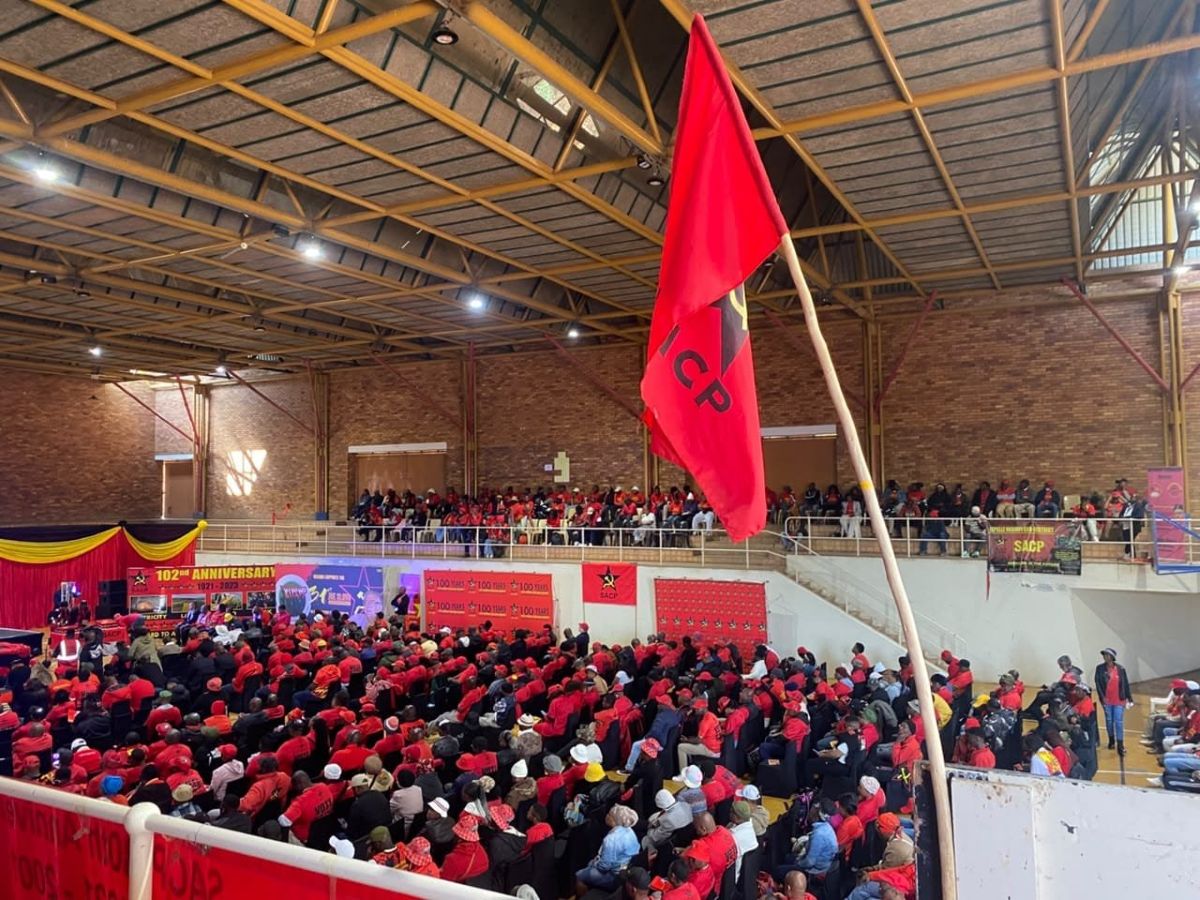
The party unveiled its 2026 Local Government Election Manifesto on Sunday during its 105th anniversary rally. Marking more than a century since its founding as the Communist Party of South Africa in Cape Town in 1921, the SACP outlined a radical campaign platform centred on “building people’s power where we live.”
The decision to contest municipalities directly under its own banner follows decades of growing frustration with neoliberal economic policies, administrative decay, and what the party terms a betrayal of the working class.
A Decisive Break Over the Government of National Unity
Addressing supporters, party leadership sharply criticized the current political dispensation, arguing that the Government of National Unity (GNU) has effectively become a “front for monopoly capital.”
The SACP argued that after 28 years of pushing to reconfigure the Tripartite Alliance into a genuine consensus-seeking leadership body, the working class has been left voiceless in the halls of state power.
“We are contesting the local government elections independently because the working class is not represented in government; it has lost its voice in government,” the party statement declared. “The working class has been patient long enough for unfulfilled promises.”
Central to the party’s ideological critique is the state’s Operation Vulindlela initiative, which the SACP characterized as a “sell-out programme” driving stealth privatisation, deregulation, and austerity. The party warned that opening key state-owned assets—such as Eskom, Transnet, rail, and ports—to private accumulation directly violates the Freedom Charter’s promise that state wealth shall be transferred to the ownership of the people as a whole.
Core Pillars of the 2026 Manifesto
The SACP’s election manifesto frames municipal governance not merely as administrative oversight, but as an active front in class struggle. Invoking the standard set by slain communist leader Chris Hani, the party pledged to measure all candidates by their commitment to selfless public service rather than careerism and corruption.
The party outlined six core priorities aimed at restructuring local government:
- Ending Municipal Tenderization & Corruption: Complete abolition of the corrupt tender system in favor of state insourcing, direct public provision of services, and equipping municipal workers directly.
- Reliable Basic Utility Services: Immediate cessation of private water-tanker mafias, eradication of the bucket system, protection of lifeline utility allocations, and opposing the privatisation or unbundling of Eskom.
- Land Redistribution for Social Need: Expropriation and release of well-located public land for housing, urban agriculture, and cooperatives, explicitly rejecting municipal land sales to private developers.
- Decent Work & Local Economy: Implementation of municipal decent work plans, full recognition of informal economy workers, and affordable public transit under community control.
- Safe & Caring Communities: Combating gender-based violence, curbing extortion mafias and drug networks, recognizing unpaid care work predominantly borne by women, and upgrading township infrastructure.
- Participatory Democracy & Accountability: Establishment of ward assemblies and participatory budgeting, with SACP councillors bound to regular reporting and subject to immediate party recall if they betray public trust.
The Red Caravan and Direct Mobilization
The party highlighted its ongoing ground initiative, the “People’s Red Caravan,” as proof of concept for its grassroots model. Operating across rural and township communities like Gladstone in the Free State, the program coordinates communal farming, egg and honey production, cooperative stores, road grading, and community safety initiatives.
The manifesto stresses that while community self-reliance is vital, it must complement—rather than replace—the structural demand for state delivery.

Key Historical & Ideological Context
The statement tied the 2026 election launch to significant historical milestones, including Women’s Month and the centenary of Cuban leader Fidel Castro. The SACP paid tribute to Cuban internationalist forces who fought alongside African liberation movements in Angola, culminating in the battle of Cuito Cuanavale, while demanding an immediate end to the long-standing US blockade against Cuba.
Reflecting on South Africa’s stark socio-economic profile—where approximately 23 million people live below the lower-bound poverty line and expanded unemployment hovers near 43 per cent—the SACP asserted that capitalist development has proven utterly incapable of resolving historic colonial and apartheid disparities.
By entering candidates into council chambers directly on November 4, 2026, the SACP aims to convert grassroots working-class discontent into structured legislative and municipal power.