 By
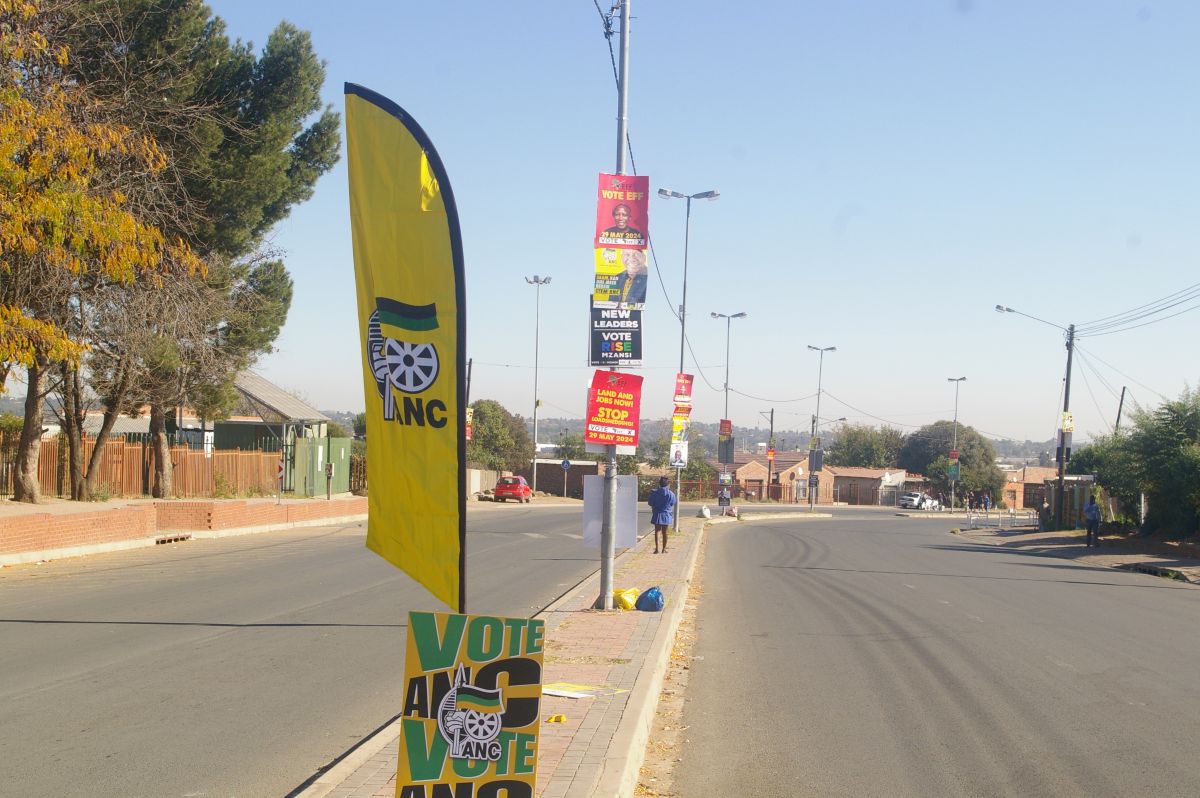
By JOHANNESBURG — As South Africa gears up for local government elections, a new political landscape is violently shaking the traditional power axes. Fresh data from the eNCA MarkData poll reveals that the ruling African National Congress (ANC) is locked in razor-thin, dead-heat battles in two of the country’s most critical economic hubs: Nelson Mandela Bay and Ekurhuleni.
With polling conducted across South Africa’s top six metros between August 10 and September 12, the numbers lay bare a volatile electorate characterized by ANC erosion, surging opposition momentum, and a generational political shift that could redefine municipal governance.
The Battlegrounds: DA Edges Ahead of a Bleeding ANC
In both Nelson Mandela Bay and Ekurhuleni, the Democratic Alliance (DA) has edged into a narrow lead over the ANC among likely voters, though statisticians warn that the contest is effectively too close to call.
In Nelson Mandela Bay, the DA leads the ANC by 37.7% to 37.4%, comfortably within the poll’s 3.11% margin of error. Compared to the 2024 provincial results, the ANC has slipped slightly from 38.2% to 37.4% in the metro, while the DA has ticked up from 36.2% to 37.7%.
The picture is similarly tense in Ekurhuleni. Here, the DA holds 31.2% of projected support compared to the ANC’s 29.4%, against a 3.07% margin of error. The ANC’s descent in Ekurhuleni is starker, tumbling from 34.9% in 2024, whereas the DA has grown its footprint from 26.8% to 31.2%.
Across the country, the overarching narrative is the ANC’s bleeding support, particularly in metros it governs or co-governs. Survey respondents heavily attribute this precipitous drop to poor municipal service delivery.
Youth Wave and Third-Party Surges
While the traditional two-party heavyweight clash dominates the headlines, the survey underscores a dramatic restructuring of the political periphery.
- The EFF Youth Magnet: While the Economic Freedom Fighters (EFF) poll at a modest 9.2% overall in Ekurhuleni, they command a massive 24.5% of likely voters aged 18 to 24 in the metro, signalling an aggressive pull among young urban voters. Total EFF support sits at 9.2% in Ekurhuleni (down from 12.5% in 2024) and 8% in Nelson Mandela Bay (down from 11%).
- MK Party Factor: Former President Jacob Zuma’s uMkhonto weSizwe (MK) Party remains a potent force in Ekurhuleni despite being polled before Zuma’s current grave illness. MK captures 11.5% of the Ekurhuleni vote (down from 13.6% in 2024) and has grown to 3.2% in Nelson Mandela Bay from a meagre 0.9% two years prior.
- ActionSA and FF Plus Growth: ActionSA is poised for celebration if current numbers hold, growing to 6.1% in Ekurhuleni (up from 2.9% in 2024) and 3.4% in Nelson Mandela Bay. Meanwhile, the Freedom Front Plus (FF Plus) is outperforming expectations in Ekurhuleni at 5.2%, up from 2% in 2024.
- Patriotic Alliance Movement: The Patriotic Alliance registers 4% support in Nelson Mandela Bay (down from 6.5%) and 2.5% in Ekurhuleni (up from 1.9%).
A High-Stakes Countdown
Methodologically executed via telephone and face-to-face interviews in respondents’ preferred languages, the eNCA MarkData survey captures an electorate running out of patience with status-quo governance.
As the clock ticks down to election day on November 4, the margins of error mean that any minor swing in turnout could violently flip control of these industrial heartlands. For the ANC, it is a desperate defensive stand; for the opposition, a historic, high-stakes opportunity within touching distance.