
 By
BRASÍLIA — As central bankers across Latin America and beyond mark 25 years of inflation targeting, they face a treacherous economic landscape where opposing global forces are colliding and old protective buffers are thinning.
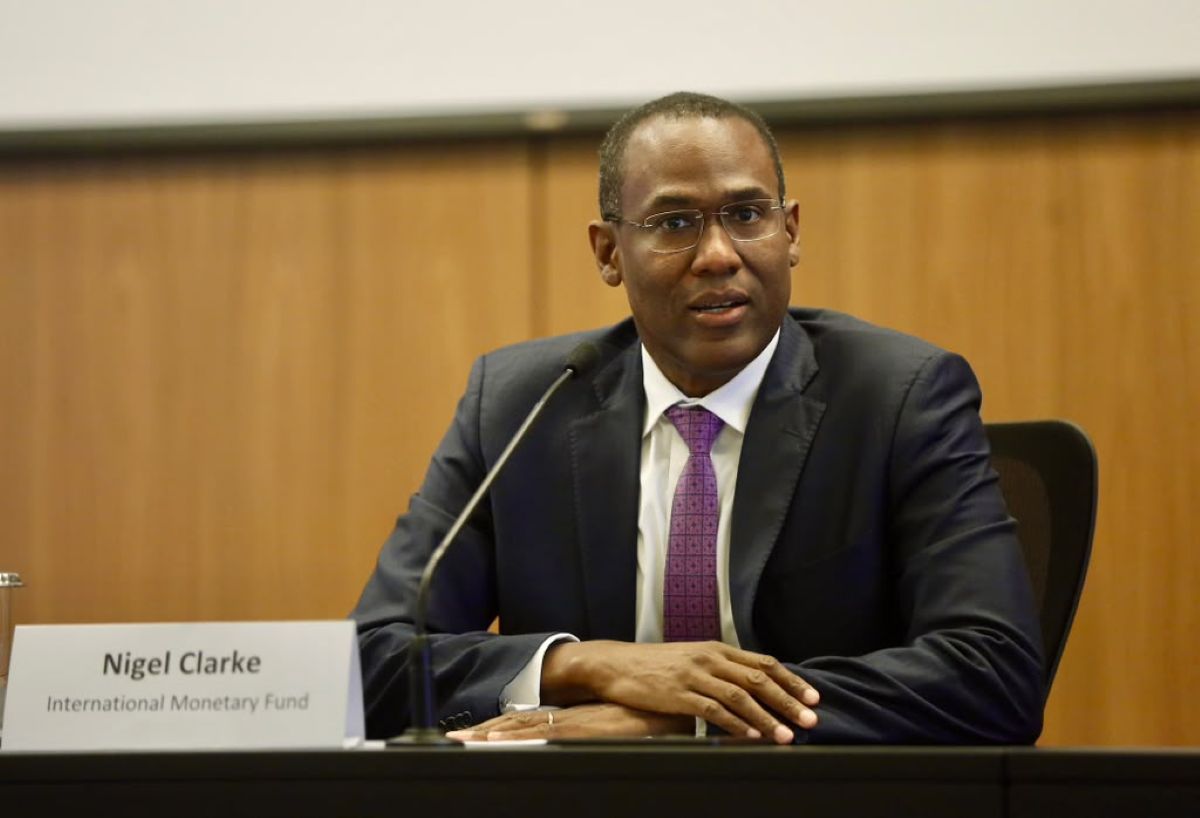
Addressing a joint conference hosted by the International Monetary Fund and the Central Bank of Brazil in Brasília on Wednesday, IMF Deputy Managing Director Nigel Clarke warned that policymakers are trying to finish the “last mile” of disinflation amid a tug-of-war on global growth.
On one side, an energy shock is acting as a negative supply shock that weighs on economic output and heightens uncertainty. On the other, an artificial intelligence investment boom is fuelling demand, trade, growth, and financial market valuations.
“Different as they are, these forces share one important feature: both add to inflationary pressures, complicating the path back to price stability,” Clarke said.
Layering onto those cross-currents are rising food prices tied to intensifying climate events—such as El Niño—alongside elevated and climbing public debt burdens. Together, these pressures test the durability of inflation-targeting regimes that have anchored monetary policy across the region for a quarter century.
Latin America’s Early Pivot and the Brazil Blueprint
Clarke praised Latin American central banks for moving aggressively ahead of most advanced economies during the post-pandemic inflation surge. In Brazil, for instance, the central bank hiked its policy rate from 2 percent in March 2021 to 13.75 percent by August 2022.
That decisive tightening helped keep long-term inflation expectations relatively anchored despite supply chain disruptions and geopolitical tensions.
Still, Clarke cautioned that institutional credibility—the bedrock of inflation targeting—is hard-won and easily eroded. When expectations hold steady, temporary shocks tend to pass; when they drift, inflation becomes entrenched and far more expensive to unwind.
Brazil’s own history offers a stark reminder of what happens when credibility is absent and what it takes to rebuild it. Before the Real Plan took effect in 1994, inflation exceeded 1,000 percent.
After abandoning its exchange rate peg and adopting formal inflation targeting in June 1999, Brazil gradually built a durable nominal anchor through a floating exchange rate, stronger fiscal discipline, clearer central bank communication, ample reserve buffers, operational autonomy, and a continuous 3 percent target.
Fiscal Dominance and the Jamaican Turnaround
While monetary frameworks matter, Clarke emphasized that central banks cannot carry the stabilization burden alone as rising public debt sharpens the collision between interest rates and fiscal policy. High debt makes debt-servicing costs more sensitive to rate hikes and leaves market rates more vulnerable to fiscal slippages.
Drawing on his prior tenure as Jamaica’s Minister of Finance, Clarke outlined how fiscal discipline and central bank independence can reinforce one another. For four decades starting in 1973, Jamaica ran fiscal deficits in 34 of 40 years, suffered double-digit inflation for nearly half that span, and slipped into fiscal dominance—where budget needs constrained monetary policy and a lack of central bank independence allowed repeated shocks to fuel persistent inflation.
Comprehensive fiscal reforms eventually helped slash Jamaica’s general government gross debt from roughly 135 percent of GDP in 2013 to about 62 percent at the end of 2024. Alongside greater exchange-rate flexibility and 2020 legislation establishing central bank independence with price stability as its primary mandate, the economy gained room to maneuvers.
When post-pandemic inflation surged in Jamaica from 3.8 percent in April 2021 to a peak of 11.8 percent in April 2022, the central bank raised its policy rate from 0.5 percent to 7.0 percent by November 2022.
Inflation returned inside the target range by October 2023 without triggering the severe downturn some feared—a shift Clarke attributed to anchored expectations underpinned by sustainable fiscal policy.
Crucially, Clarke noted that durable fiscal reform required political consensus. Jamaica’s reform bill was examined clause by clause over two years by a joint committee of government and opposition lawmakers in public view before the country established an Independent Fiscal Commission to guard fiscal rules.
Adapting to an Era of Frequent Shocks
Looking ahead, Clarke argued that the past seven years have shown just how rapidly shocks can strike—from the pandemic and wars in Ukraine and the Middle East to shifting trade barriers. Geopolitical fragmentation, the AI revolution, extreme weather, and volatile capital flows are structural features of the current environment, while buffers such as fuel inventories have grown thinner.
Because modern shocks frequently push inflation and economic growth in opposite directions, central banks face steeper trade-offs and tougher communication challenges. To adapt, Clarke said policymakers will need sharper tools to monitor expectations, a risk-based approach, transparent explanations of difficult trade-offs, and steadfast central bank independence.
When inflation expectations are firmly anchored, commodity and energy price shocks are less likely to pass through into consumer prices, giving central banks space to moderate rate increases.
Clarke framed three central questions for participants over the two-day conference: how to sustain hard-won credibility amid recurring shocks; how to align monetary and fiscal policy while protecting central bank independence; and how inflation targeting itself must evolve in a world of prolonged uncertainty.