 By
CAIRO / WASHINGTON — International Monetary Fund (IMF) staff and Egyptian authorities have reached a staff-level agreement covering the eighth and final review of Egypt’s 48-month Extended Fund Facility (EFF) arrangement and the third review under the Resilience and Sustainability Facility (RSF), according to a statement released on November 18, 2026.
Subject to approval by the IMF Executive Board, the agreement clears the way for a disbursement of SDR 1,113.02 million (roughly US$1.5 billion) under the EFF and up to SDR 600 million (about US$0.8 billion) under the RSF.
Together, these tranches would bring total disbursements across both arrangements to SDR 7,111.69 million (approximately US$9.6 billion).
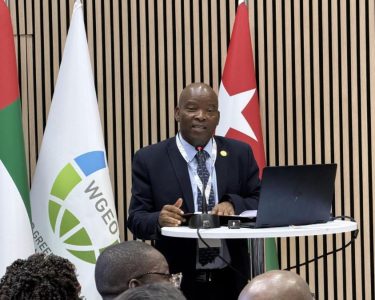
The agreement follows an IMF mission led by Amine Mati that met with Egyptian officials in Cairo from October 25 to November 5, followed by virtual talks between November 7 and November 15.
Growth Holds Up Amid Regional Shocks
According to IMF staff, Egypt’s economy has demonstrated resilience despite heightened regional tensions, global uncertainty, and the fallout from the Middle East war. Real gross domestic product (GDP) growth reached 5.1 percent in FY2025/26 (which ended June 30), underpinned by:
- A recovery in Suez Canal and petroleum-related activity.
- Continued momentum across manufacturing, tourism, and communications.
Inflationary pressures, while still elevated, have proven more favourable than previously anticipated. Meanwhile, higher imports have widened the current account deficit, prompting authorities to lean on macroeconomic adjustments—including allowing the exchange rate to adjust—which helped keep gross reserves comfortably above the IMF’s reserve adequacy metric.
Monetary and Fiscal Priorities
With international oil prices elevated and regional risks lingering, IMF staff emphasized the need for continued policy discipline. The Central Bank of Egypt’s (CBE) 100-basis-point policy rate hike in October was welcomed as a sign of commitment to price stability.
Staff noted that maintaining a tight, forward-looking, and data-dependent monetary stance is vital to steer inflation toward the CBE’s target of 7 percent (±2 percentage points) in Q4 2027, while treating exchange-rate flexibility as the primary buffer against external shocks.
On the fiscal front, Egypt exceeded its end-September primary surplus and tax-revenue targets despite a difficult external backdrop. Authorities remain committed to a primary surplus of 5 percent of GDP in FY2026/27 and a tight medium-term fiscal stance aimed at curbing debt. Key fiscal priorities highlighted in the statement include:
- Sustaining revenue mobilization, expenditure discipline, and targeted social support to protect vulnerable households.
- Executing the Egyptian General Petroleum Corporation’s financial viability plan by curbing leverage, collecting public-sector receivables, and making timely fuel price adjustments for cost recovery.
- Lengthening new domestic debt maturities and cutting gross financing needs by 5 percent of GDP in FY2026/27 through maturity extensions, voluntary liability management, and divestment proceeds, while reducing reliance on short-term debt.
Banking, State Footprint, and Climate Reforms
The IMF noted that Egypt’s banking sector remains well-capitalized, liquid, and profitable, even as sovereign exposure stays high. Strengthening banking supervision, risk management, and governance at state-owned banks remains important to safeguard financial stability.
Looking beyond stabilization toward private sector-led growth, IMF staff pointed to the recent Banque du Caire initial public offering (IPO) and plans to speed up state asset divestments.
They also highlighted Egypt’s newly unveiled National Economic Transformation Program and the Executive Plan for the State Ownership Policy (SOP) as tools to promote competitive neutrality, transparency, and oversight—including for state-owned entities such as Future of Egypt.
Under the RSF, reforms are advancing across climate-related financial risks, disaster-risk financing, water management, methane emissions, and oversight of public-private partnerships.
Risks Ahead as EFF Concludes
Even with upside potential from de-escalation in the region, stronger Suez Canal transit, and faster structural reforms, IMF staff cautioned that significant downside risks persist. Escalating regional conflict could disrupt trade and investment, while tighter global financial conditions could spark capital outflows and higher borrowing costs—compounded by elevated debt and financing needs.
As the EFF-supported program wraps up, IMF staff said Egypt has made notable progress in rebuilding macroeconomic stability and external buffers, stressing that sustained discipline and deeper private-sector reforms will be essential to turn stability into stronger job creation and higher living standards.