 By
By Navigating Global Headwinds
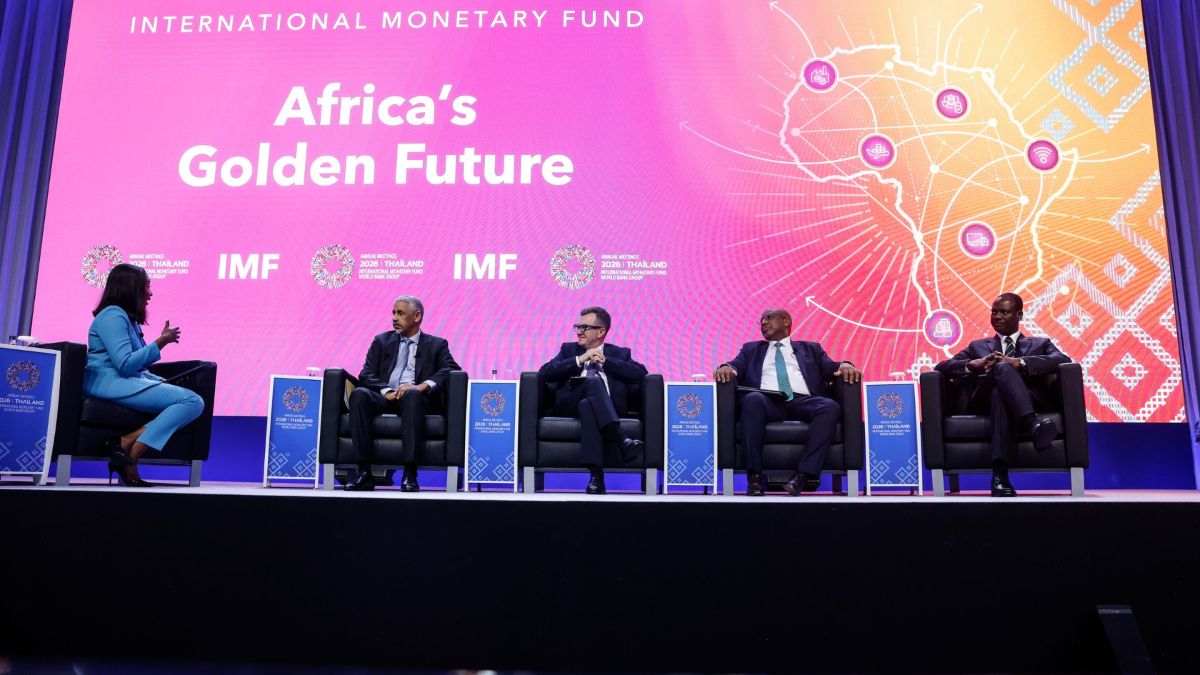
As policymakers gather for the 2026 IMF–World Bank Annual Meetings in Bangkok, Thailand, the economic trajectory of the African continent remains a focal point of global significance.
Against a backdrop of complex international pressures—including the spill-overs from conflict in the Middle East, tightening global financial conditions, and the looming threat of severe El Niño weather patterns—African economies continue to demonstrate remarkable endurance.
During a high-level dialogue in Bangkok, Mr. Seedy Keita, Chair of the African Caucus and Minister of Finance and Economic Affairs of The Gambia, alongside IMF Managing Director Kristalina Georgieva, underscored a shared commitment to reinforcing macroeconomic stability while aggressively pursuing structural transformation.
Economic Outlook: Resilience Amid Elevated Pressures
The latest joint assessments indicate that Africa’s overall economic growth is projected to hold steady at 4.5 percent this year. Meanwhile, inflation is on a downward trend, expected to ease to 9.3 percent, though it remains at an elevated level that continues to impact households and businesses.
A divergence in economic performance is visible across the continent:
- Resource-Rich Economies: These nations are finding support through favourable terms-of-trade gains, helping buffer against external shocks.
- Non-Resource-Rich Economies: Expansionary fiscal policies are being deployed to cushion the blow of rising external pressures.
Despite external buffers remaining protected on average, structural vulnerabilities persist. Several economies face elevated debt burdens, with debt-service costs consuming scarce public resources that would otherwise fund critical infrastructure. Concurrently, declining external assistance and costly market financing are further squeezing development spending.
Pillars of Transformation: Stability, Domestic Mobilization, and Reform
To counteract these pressures and unlock the continent’s immense potential, the African Caucus and the IMF have emphasized several critical policy imperatives:
1. Safeguarding Macroeconomic Stability
In an increasingly shock-prone global environment, maintaining macroeconomic stability is non-negotiable for sustained and inclusive growth. Rising energy prices have increased operational costs for local businesses and strained family budgets. Policymakers stressed the immediate necessity of containing inflation, enforcing strict fiscal and debt sustainability, reinforcing institutional policy frameworks, and enhancing governance and transparency.
2. Mobilizing Domestic Resources
Africa’s vast resources must deliver greater, tangible benefits for its people. This requires modern, efficient, and equitable tax systems designed to broaden the revenue base and improve tax compliance.
By securing more durable revenue streams and spending smarter, governments can protect vulnerable populations, meet urgent developmental milestones, and finance critical climate-resilient investments. However, this domestic push must be complemented by continued international support through affordable financing and technical expertise.
3. Unlocking Job-Rich Growth and Regional Integration
Sound policies and robust institutions are the bedrock of structural transformation. Achieving job-rich growth demands a more attractive investment climate, deeper development of financial markets, and accelerated regional integration. A cornerstone of this strategy is the full implementation of the African Continental Free Trade Area (AfCFTA), which promises to build larger domestic markets, strengthen regional value chains, and elevate Africa’s overall global competitiveness.
Strengthening the Partnership
Reaffirming its steadfast dedication to the continent, the IMF pledged to continue providing tailored policy advice, capacity development, and targeted financing to help African nations rebuild policy buffers and protect vulnerable communities.
Furthermore, the African Caucus welcomed the enhanced voice provided by the third sub-Saharan Africa chair on the IMF Executive Board. Both leadership teams called for the ongoing deepening of this strategic partnership, emphasizing the necessity of sustained progress toward greater representation for African nations within the IMF.
As Africa’s entrepreneurial energy continues to capture global attention, the collaborative resolve forged in Bangkok signals a proactive roadmap to position the continent as a primary engine of future global economic growth.