 By
By DURBAN — South Africa’s mineral and petroleum sectors, long considered the foundational pillars of the nation’s industrial economy, stand at a critical inflection point. While decades of resource extraction have driven significant economic output, foreign direct investment, and employment creation, systemic barriers—most notably capital constraints and acute information asymmetry—continue to restrict women and emerging entrepreneurs from fully integrating into the primary resource value chain.

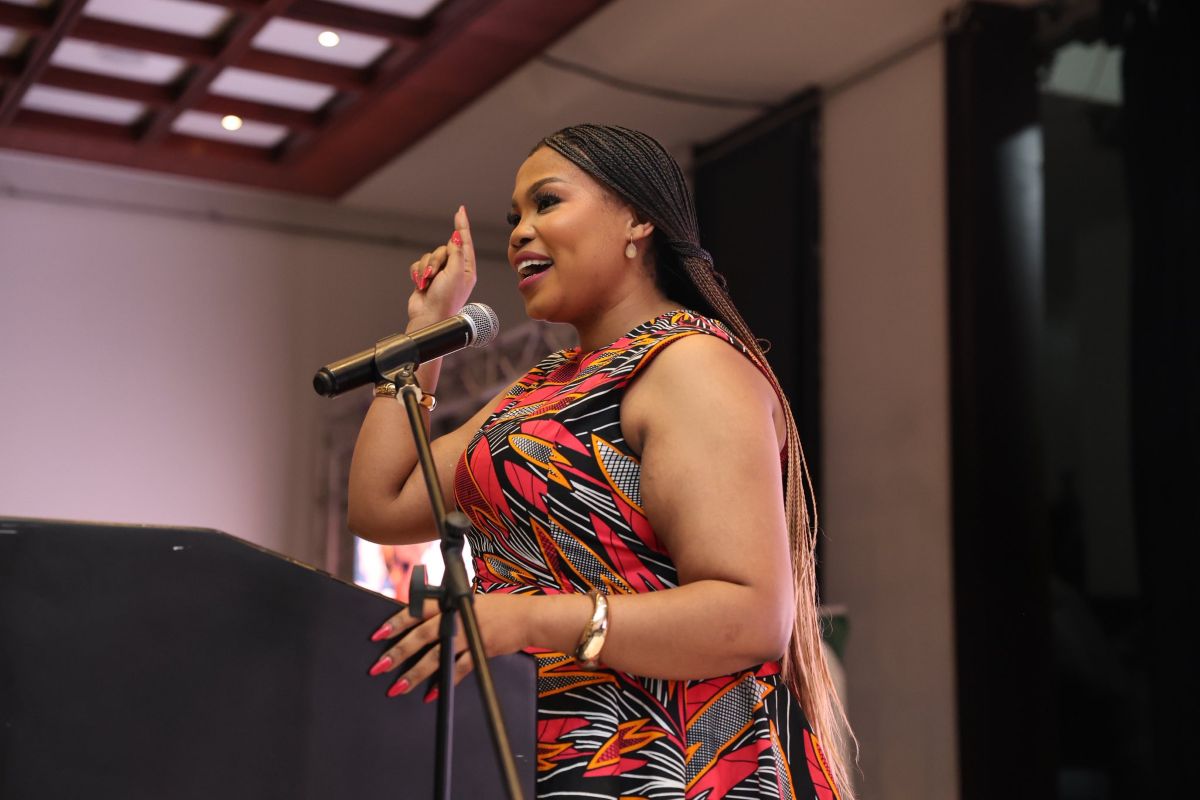
Addressing delegates at the Women in Mining and Petroleum Conference at the Southern Sun Elangeni-Maharani in Durban on September 7, 2026, Deputy Minister of Mineral and Petroleum Resources, Ms. Phumzile Mgcina, outlined the government’s strategic blueprint to dismantle these structural obstacles.
Central to the state’s strategy is a dual approach combining legislative modernization with targeted financial interventions designed to de-risk high-barrier segments such as mineral exploration and small-scale operations.
Overcoming Structural Exclusion and Information Barriers
While the South African mining sector has operated for over a century, the historic exclusion of black South Africans and women from core ownership and executive roles remains a persistent economic challenge.
Government intervention under the Minerals and Petroleum Resources Development Act (MPRDA) of 2002 established state custodianship over mineral wealth, asserting that all South Africans hold an equitable stake in resource exploitation.
Today, progress is measurable: over 78,000 women are actively employed across the mining sector, with thousands more operating within the petroleum industry. Crucially, female leadership has expanded beyond mid-level managerial roles into the executive suites of multinational resource corporations.
However, Deputy Minister Mgcina emphasized that professional competence—not tokenism—has driven these advances, while cautioning that access to actionable policy, licensing, and financial information remains a major barrier for new entrants.
“Getting the right information to the right people requires deliberate and sustained intervention… Information exists, but the challenge is that it is not always easily accessible, understandable, or effectively reaching those who need it most.” — Phumzile Mgcina, Deputy Minister of Mineral and Petroleum Resources
To bridge this gap, the Department of Mineral and Petroleum Resources (DMPR) is pairing national education campaigns on regulatory compliance with direct state capital allocation.
Financing the Frontier: ASSM and the Junior Exploration Fund
To convert policy frameworks into commercial equity, the state has deployed capital across two critical industry segments: Artisanal and Small-Scale Mining (ASSM) and early-stage mineral exploration.
Key State & Institutional Capital Commitments:
- ASSM Fund Direct Grants: R59.7 Million disbursed in 2025/26 across 20 projects for equipment, working capital, and rehabilitation guarantees, with R31.12 Million ring-fenced for 2026/27.
- Junior Miners Exploration Fund (JMEF): R400 Million co-established with the Industrial Development Corporation (IDC) to support 15 active exploration projects.
- Private Sector & Institutional Co-Investment: R600 Million pledged by Anglo American and an additional R1.35 Billion committed by the Public Investment Corporation (PIC) to establish a downstream Continuation Fund.
The Artisanal and Small-Scale Mining Policy, promulgated in 2022, serves as the statutory foundation for formalizing informal mining activities. To ensure long-term regulatory sustainability, legislative amendments introduced via the Mineral Resources Development Amendment Bill aim to remove administrative hurdles that have historically stifled small-scale development.
Capital Flow Summary
| Strategic Initiative | Institutional Partners | Capital Allocation | Primary Target |
| Artisanal & Small-Scale Mining Fund | DMPR | R59.7M (2025/26) + R31.12M (2026/27) | Equipment, capital & rehabilitation guarantees |
| Junior Miners Exploration Fund (JMEF) | DMPR & IDC | R400 Million (15 projects) | Early-stage greenfield exploration |
| JMEF Private Sector Expansion | Anglo American | R600 Million Pledge | Exploration fund capacity expansion |
| JMEF Continuation Fund | Public Investment Corp (PIC) | R1.35 Billion Commitment | Transitioning exploration to active development |
Reigniting Mineral Exploration via Public-Private Synergies
A critical structural issue facing South Africa’s mining sector has been a prolonged decline in its share of global exploration expenditure. To counter this trend and foster greenfield project development, the DMPR, in partnership with the Industrial Development Corporation (IDC), launched the Junior Miners Exploration Fund (JMEF).
The JMEF currently supports 15 exploration projects nationwide, backed by R400 million in seed allocation. The program’s ability to crowd in institutional and private capital has yielded significant commitments: Anglo American’s R600 million pledge and the PIC’s R1.35 billion Continuation Fund ensure a continuous capital pipeline from initial discovery to mine development.
A Call for Accountable Partnerships
Deputy Minister Mgcina concluded her address by urging social partners—including state-owned entities, municipal authorities, and corporate mining houses—to convert policy dialogues into binding operational commitments with defined timelines and measurable targets.
As South Africa seeks to expand its mining and energy sectors amid evolving global demand for strategic minerals, integrating women across the full economic value chain—from early exploration to executive boardrooms—remains essential for sustainable macroeconomic growth.