 By
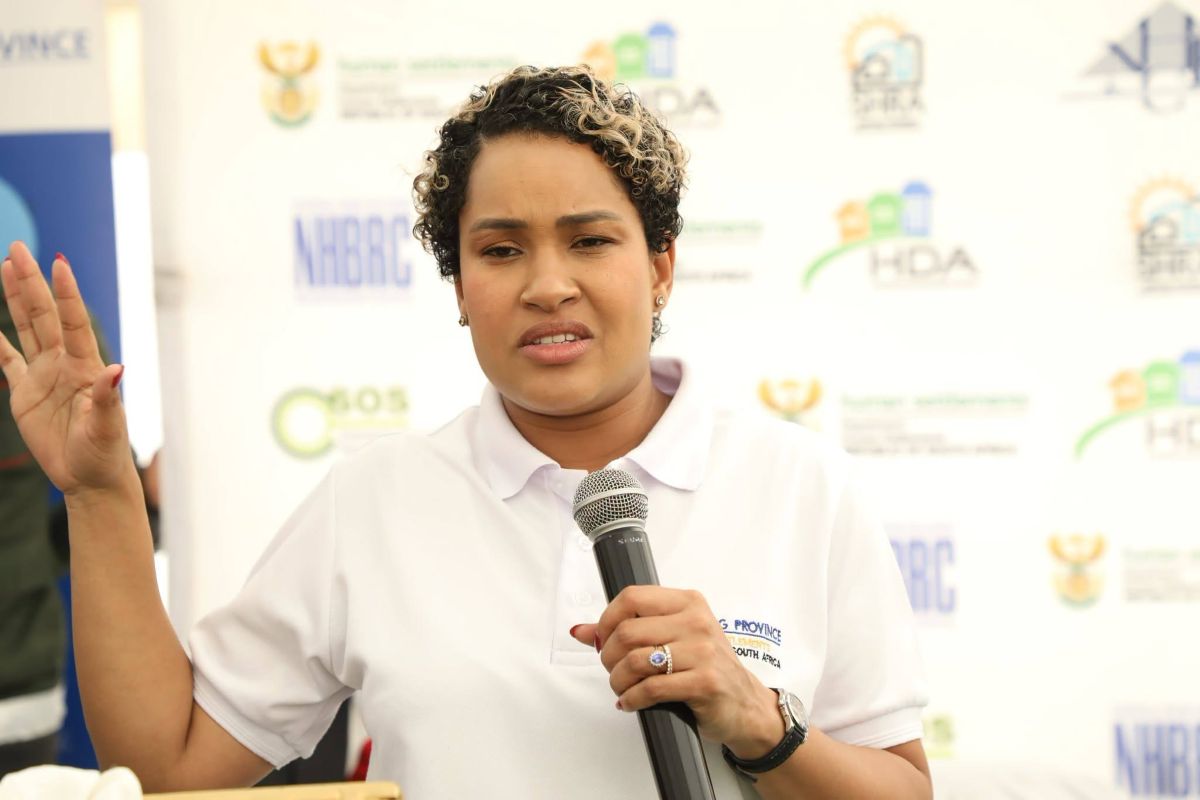
By In the high-stakes arena of provincial governance, housing delivery in Gauteng remains both a vital socio-economic imperative and a political litmus test. On Friday, 4 September 2026, Human Settlements MEC Tasneem Motara presented the Gauteng Department of Human Settlements (GDHS) 2025/26 Annual Report to the Provincial Legislature.

The report presents a compelling study in contrasts: a department exceeding its primary delivery targets and maintaining stringent financial hygiene, yet openly constrained by systemic operational bottlenecks that kept its overall target achievement at 69%.
At first glance, the numerical victories are undeniable. Against an annual target of 7,503 housing units, the department built and completed 7,976 homes—surpassing its headline goal by 473 units. More crucially, the allocation of completed homes to approved beneficiaries reached 5,445, significantly outstripping the planned 4,000 allocations.
For thousands of working-class families who have spent years navigating the province’s infamous housing backlog, these figures represent tangible relief.
Key Delivery Dashboard (2025/26 Financial Year)
- Completed Housing Units: 7,976 delivered vs 7,503 target (+473 / Exceeded)
- Allocated Completed Homes: 5,445 allocated vs 4,000 target (+1,445 / Exceeded)
- Strategic Land Acquired: 279.95 hectares vs 200 hectares target (+79.95 ha / Exceeded)
- Serviced Sites Completed: 139 sites vs 31 planned (+108 / Exceeded)
- First Home Finance Subsidies: 64 subsidies vs 30 target (+34 / Exceeded)
- Priority Development Areas Investment: 38.39% of allocation vs 33.0% target (Exceeded)
- Financial Execution: R5.824 Billion spent out of R6.006 Billion final budget (97% spent)
- Audit Outcome: Unqualified Clean Audit Opinion (4th Consecutive Year)
Spatial Transformation and Strategic Land Acquisition
A central pillar of the department’s strategy has been shifting away from the apartheid-era paradigm of peripheral urban sprawl—relegating low-income citizens to the distant fringes of economic hubs. Instead, the department acquired 279.95 hectares of strategically located land, comfortably clearing its 200-hectare target.
Furthermore, 38.39% of the department’s total Human Settlements budget allocation was directly funnelled into Priority Development Areas (PDAs), topping the 33% target threshold.
By integrating these land acquisitions with the province’s ongoing “Mega Projects,” the department aims to weave social housing into the economic fabric of Gauteng. This spatial restructuring is designed to ensure that new housing developments are tied to public transport corridors, bulk infrastructure, and industrial zones, reducing daily commuting costs for residents and facilitating genuine urban integration.
Fiscal Discipline Amidst Operational Friction
In an era where public procurement and infrastructure spending in South Africa are frequently scrutinized, the GDHS demonstrated robust financial controls. The department recorded its fourth consecutive clean, unqualified audit opinion from the Auditor-General. From a total final budget allocation of R6.006 billion, the department expended R5.824 billion, translating to an impressive 97% financial execution rate.
“We exceeded our housing delivery target, we allocated more completed homes than we planned, and we kept our finances clean for a fourth year running. But an overall performance of 69% tells us there is still considerable room for improvement, and we say so openly.” — Tasneem Motara, Gauteng MEC for Human Settlements
However, as political analysts know, fiscal efficiency does not automatically translate into total operational success. Despite strong headlines in direct brick-and-mortar delivery, the department met only 69% of its 32 Annual Performance Plan (APP) indicators.
This gap underlines a lingering structural vulnerability: while physical construction is over-performing, regulatory, intergovernmental, and administrative mechanisms continue to lag behind.
The Administrative Stumbling Blocks
The department was uncharacteristically candid about its shortcomings. Chief among the problem areas are delayed title deed registrations, hostel redevelopment, and the Rapid Land Release Programme.
Title deed issuance remains a thorny political issue across South Africa. A house without a title deed leaves a beneficiary in a state of asset-poverty, unable to leverage their property for credit or pass down legal wealth to future generations. The department acknowledged that red tape between provincial authorities, local municipalities, and the national Deeds Office has choked the transfer process.
To resolve this, intergovernmental tasking mechanisms are being strengthened to streamline municipal township establishment approvals and legal registration.
Similarly, the Rapid Land Release Programme—intended to provide serviced sites to qualifying individuals to build their own homes—struggled under past operational frameworks. The department confirmed that the programme is currently being relaunched with revised guidelines based on tough lessons learned over the preceding 12 months.
Outlook for the 2026/27 Financial Pipeline
Looking ahead, the department’s primary strategy for the current financial year is focused on converting an extensive structural pipeline into habitable dwellings. The 2025/26 cycle left behind significant work-in-progress assets, including 1,961 complete foundations, 1,596 wall plates, and 1,565 installed roofs.
As MEC Motara noted in her closing remarks to the legislature, behind every unfulfilled housing application is a family waiting for dignity and security. Whether the department can build on its physical delivery momentum while overcoming its administrative and municipal bottlenecks will determine whether Gauteng can truly transform its urban landscape or remain trapped in bureaucratic inertia.