 By
By 
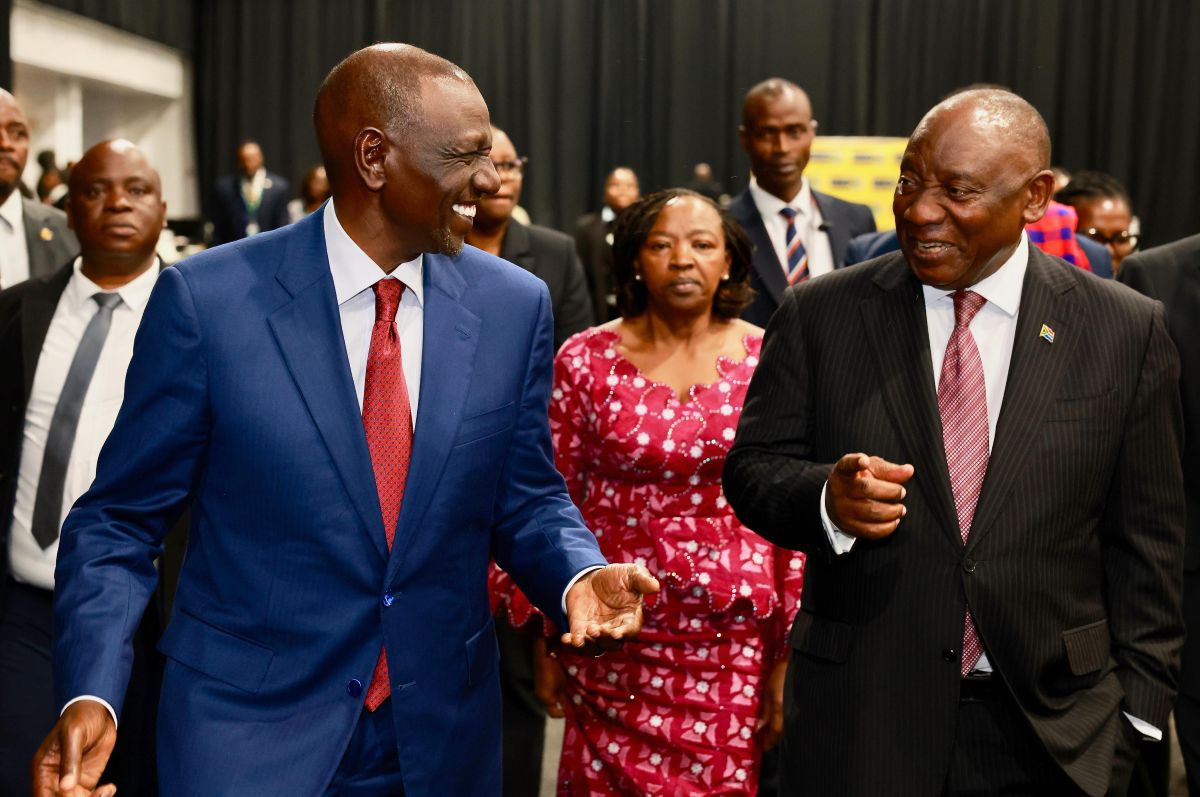
JOHANNESBURG — In a major push for continental economic integration, the Kenya-South Africa Business Forum convened yesterday at the Gallagher Convention Centre, signalling a decisive shift from transactional trade to deep industrial co-building.
Addressing the forum during the state visit of Kenyan President Dr. William Ruto, the address underscored a growing bilateral synergy that looks to bypass traditional protectionism in favor of integrated regional value chains.
The Hard Numbers: Balancing Trade and Investment
While global markets remain volatile, the economic corridor between East and Southern Africa’s powerhouses shows steady resilience. Since 2022, total trade between South Africa and Kenya has expanded by an average of 3.5% annually. Notably, Kenya maintains its status as one of South Africa’s largest trading partners outside the Southern African Development Community (SADC) bloc.
However, the real story lies in the asymmetric but substantial foreign direct investment (FDI) flows:
- South African Footprint: South African entities anchor 96 investment projects in Kenya, valued at just over $2 billion.
- Kenyan Expansion: Kenyan enterprises have established 11 strategic projects in South Africa, totaling $283 million.
This corporate backing is heavily reinforced by public capital. South Africa’s development finance institutions (DFIs) have increasingly assumed the role of infrastructure underwriters in East Africa. A prime example is the Development Bank of Southern Africa’s (DBSA) funding of the 350-kilometer pipeline replacing the Mombasa-to-Nairobi petroleum and crude oil line.
Industrializing the Value Chain
From an economic perspective, the forum highlighted a critical evolution: both nations are moving past the baseline economics of “what we can sell to each other” toward a model of shared manufacturing capabilities. Panelists targeted high-multiplier sectors—including automotive, pharmaceuticals, mining, and construction—as the primary vehicles for structural reform and diversification.
For South Africa, the policy directive remains clear: outbound investment must be paired with technology and skills transfer to ensure localized capacity and sustainable employment. Similarly, addressing systemic agricultural supply shocks is high on the agenda. Agricultural ministries are currently reviewing joint private-sector proposals to deploy climate-smart production technologies and enhance livestock management to combat foot-and-mouth disease.
Removing Friction: Infrastructure, ICT, and the AfCFTA
Recognizing that macroeconomic ambitions fail without regulatory predictability, the two governments are actively targeting non-tariff barriers and logistics bottlenecks.
To streamline cross-border operations, institutions have executed Memoranda of Understanding (MoUs) covering Standards, Quality, Metrology, and Accreditation. These frameworks are designed to give the private sector the stability required for long-term capital expenditure.
Key Areas of Bilateral Economic Integration:
├── Regulatory: MoUs on Standards, Quality, & Metrology
├── Logistics: Port prioritization & Customs harmonization via AfCFTA
└── Digital: Upgraded ICT agreements covering AI & Digital Trade
On the physical infrastructure front, DFIs are currently appraising funding for the Kenya Roads Board Securitisation Programme to boost transport logistics. Concurrently, efforts are underway to prioritize trade corridors, optimize port efficiencies, and harmonise customs procedures to align with the African Continental Free Trade Area (AfCFTA) framework.
Critically, the digital economy is receiving a structural upgrade. Officials are updating bilateral ICT agreements to account for algorithmic innovation, digital trade, and artificial intelligence (AI). This digital and physical integration aims to lower transaction costs, ensuring domestic products remain competitive against third-party global imports.
From Dialogue to Action: The ‘Pamoja’ Mandate
The establishment of a dedicated South Africa–Kenya Business Council is expected to formalize this economic alliance, giving corporate interests a unified advocacy channel.
As both economies navigate structural reforms, the days of passive dialogue are being replaced by an explicit mandate for rapid implementation. The strategic objective is no longer confined to isolated economic nationalism—encapsulated by “Made in Kenya” or “Proudly South African”. The future relies on Pamoja (Together)—integrating supply chains to build a highly competitive, integrated continental market.
How would you like to angle the follow-up analysis? We can dive deeper into the DFI infrastructure funding mechanisms, or evaluate the specific AfCFTA regulatory hurdles these MoUs aim to solve.