
 By
By 
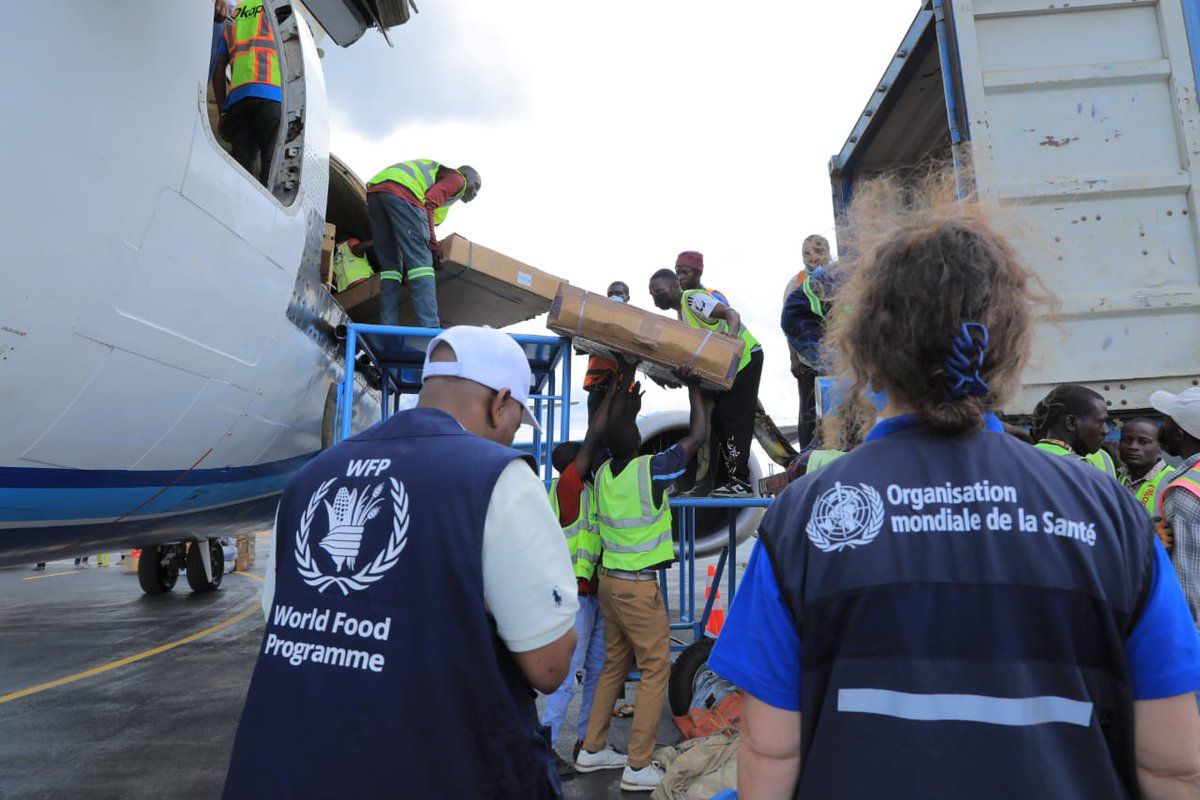
The World Health Organisation (WHO) has declared the Ebola outbreak in the Democratic Republic of Congo (DRC) and Uganda a public health emergency of international concern (PHEIC), and has commended the two African states for their swift response to the outbreak.
According to WHO, since the outbreak of Ebola of the Bundibugyo virus strain on 16 May 2026, 246 suspected cases have been confirmed and 80 suspected deaths have also been comfort. Though WHO says the outbreak does not meet the pandemic criteria as outlined in the International Health Regulation (IHR) 2005, the outbreak is a cause for concern as it has the potential to disrupt global economic activity.
The President of South Africa H.E Cyril Ramaphosa in his capacity as African Union Champion on Pandemic Prevention, Preparedness and Response, commended the DRC and Uganda for their effective and quick response to the outbreak; he has also affirmed solidarity with the affected countries and has called on African Union member states and international partners to land a hand in fighting the Ebola outbreak.
“We stand in solidarity with the Governments and peoples of the Democratic Republic of the Congo and Uganda, particularly affected communities and frontline health workers. I also commend neighbouring countries that have moved rapidly to strengthen preparedness, cross-border surveillance and emergency coordination.
I further commend the Africa Centres for Disease Control and Prevention, under the leadership of the Director General, Dr Jean Kaseya, working together with the World Health Organisation, for its rapid support to affected countries, regional coordination efforts and mobilisation of partners around a unified continental response, building on the successful continental incident management model deployed during the mpox response.
I also welcome the efforts of national authorities, Africa CDC, the World Health Organisation and partners to strengthen surveillance, laboratory systems, contact tracing, infection prevention and control, risk communication, case management and access to appropriate medical countermeasures,” said Ramaphosa.
“Ebola does not respect borders. In a region marked by high population mobility, insecurity and humanitarian movement, the risk of regional spread is significant and demands urgent, coordinated action. I therefore urge affected and at-risk countries to intensify cross-border collaboration, strengthen surveillance at formal and informal points of entry, and ensure rapid information sharing, particularly in areas affected by insecurity and population displacement.
As the chair of the Global Leaders Network for Women’s, Children’s and Adolescents’ Health, I make a special plea to ensure that women, children and adolescents’ are not left behind and that routine services do not backslide as we handle this crisis,” he continued.
WHO says the event taking place in the Democratic Republic of Congo and Uganda is extraordinary based on the following reasons.
- As of 16 May 2026, eight laboratory-confirmed cases, 246 suspected cases and 80 suspected deaths have been reported in Ituri Province of the Democratic Republic of the Congo across at least three health zones, including Bunia, Rwampara and Mongbwalu. In addition, two laboratory confirmed cases (including one death) with no apparent link to each other have been reported in Kampala, Uganda, within 24 hours of each other, on 15 and 16 May 2026, among two individuals travelling from the Democratic Republic of the Congo. A further case reported on 16 May, an individual returning from Ituri to Kinshasa, has tested negative for Bundibugyo virus on confirmatory testing by INRB, and is therefore not considered a confirmed case.
- Unusual clusters of community deaths with symptoms compatible with Bundibugyo virus disease (BVD) have been reported across several health zones in Ituri, and suspected cases have been reported across Ituri and North Kivu. In addition, at least four deaths among healthcare workers in a clinical context suggestive of viral haemorrhagic fever have been reported from the affected area raising concerns regarding healthcare-associated transmission, gaps in infection prevention and control measures, and the potential for amplification within health facilities.
- There are significant uncertainties to the true number of infected persons and geographic spread associated with this event at the present time. In addition, there is limited understanding of the epidemiological links with known or suspected cases.
- However, the high positivity rate of the initial samples collected (with eight positives among 13 samples collected in various areas), the confirmation of cases in both Kampala and Kinshasa, the increasing trends in syndromic reporting of suspected cases and clusters of deaths across the province of Ituri all point towards a potentially much larger outbreak than what is currently being detected and reported, with significant local and regional risk of spread. Moreover, the ongoing insecurity, humanitarian crisis, high population mobility, the urban or semi-urban nature of the current hotspot and the large network of informal healthcare facilities further compound the risk of spread, as was witnessed during the large Ebola virus disease epidemic in North Kivu and Ituri provinces in 2018-19. However, unlike for Ebola-zaire strains, there are currently no approved Bundibugyo virus-specific therapeutics or vaccines. As such, this event is considered extraordinary.