
 By
By JOHANNESBURG — South Africa’s economic narrative has long been defined by a stark geographical paradox: vibrant metropolitan commercial hubs driving national output on one hand, and historically marginalized townships and rural areas struggling on the periphery on the other.

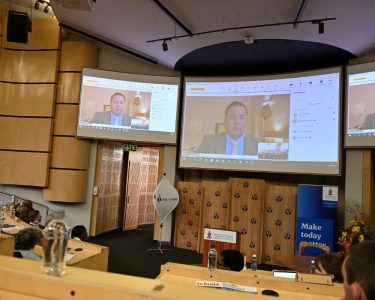
Addressing this enduring spatial imbalance, Deputy Minister of Trade, Industry and Competition, Mr. Zuko Godlimpi, officially launched the landmark 2026 Rural and Township Economy Report on Thursday, 3 September, in Johannesburg. The comprehensive report serves as a pivotal strategic document aimed at accelerating South Africa’s spatial transformation, fostering structural economic reform, and expanding meaningful economic inclusion.
The Reality of Peripheral Economies: Structural and Market Barriers
Speaking at the launch, Deputy Minister Godlimpi emphasized that marginalized businesses and consumers in rural communities and townships continue to bear the brunt of entrenched market inefficiencies.
Informal enterprises face acute procurement hurdles, including inflated wholesale prices and restricted access to formal distribution networks. These structural bottlenecks spill over to residents, who frequently experience higher effective costs for basic goods alongside reduced product variety and compromised quality.
“High rental costs, exclusivity arrangements, and preferences for national brands exclude them from retail. Weak compliance and infrastructure hinder their participation in e-commerce. Regulatory barriers, such as permits and tax compliance, also inhibit formalisation,” Godlimpi noted, outlining the complex web of friction points stalling grassroots commercial vitality.
The report highlights a visible shift in the rural retail landscape: the steady decline of traditional village general dealers, with remaining operations increasingly reliant on foreign national operators. Godlimpi underscored that the national government’s ultimate mandate is to build an inclusive economic framework capable of resolving structural challenges for every citizen, rather than concentrating policy focus exclusively on urban metropolitan centres.
Modernizing the Township High Street: Stock, Tech, and Supply Chains
While historical and spatial factors persist, the post-apartheid removal of restrictions on African mobility into urban centres has reshaped consumer behaviour and heightened competition for township-based enterprises. Consumers now demand convenience, reliability, and modern service standards comparable to major national retail chains.
Godlimpi identified two critical operational imperatives currently facing local rural and township business owners:
- Stock Availability & Supply Chain Dynamics: Consumers exhibit low tolerance for stockouts. If local shops fail to maintain key items, shoppers routinely migrate toward larger commercial centres, eroding local revenue.
- Point-of-Sale (POS) Technology & Digital Adoption: Modern consumers increasingly prefer seamless, card-, or app-based digital transactions over cash. Enhancing POS systems and supply chain visibility is vital to elevating customer retention and modernizing township business models.
To bridge these operational gaps, the report calls for targeted technology adoption, better supply chain integration, and private-public partnerships designed to bolster the competitiveness of local enterprises.
Industrial Policy Meets Competition Policy: A Dual Imperative
A central theme of the Deputy Minister’s address was the imperative to align active industrial policy with robust competition law.
“The task before us is therefore not simply to grow the economy. We must transform the economy while growing it,” Godlimpi asserted. “We must expand productive capacity while broadening participation. We must create an economy that is globally competitive while ensuring that the benefits of growth are more widely shared.”
Market forces alone, Godlimpi argued, are insufficient to automatically build the long-term productive capabilities required in historically underfunded geographic regions. Consequently, state intervention through industrial policy must work hand-in-hand with market regulation:
- Industrial Policy should focus on building productive firm capabilities, offering targeted incentives, and supporting local supply chain infrastructure.
- Competition Policy must aggressively dismantle market entry barriers, preventing dominant firms from leveraging market power to foreclose emerging township or rural entrants.
- Transformation Policy must expand ownership while ensuring that structural market constraints do not undermine Newly Transformed Businesses.
Looking Ahead: Transforming the Base of the Economy
The release of the 2026 Rural and Township Economy Report signals a shift from treating township commerce as an informal survivalist sector to recognizing it as a key pillar of national industrial strategy. By synchronizing regulatory relief, technological adoption, and proactive competition oversight, the government aims to dismantle the historical spatial economic divide and unlock sustained, inclusive growth across South Africa.