
 By
By Township and rural enterprises in South Africa are operating at a fundamental competitive disadvantage compared to national chains, locked out of efficient procurement networks and burdened by inflated input costs.

A landmark report by the Competition Commission reveals that structural differences in how local businesses source their goods are directly undermining their ability to compete on price, range, and stock reliability. Rather than a lack of entrepreneurial drive, the primary bottleneck facing small, independent, and informal traders stems from unequal supply chain architecture that systematically favours larger corporate entities.
The Sourcing Divide: Corporate Scale vs. Fragmented Channels
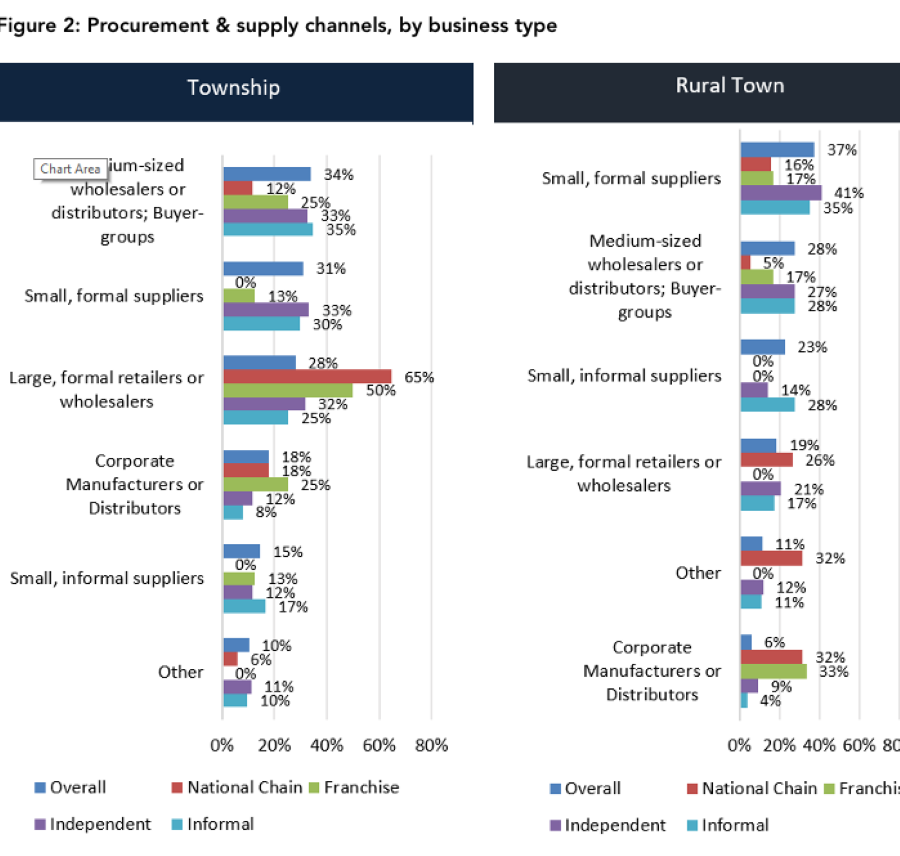
The Commission’s findings highlight a sharp divide in procurement models between national chains or franchises and independent local businesses. National retail chains operating within township markets draw approximately 65% of their inventory through large formal retailers, direct corporate distribution arrangements, or massive wholesalers. This scale provides them with immense bargaining power, secure supply lines, and bulk pricing discounts.
In stark contrast, independent and informal township businesses rely far more heavily on smaller formal suppliers, medium-sized wholesalers, and intermediary channels. In rural towns, the disparity is even more pronounced: independent businesses rely most on small formal suppliers for up to 41% of their inventory.
Because these smaller or fragmented distribution channels lack economies of scale, independent traders pay significantly higher unit prices for the exact same inventory, effectively squeezing their margins before goods even reach the shelf.
Cross-Sector Bottlenecks and High Costs
The report demonstrates that procurement barriers are not isolated to general spaza shops or retail, but span a wide array of economic sectors. Difficulties were recorded across agriculture, automotive, construction, manufacturing, hospitality and food services, health services, ICT, and hair and beauty.
Across every single sector evaluated, the most prevalent hurdle was higher input and inventory costs driven by small order sizes and weak negotiating leverage. Furthermore, localized stock shortages and a dearth of nearby suppliers severely impact critical sectors such as agriculture and hospitality, forcing small operators to absorb additional transport costs or suffer from inconsistent stock levels.
Economic Implications for Local Growth
The implications for South Africa’s township and rural economic revitalisation are profound. As long as independent and informal businesses face elevated procurement costs, they remain unable to offer competitive pricing or maintain consistent product ranges. This dynamics shifts consumer spend away from local entrepreneurs and back toward established national chains, preventing wealth creation from anchoring within local communities.
Addressing these structural procurement barriers—through bulk-buying cooperatives, modernized wholesale distribution in rural areas, and targeted supply-chain integration—will be essential if South Africa’s township and rural economies are to transition from survivalist hubs into self-sustaining engines of competitive growth.