 By
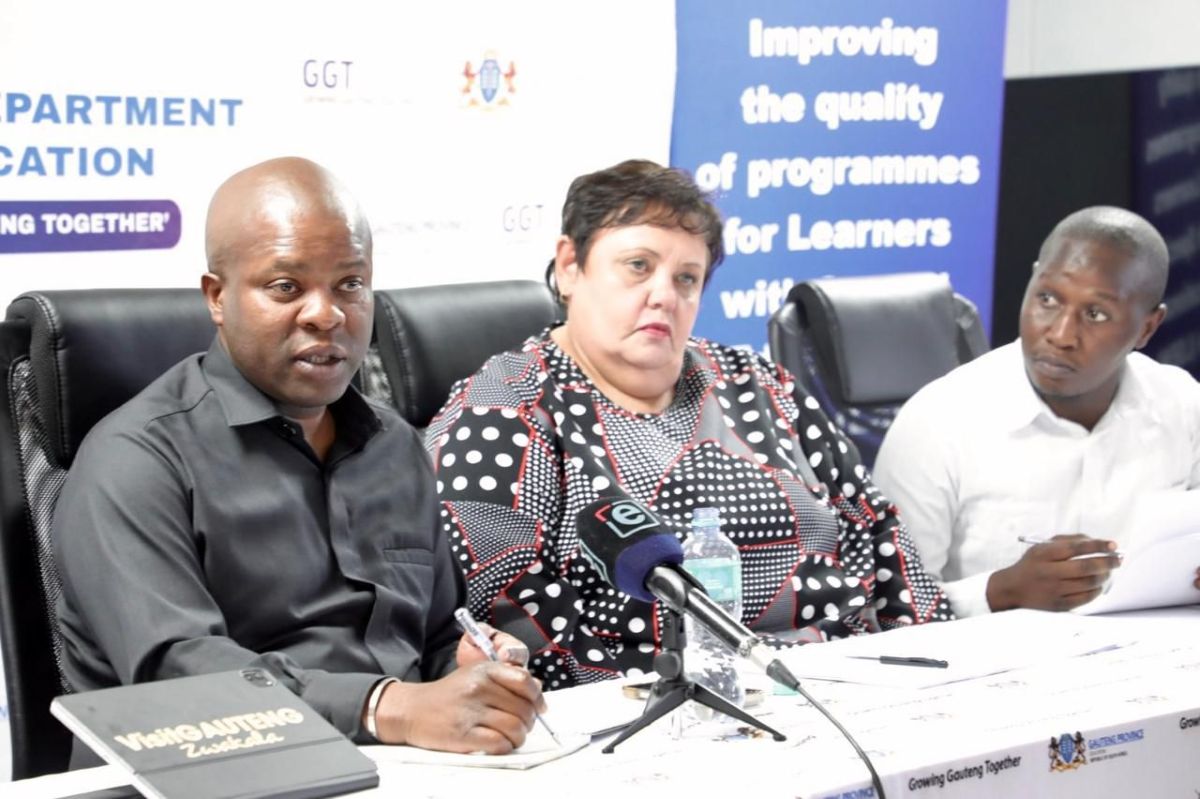
By Gauteng’s public education system is currently undertaking a massive, deliberate structural pivot to broaden support for learners with special needs. In a comprehensive progress update, Gauteng MEC for Education, Sport, Arts, Culture and Recreation, Lebogang Maile, laid out the province’s current standing, strategic wins, and remaining bottlenecks in delivering inclusive education.

Anchored in Sections 9 and 29 of the South African Constitution, Education White Paper 6, and the 2014 Screening, Identification, Assessment and Support (SIAS) policy framework, the provincial strategy operates on a core premise: disability must never be equated with inability.
The Numbers Behind the Push
Across Gauteng’s network of more than 2,200 public schools—serving a massive cohort of over 2.8 million children—more than 91,039 learners are currently benefiting from targeted inclusive education and support interventions.
- Special School Capacity: Over the past 14 years, Gauteng has expanded its dedicated Special Schools from 94 in 2012 to 131 today—a 39.4% increase that translates to roughly 14 Special Schools for every 10 that existed a decade ago. These institutions currently serve approximately 43,000 learners (1.54% of the total public school population).
- Mainstream Integration: Reflecting a push to keep children within their home communities, 9,735 learners with disabilities are integrated directly into ordinary mainstream schools.
- Early Intervention: Following routine SIAS evaluations, a further 38,304 learners across the province receive targeted learning support within the general school system.
Unpacking Learner Support Profiles
Data shared by the Department highlights that the vast majority of special education needs involve invisible or cognitive conditions. Within the Special School population, almost 85% of support requirements stem from cognitive and neurodevelopmental conditions:
- Learning and Cognitive Support: 30,065 learners (68.8%) require differentiated instruction due to severe learning difficulties, dyslexia, intellectual impairments, memory difficulties, or processing disorders.
- Neurodivergent Needs: 6,873 learners (15.7%) fall into neurodevelopmental categories, including Autism Spectrum Disorder (ASD), ADHD, Cerebral Palsy, and epilepsy.
- Profound and Physical Impairments: The balance includes 2,096 learners with profound intellectual disabilities, 1,830 with hearing impairments, 864 with visual impairments, 811 with physical disabilities, and roughly 660 requiring ongoing health-related support.
To cater to these diverse needs, services span South African Sign Language (SASL), Braille, orientation and mobility training, assistive technologies, occupational therapy, and speech therapy.
Academic Dividends and Specialist Staffing
The targeted approach is producing measurable academic gains. In the 2024 National Senior Certificate (NSC) examinations, Special School candidates achieved a 93.16% pass rate (654 passes out of 702 candidates). In 2025, that metric climbed by 2.41 percentage points to 95.57%, with 453 out of 474 candidates passing their final exams.
Behind these outcomes is a low teacher-to-learner ratio. Special Schools in the province employ 4,620 educators, 670 specialists, and 236 Learner Support Educators—averaging roughly one teacher for every 9.3 learners. Furthermore, the province has filled 44 out of 60 funded Educational Psychologist posts (a 73% fill rate) to manage psychosocial care, trauma debriefing, and formal diagnostic placements.
Decentralizing Care: Resource and Full-Service Hubs
To prevent families from having to send children far from home for specialized care, Gauteng is expanding its decentralized support networks:
- Resource Centres: 30 Special Schools currently function as Resource Centres, acting as expert hubs that deploy specialists, reading interventions, and assistive devices to surrounding mainstream schools.
- Full-Service Schools: The province currently operates 51 Full-Service Schools—mainstream schools equipped with remedial educators, physical accessibility features, and specialized training to accommodate mild-to-moderate needs.
- Planned Expansion: The Department is actively preparing 69 additional schools for full-service status, which will scale the network from 51 to 120 schools—a 135% increase designed to ensure support “follows the learner.”
Parallel to academic routes, the province is scaling up its Technical Occupational Curriculum under the Three-Stream Model. This offers practical skills in 23 distinct trades—including Motor Mechanics, Welding, Early Childhood Development, Hospitality, Office Administration, and Electrical Technology—to prepare learners for direct entry into the workforce or self-employment.
Persistent Placement Bottlenecks
Despite infrastructure growth, rapid population growth in Gauteng continues to strain capacity. Currently, 702 learners remain on the waiting list for Special School placement.
- Where They Are: Of the 702 waiting learners, 419 are attending mainstream schools, 153 are out of school (receiving home and family support via Resource Centres), 52 are in Special Care Centres, and 140 are slated for Technical Occupational placements in 2027.
- Primary Demands: Four categories account for nearly 90% of the placement queue: Autism Spectrum Disorder (213 learners / 30.3%), severe intellectual disabilities (164 learners / 23.4%), mild-to-moderate intellectual disabilities (140 learners / 19.9%), and specific learning disabilities (112 learners / 16%).
Departmental officials note that resolving placement queues involves more than empty seats; it requires a complex mix of specialized teaching capacity, dedicated transport, hostel availability, therapeutic personnel, and geographic proximity.
Community Outreach and Systemic Reach
Beyond standard schooling, Gauteng supports 64 Special Care Centres serving 1,293 learners with severe disabilities, utilizing 565 caregivers (200 of whom have undergone formal training). To foster broader social inclusion, over the past six years, 18,621 hearing Grade 5 learners have participated in basic South African Sign Language and Deaf culture orientation programmes. Additionally, 3,532 mainstream teachers have received specialized training covering autism, ADHD, behavioural support, and differentiated reading instruction.
MEC Maile emphasized that while key metrics reflect solid progress, the ultimate measure of success lies in whether the education system can respond to every child’s unique needs. The provincial goal remains focused on eliminating systemic barriers so that a child’s disability never dictates the ceiling of their potential.