
 By
By 
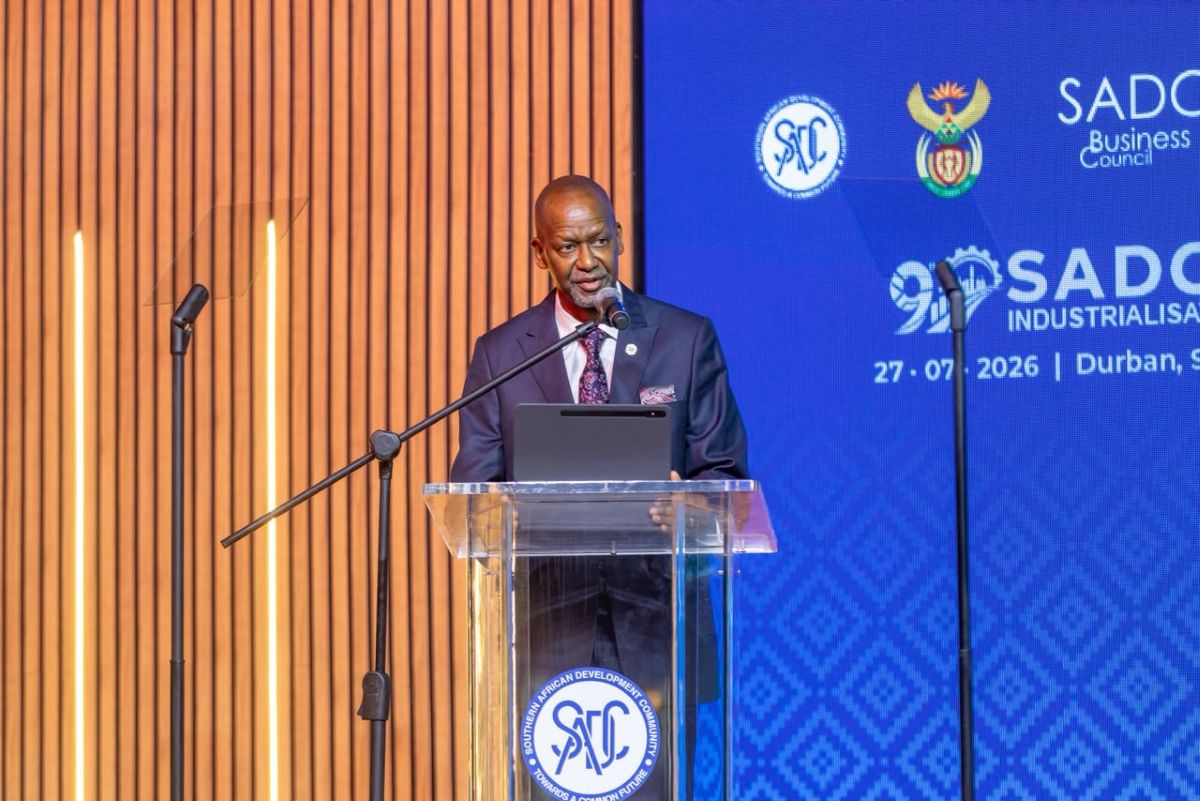
DURBAN, SOUTH AFRICA — Southern African Development Community (SADC) Executive Secretary, His Excellency Mr. Elias M. Magosi, has issued a direct challenge to regional leaders, policymakers, and private sector captains: Southern Africa must urgently shift from “aspiration and rhetoric to action” to build resilient economies capable of delivering real prosperity.
Delivering his opening address at the 9th SADC Industrialisation Week and Exhibition in Durban, Magosi emphasized that industrial transformation, underpinned by infrastructure, agriculture, and critical minerals, is the region’s most effective pathway to economic structural transformation.
The high-level gathering was officially opened by South African President Matamela Cyril Ramaphosa, alongside key regional figures including AfCFTA Secretary-General Wamkele Mene, South Africa’s Trade, Industry and Competition Minister Parks Tau, and representatives from the SADC Business Council and UNIDO.
Navigating Global Uncertainty Through Regional Resilience
Speaking to delegates against the backdrop of a volatile global economic environment, Magosi noted that SADC member states are navigating a complex landscape defined by geopolitical instability, climate shocks, global supply chain disruptions, and rapid technological shifts.
“These developments require us to strengthen our productive capacities, deepen regional integration, accelerate industrial transformation, and build economies that are resilient, competitive, and capable of delivering—not imagined, but real prosperity for our citizens,” Magosi stated.
He reiterated that the targets outlined in the SADC Industrialisation Strategy and Roadmap 2015–2063, the Regional Indicative Strategic Development Plan (RISDP) 2020–2030, and SADC Vision 2050—which aim to transform the bloc into a peaceful, inclusive, and industrialized upper-middle-income region—will remain unfulfilled without robust investment, innovation, and strong political commitment.
Three Strategic Pillars for the Next Two Decades
The theme for this year’s summit—“Resilient, Sustainable and Inclusive Industrialization through Infrastructure Development, Agricultural and Critical Minerals Transformation in Pursuit of a Just World”—focuses on three core economic drivers that Magosi believes must shape the region’s development trajectory over the next 20 years.
1. Modern Infrastructure to Lower Trade Costs
Magosi pointed to modern cross-border infrastructure, such as the North-South Corridor, as critical to boosting industrial competitiveness. Efficient transport, modern port facilities, reliable power systems, and digital connectivity are vital for reducing production costs and enabling seamless regional trade under the African Continental Free Trade Area (AfCFTA).
2. Overcoming Agricultural Bottlenecks
Highlighting the stark gaps in Southern Africa’s agricultural performance, Magosi called for an immediate overhaul of regional farming systems. Despite vast land and water assets, productivity remains severely suppressed by rudimentary practices and poor logistics:
- Irrigation Gap: Only about 3% of agricultural land in the SADC region is irrigated, compared to the global average of roughly 20%.
- Fertilizer Deficit: Regional fertilizer application averages less than 10 kg per hectare, significantly lagging behind the continental target of 50 kg/ha and the global average of 120 kg/ha.
- Logistical Post-Harvest Losses: Nearly one-third of agricultural fresh produce never leaves the farm due to inadequate logistics. For produce that does reach markets, transport and logistics account for almost 50% of total production costs.
“This surely must change! We must change it and do it now!” Magosi urged delegates.
3. Strategic Beneficiation of Critical Minerals

Addressing Southern Africa’s mineral wealth, Magosi highlighted the region’s central role in supplying critical minerals essential for the global green energy transition, advanced manufacturing, and digital technology. However, he cautioned against relying on simple resource extraction or isolated national initiatives.
Instead, Magosi advocated for the full implementation of the SADC Regional Mining Vision, urging member states to build end-to-end regional value chains from exploration and refining to manufacturing and high-value exports.
“Our challenge is to position our mineral wealth as a catalyst for broad-based industrial development… Mr President, let us implement this noble vision and change our lives. We need permission from no one externally to do this!” Magosi declared.
Private Sector and Small Businesses at the Core
Throughout the week, deliberations will cover agro-processing, mineral beneficiation, manufacturing, infrastructure financing, and cross-border trade execution. Magosi highlighted that industrialization cannot be driven by governments alone, emphasizing the critical role of the private sector, Small and Medium Enterprises (SMEs), women, and youth in turning regional plans into commercial reality.