 By
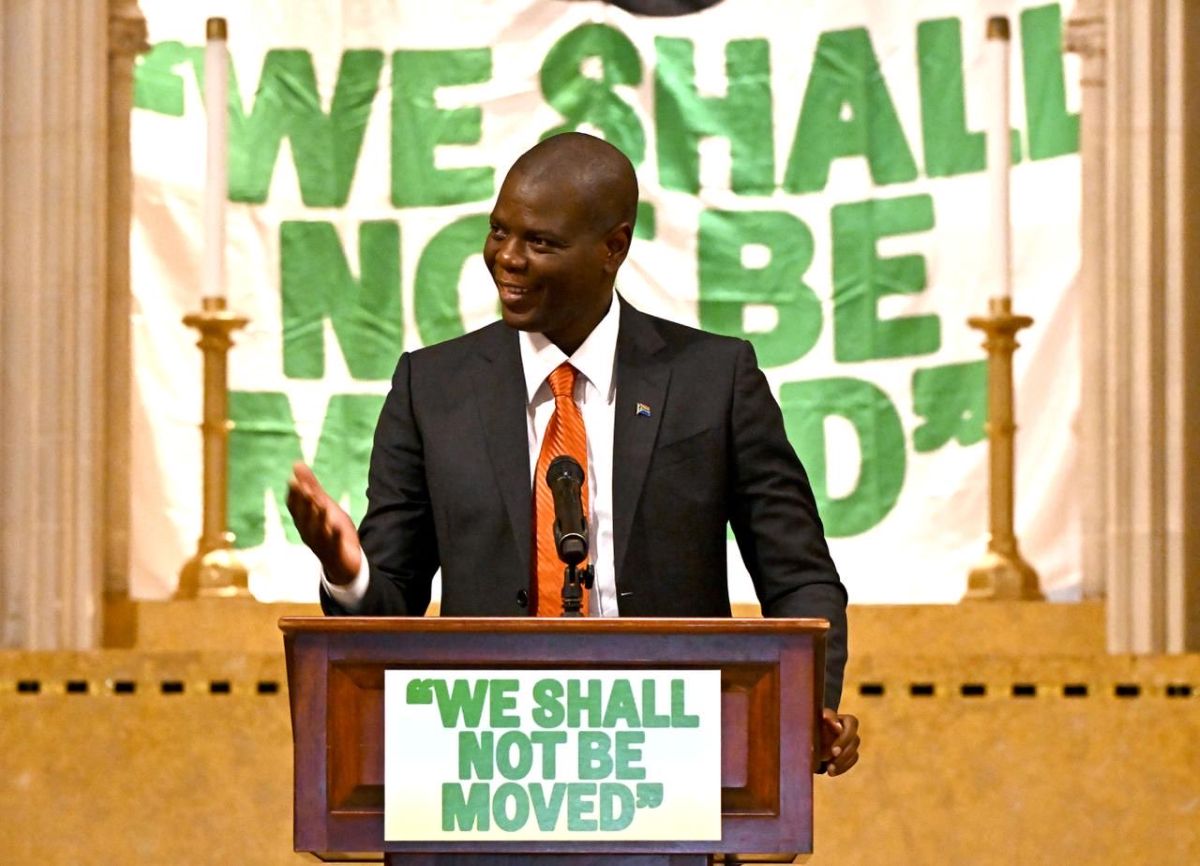
By NEW YORK — Standing inside the historic sanctuary of Riverside Church, where the echoes of the twentieth century’s greatest moral crusades still linger, South Africa’s leadership brought a searing challenge to the heart of the global establishment this week.

Addressing a packed public forum titled “We Shall Not Be Moved: A Special Event in Honour of the UN Charter,” South African representatives, joined by US Senator Bernie Sanders and international human rights advocates, framed the defence of multilateralism not as a bureaucratic exercise, but as the defining moral struggle of our era.
The venue itself carried profound political weight. It was from this very pulpit that Dr. Martin Luther King Jr. delivered his prophetic Beyond Vietnam address in 1967, and where Nelson Mandela stood months after his release from prison to thank the global anti-apartheid movement.
Invoking these ghosts of moral resistance, speakers drew a straight line from the historic struggles against racial segregation and colonial subjugation to today’s unfolding global crises—most notably the devastation in Gaza and the systemic failures of the international order.
A Scathing Indictment of Global Double Standards
At the core of the New York address was an uncompromising critique of a world order governed by the creed that “might makes right.” Pointing to the ongoing destruction in the Middle East, the delegation underscored that the international community is witnessing a live-streamed humanitarian catastrophe that threatens to render the foundational principles of the United Nations obsolete.
“For Palestinians, the age of freedom is yet to dawn,” the gathering was told, as speakers detailed the systematic dismantling of civilian infrastructure, hospitals, and basic survival necessities.
The address excoriated the global North for looking away despite digital transparency laying bare the scale of the suffering, noting the tragic reality that generations are growing up under the constant shadow of violence.
For Pretoria, the decision to drag Israel before the International Court of Justice (ICJ) under the Genocide Convention was framed as an unavoidable historical duty. Having triumphed over its own institutionalized racism through global solidarity, South Africa positioned its legal actions not as a solitary diplomatic maneuverer, but as the discharge of a collective debt to international law.
Through coalitions like the Hague Group, the country is attempting to summon the same transnational pressure that dismantled apartheid to halt impunity in the Middle East.
The Broader Crisis of Multilateralism
Beyond the Middle East, the critique levelled at Riverside Church targeted the plumbing of global governance. Speakers argued that the architecture of international relations remains fundamentally skewed—placing heavy burdens of climate vulnerability on developing nations while locking African states out of primary decision-making chambers.
With the 2030 Sustainable Development Goals slipping out of reach, and global military spending soaring to nearly 800 times the regular UN budget, the cracks in global governance are widening. From the catastrophic displacement crisis in Sudan and the grinding conflict in the eastern Democratic Republic of Congo to the protracted war in Ukraine, multilateral institutions face an unprecedented legitimacy crisis.
The Price of Defiance
Taking a principled stand against powerful geopolitical blocs has not come without domestic and international friction. South African officials acknowledged facing hard-nosed pragmatic challenges: Why expend political capital on distant conflicts? Should foreign policy not be dictated strictly by the national balance sheet and cold trade calculations?
The response from the podium was unequivocal: in the face of grave injustice, neutrality is complicity. Drawing on the historic defiance shown by residents of Sophiatown facing apartheid’s bulldozers seven decades ago, the message to global powers was clear.
As the gathering concluded with the resonant strains of the civil rights anthem We Shall Not Be Moved, the political subtext was unmistakable. As inequality deepens and populist movements threaten democratic norms worldwide, a growing coalition of nations and grassroots movements is signalling that the rules-based international order will not be abandoned without a fight.
In the shadow of Manhattan, the global South is drawing a line in the sand—insisting that international law must apply equally to all, or risk collapsing under the weight of its own hypocrisy.