 By
The strengthening of bilateral economic and diplomatic relations often hinges on physical connectivity, and few sectors demonstrate this interdependence quite as vividly as aviation and tourism.
Recently, industry leaders have turned their focus toward deepening economic ties between New Delhi and Moscow, arguing that regulatory reform in the skies could unlock unprecedented growth.
The Vision for an Open Sky
Subhash Goyal, Chairman of the Indian Chamber of Commerce Aviation and Tourism Expert Committee and Chairman of STIC Travels, has made a compelling case for the establishment of an open sky policy between India and Russia.
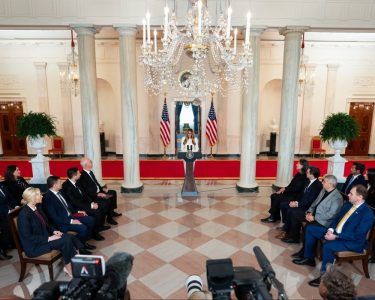
Speaking on the sidelines of the ‘Open Your Russia 2.0’ programme at the Russia House in New Delhi, Goyal emphasized that while political relations between the two nations remain robust, the tourism and economic exchange sectors possess vast, untapped potential.
According to Goyal, implementing an open sky policy—which removes restrictions on airlines’ international services and allows free market forces to determine routes, frequencies, and pricing—could trigger a 50 to 100 percent surge in both tourism and bilateral trade within a span of just two years.
The proposal was met with unanimous support, resulting in a formal resolution passed by industry stakeholders calling for immediate policy action.
Addressing the Bottleneck of Air Connectivity
Despite strong strategic alignments, logistical challenges continue to constrain travel exchanges. Anupam Vohra, Moscow MICE Ambassador, pointed out that limited air links remain a primary hurdle. Currently, only about five direct flights operate between Delhi and Moscow, while previous routes connecting Mumbai to Moscow have experienced cancellations or unavailability.
Industry experts agree that resolving these transport bottlenecks is non-negotiable for any meaningful expansion of bilateral tourism. To tackle these issues head-on, tourism stakeholders planned high-level discussions with the Director General of Tourism of the Government of India.
A key objective of these talks includes the establishment of a joint working group dedicated to streamlining tourism and resolving systemic transport challenges.
Strategic Investments and Regional Partnerships
Beyond commercial aviation, the dialogue in New Delhi underscored emerging opportunities for cross-border investment. A notable initiative gaining momentum is the Russian government’s push to encourage Indian investment within Russia’s expanding hospitality and hotel sector.
The ‘Open Your Russia 2.0’ programme—an inbound tourism development initiative implemented by the Centre for Strategic Research (CSR) with support from the Ministry of Economic Development of the Russian Federation and the Agency for Strategic Initiatives (ASI)—served as a crucial platform for these discussions.
Recognizing India as a priority international market, several Russian regions, including Tver, Sverdlovsk, Leningrad, and the Republic of Karelia, presented targeted strategies to attract a greater footprint of Indian travellers.
As both nations look to deepen their economic partnership, bridging the connectivity gap through visionary aviation policies and robust regional cooperation will be critical in transforming diplomatic goodwill into tangible commercial growth.