 By
By DURBAN — In an economy long constrained by infrastructural bottlenecks and administrative red tape, South Africa’s vast portfolio of state-owned land and real estate has frequently been cited as an untapped goldmine.
Now, a localized digital intervention in KwaZulu-Natal is offering a blueprint for how underutilised public assets might finally be leveraged to drive industrial expansion, small business development, and job creation.
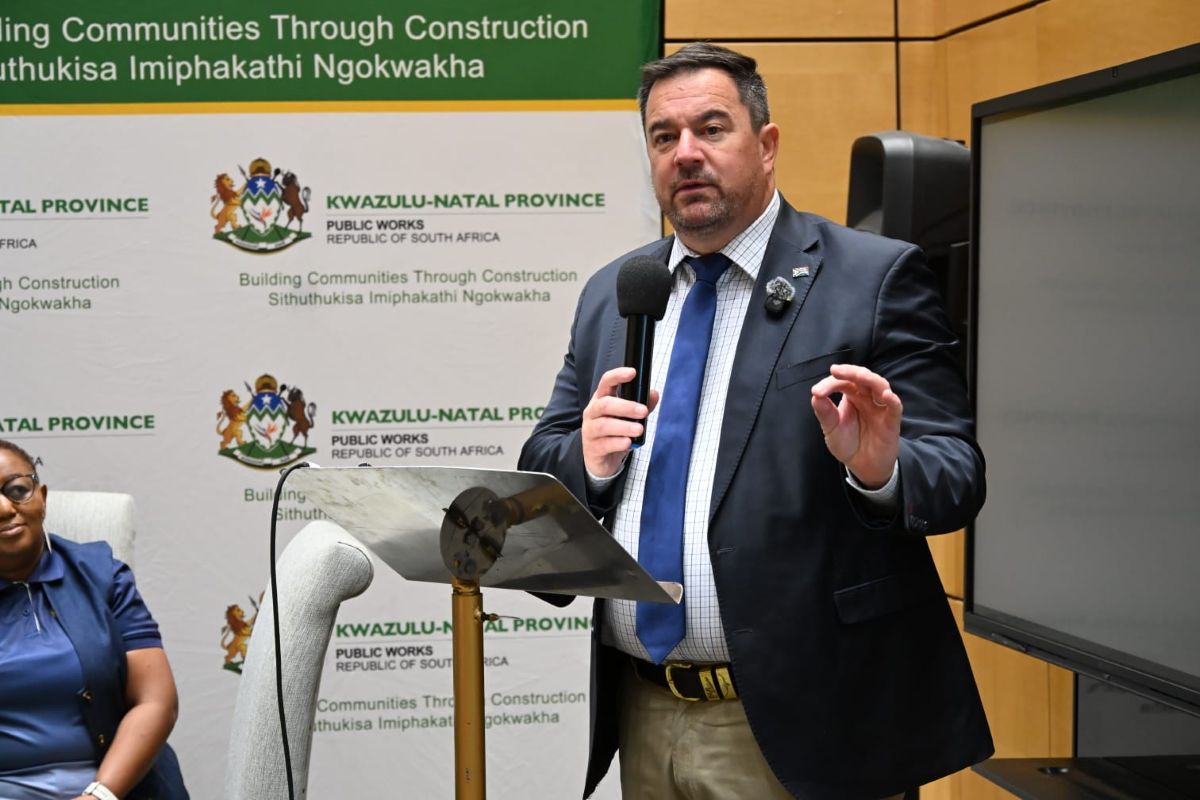
Deputy Minister of Trade, Industry and Competition, John Steenhuisen, has strongly endorsed the launch of KwaZulu-Natal’s new Government Property Finder Portal. Hailing the initiative as a watershed moment for public asset management, Steenhuisen emphasized that the platform tackles a historic paradox: a cash-strapped economy burdened by high unemployment while governments sit on massive portfolios of dormant or underperforming properties.
Turning Balance Sheets into Economic Catalysts
For decades, government-owned land and buildings have languished on public balance sheets, generating little to no economic value. Meanwhile, entrepreneurs, small-to-medium enterprises (SMEs), and foreign investors frequently struggle to secure affordable premises or suitable locations for expansion.
The KwaZulu-Natal Government Property Finder Portal seeks to bridge this gap. By offering a transparent, easily accessible digital platform that inventories government-owned properties, their locations, and their potential commercial uses, the portal removes traditional information asymmetry.
“Government is sitting on an enormous portfolio of land and property that has the potential to stimulate economic activity,” Steenhuisen noted following the launch. “Yet too often, these assets remain underutilised while entrepreneurs struggle to find affordable premises… Government property should not simply be an asset on a balance sheet. It should be an asset that works for the economy and the people of South Africa.”
From an economic perspective, the initiative targets key frictions in the property and industrial markets. High commercial rental costs and scarce industrial zoning often price early-stage entrepreneurs out of the market. By opening up public inventory, the province is laying the groundwork for lower-cost entry points into productive sectors.
A Vision for Industrial Hubs and Innovation
The economic ambition behind the portal extends far beyond simple leasing. Steenhuisen challenged stakeholders to think imaginatively about how repurposed state properties can be transformed into specialized economic nodes.
Instead of leaving buildings empty or semi-abandoned, the Deputy Minister pointed to the potential for converting these spaces into:
- Manufacturing Hubs: Supplying local industrialists and export-oriented businesses with accessible factory floor space.
- Business Incubators and Innovation Centres: Providing tech start-ups and creative industries with affordable co-working and research spaces.
- Youth Enterprise Zones: Establishing localized centres where young entrepreneurs can build businesses, scale operations, and generate employment.
This approach aligns closely with broader macroeconomic imperatives: driving re-industrialisation, fostering township and regional economies, and lowering the barriers to entry for marginalized business owners.
Fostering Cross-Sector Collaboration
Visibility is only the first hurdle in public-private property development. Economists have long argued that matching assets with users requires synchronized institutional support. Steenhuisen underscored that the portal’s success will ultimately depend on deeper collaboration between the Department of Trade, Industry and Competition (the dtic), provincial administrations, development finance institutions (DFIs), and enterprise support agencies.
By linking available properties directly with funding mechanisms, business development programmes, and venture capital, the ecosystem can transform a vacant plot or building into an operational commercial entity with minimal lag time.
“We should be making it easier for entrepreneurs to start businesses, for manufacturers to expand and for investors to invest, rather than allowing unnecessary administrative barriers to stand in their way,” Steenhuisen asserted.
Innovation Without the Price Tag
Beyond its economic objectives, the portal has also drawn praise for its fiscal prudence and administrative innovation. Significantly, the KwaZulu-Natal Department of Public Works and Infrastructure developed the digital platform entirely in-house, bypassing the costly external consultants that frequently inflate public sector IT budgets.
Steenhuisen commended this lean approach, pointing out that meaningful public service delivery does not inherently require astronomical expenditure or complex, protracted interventions. By utilizing internal state capabilities and prioritizing digital transparency, the province has demonstrated a scalable model for modernizing governance.
A National Blueprint?
As South Africa continues to navigate sluggish structural growth and a persistently high unemployment rate, the imperative to mobilize every available resource has never been more urgent.
Steenhuisen’s endorsement carries a clear call to action for other provinces and national departments: replicate the model. If duplicated nationwide, a comprehensive, transparent digital registry of state assets could fundamentally alter the country’s commercial property landscape, injecting vitality into stagnant districts and providing local entrepreneurs with the physical infrastructure they need to scale.
“South Africa cannot afford to leave valuable public assets idle while the country urgently needs investment, economic growth and employment,” Steenhuisen concluded. “Every government-owned property that can be put to productive use represents a potential opportunity for a new business, a new investment or a new job. KwaZulu-Natal has taken an important step, and I hope to see this approach replicated across the country.”
As markets and investors monitor the early adoption phase of the portal, all eyes will be on KwaZulu-Natal to see how quickly digital transparency translates into tangible bricks-and-mortar economic activity.