 By
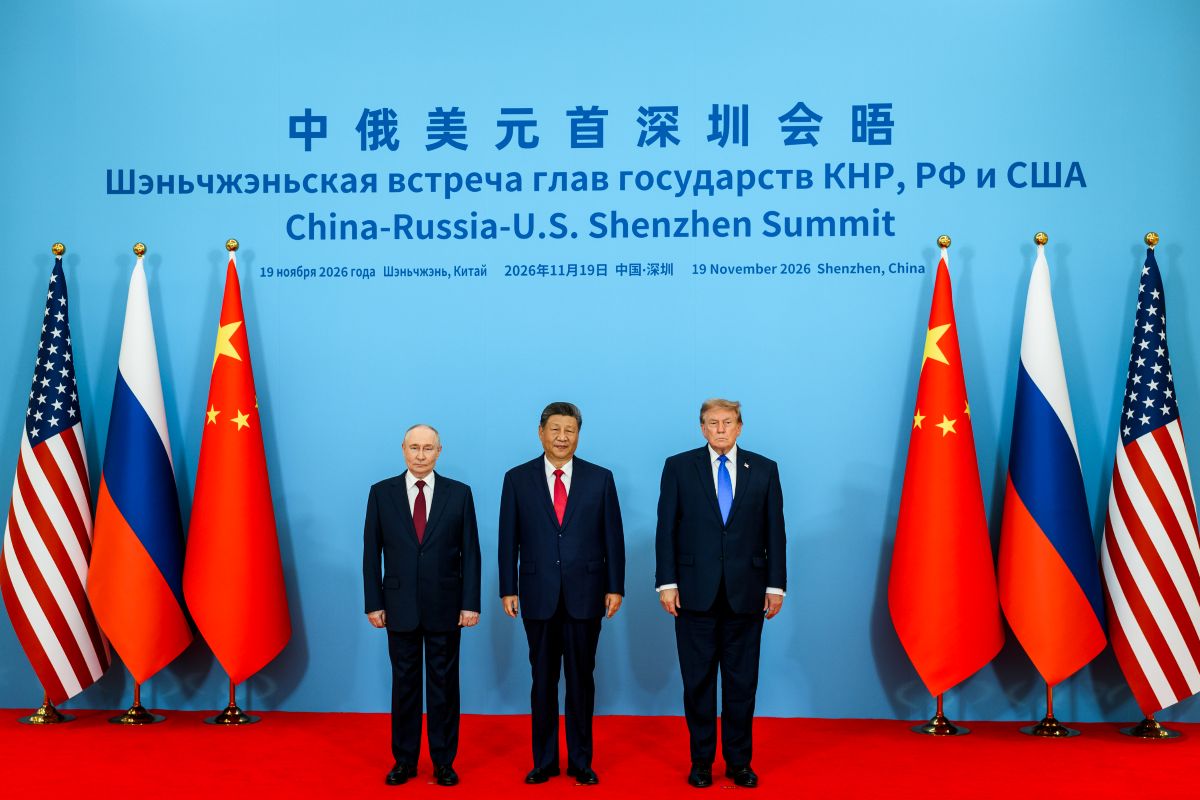
SHENZHEN, China — U.S. President Donald J. Trump, Russian President Vladimir Putin, and Chinese State Chairman Xi Jinping met in Shenzhen on Thursday, November 19, 2026, for an unprecedented trilateral summit, concluding with a joint U.S.-Russia-China Heads of State Declaration toward Peace.
Held on the sidelines of the Asia-Pacific Economic Cooperation (APEC) summit, the gathering brought the leaders of the world’s three largest nuclear powers together at the same table.
In the declaration, Trump and Putin thanked Beijing for hosting the summit, and the three leaders pledged an in-depth exchange on the international landscape alongside a commitment to “maintaining strategic stability and international security.”
Yet for a document titled a declaration toward peace, its text is notable for what it leaves unsaid. The statement makes no mention of active conflicts such as the war in Ukraine or hostilities involving Iran, instead outlining broad diplomatic, economic, and legal priorities across four core pillars:
- United Nations Reform: As permanent members of the U.N. Security Council, Washington, Moscow, and Beijing committed to reforming the United Nations so it can respond more effectively to global challenges and align with its core mandate of international peace and security.
- Energy Supply and Stability: The three nations announced plans to increase production and supply of refined petroleum products “for the benefit of all nations,” while reiterating the importance of stable energy flows.
- State Consent and Official Immunity: The leaders emphasized the primacy of state consent and respect for the immunities of state officials, agreeing that the International Criminal Court and similar bodies must not abuse their jurisdiction.
- Nuclear Risk Reduction: Reaffirming that a nuclear war cannot be won and must never be fought, the three countries pledged to hold dialogue on lowering nuclear risks and curbing nuclear proliferation.
Strategic Signalling Over Immediate Breakthroughs
The summit’s centrepiece commitments reflect a mix of long-standing grievances and carefully calibrated engagement rather than immediate conflict resolution.
The language on official immunity and international tribunals carries sharp geopolitical weight. Putin faces an arrest warrant from the International Criminal Court over the war in Ukraine, and Moscow and Beijing have frequently challenged international legal mechanisms on sovereignty grounds.
Framing state consent and immunity as paramount signals a shared pushback by the three powers against external legal pressure on state leaders.
Similarly, the pledge to talk about “reducing nuclear risks” marks a modest step toward engagement following the expiration of the last bilateral U.S.-Russia nuclear treaty in February. While Washington has long pressed Beijing to join arms control discussions as China expands its nuclear arsenal, analysts note that risk-reduction dialogue falls short of formal arms limitations.
Meanwhile, the promise to boost refined petroleum output ties energy markets directly into big-power diplomacy at a moment of global economic and geopolitical strain.
Optics, Criticism, and What Comes Next
The visual symbolism of Trump, Putin, and Xi convening together drew immediate scrutiny from critics and foreign policy observers. Detractors argued the summit risked lending diplomatic legitimacy to Moscow’s war in Ukraine and raising concerns among allies that major powers might negotiate spheres of influence over the heads of affected nations.
Supporter and official accounts of the meeting, by contrast, cast the talks as constructive engagement aimed at preventing worst-case escalation among rival powers.
Shenzhen may prove to be an opening chapter rather than a settled framework. Attention is already turning toward the G20 summit scheduled for December 14–15 in Miami, where Trump and Xi are expected to meet again, and where Putin has indicated he would consider attending following talks with Trump.
Ahead of a January 10, 2027, expiration date on the U.S.-China trade truce, Thursday’s declaration shows the three leaders willing to state shared principles—even as major geopolitical divides remain unresolved.