 By
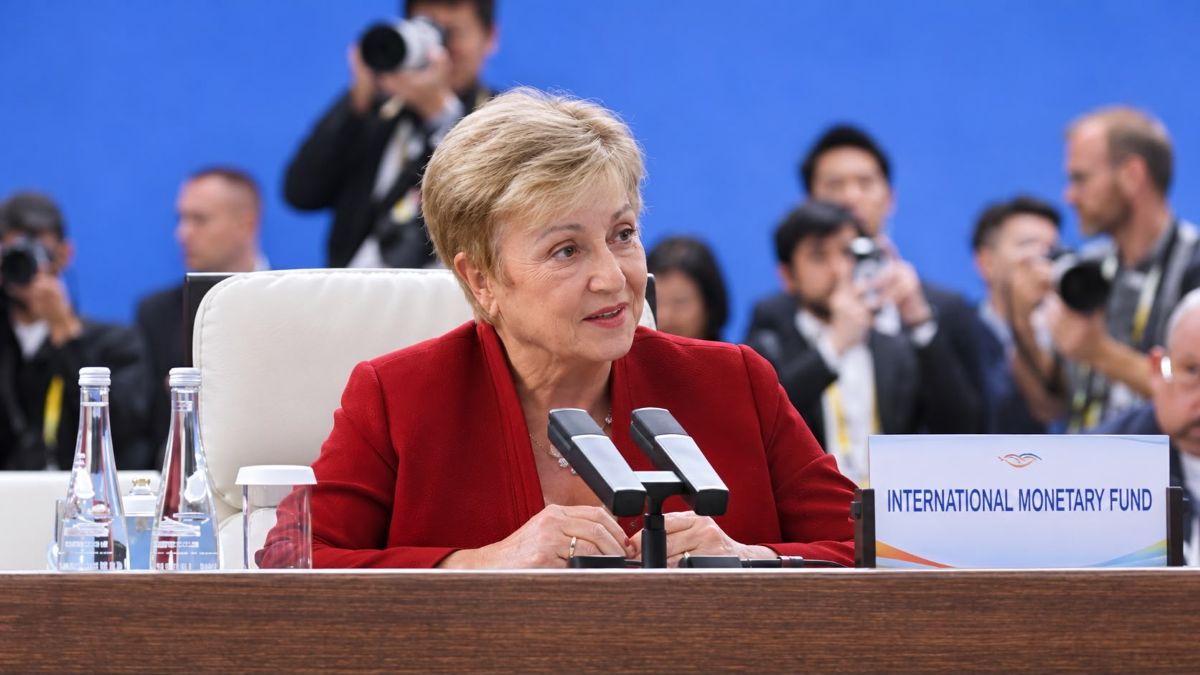
SHENZHEN, China — Artificial intelligence has crossed a critical threshold in 2026, becoming a tangible driver of global economic growth and offsetting Middle East energy disruptions, according to International Monetary Fund Managing Director Kristalina Georgieva.
Speaking on Thursday at the 2026 APEC Economic Leaders’ Meeting in Shenzhen, Georgieva framed the current moment as both “unique and exciting” and “a bit scary,” shaped by geopolitical shifts and the rapid spread of AI.
For the first time, AI has made a material contribution to global expansion, helping cushion economies against a negative energy supply shock stemming from turbulence in the Middle East.
Growth Holds Up, Though Unevenly
Global growth is projected at 3.1% this year, while the APEC region is expanding at 3.4%. Georgieva described those figures as “better than feared but worse than needed,” noting that an AI-led surge in roughly a dozen economies played a key role.
Global trade has shown resilience as well, growing 4.6% on the back of AI-related investment alongside deeper non-AI regional trade integration. Trade in AI hardware and related technology goods now represents more than 10% of global goods trade by value and is climbing rapidly.
Yet headline averages mask sharp disparities. Within APEC alone, economies that export energy or sit deeply inside global AI value chains are reaping benefits, while others face strain from elevated energy costs, a super El Niño, and other pressures.
Three Policy Pressures Ahead
Looking beyond near-term output, Georgieva highlighted three urgent policy challenges for governments:
- Inflation and Interest Rates: Both the energy supply shock and AI-driven demand are lifting global inflation to 4.7% this year. Combined with stronger growth expectations and heavy public and private bond issuance, rising inflation is pushing interest rates higher, leaving bond yields across many advanced economies at multi-decade highs and warranting tighter monetary policy in many places.
- Debt and Deficits: Elevated interest rates are increasing debt-service costs and putting fiscal positions under scrutiny. Global public debt is on track to surpass 100% of GDP, reaching its highest level since World War II—a trajectory that Georgieva warned requires prompt corrective action where needed.
- Structural Reforms: Because technological change is reshaping economies at unprecedented speed, Georgieva urged swift action on productivity-enhancing reforms, capital market development, digital infrastructure, workforce readiness for AI, and safeguards against financial stability and cybersecurity risks. “You snooze, you lose,” she cautioned.
Cooperation in a Fragmented Era
Georgieva underscored the value of multilateral dialogue at gatherings like APEC amid broader geopolitical shifts. Quoting the Chinese proverb “Hai Na Bai Chuan”—”The sea is vast because it embraces the waters of many rivers”—she said collective effort remains essential to advancing shared prosperity and peace.