 By
SAN JOSE — President Cyril Ramaphosa has called on global technology leaders and investors to treat South Africa as a strategic partner in building the artificial intelligence economy, shifting the narrative from passive technology consumption toward co-investment, local value creation, and continental market access.
Addressing the South Africa and the AI Opportunity Conference in San Jose on Wednesday, November 18, 2026, Ramaphosa framed artificial intelligence as a general-purpose economic shift comparable to electricity and the internet—one that will reshape industries, governance, and global competitiveness.
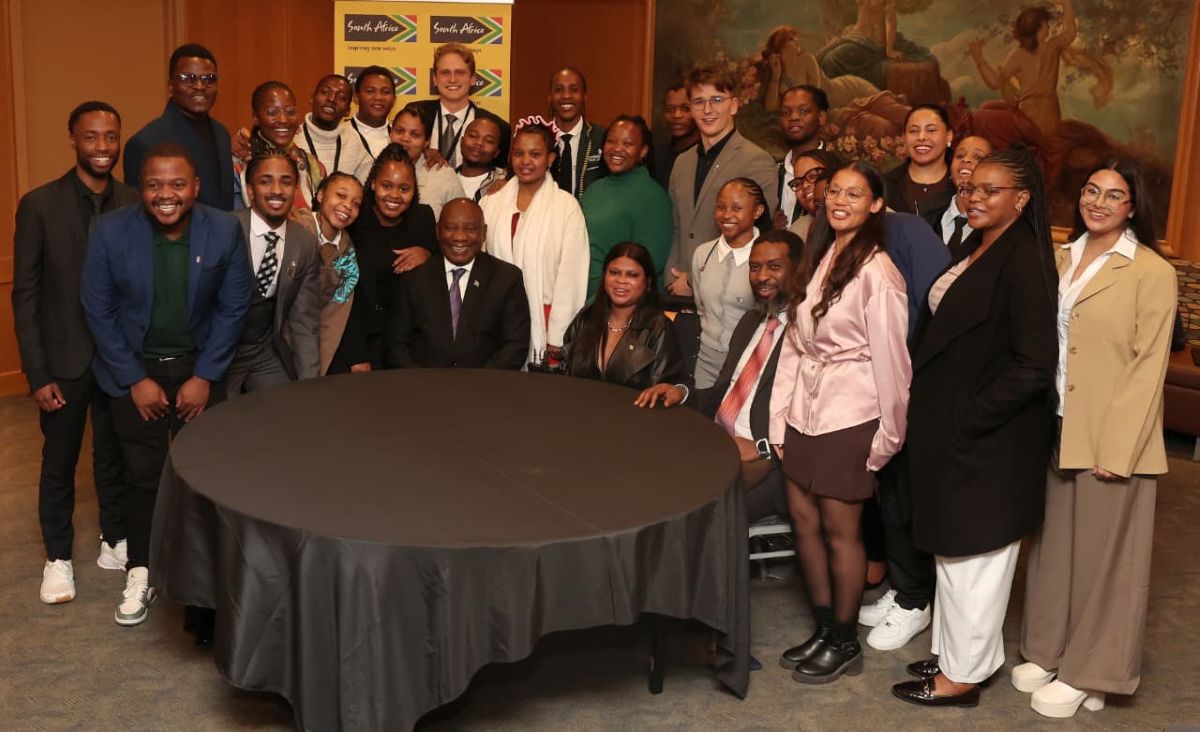
Speaking at the culmination of a working visit that saw a South African delegation tour major technology companies, research institutions, and innovation hubs across Silicon Valley, the President stressed that South Africa arrived not as a supplicant seeking charity, but with a commercial proposition grounded in mutual benefit.
Breaking Historical Patterns of Dependence
Central to Ramaphosa’s economic argument is a warning against repeating past cycles in which Africa supplied raw materials and talent while importing high-value finished goods and technologies from abroad.
While major American tech firms are projected to pour hundreds of billions of dollars into AI infrastructure this year—with estimates nearing $670 billion—global computing capacity remains heavily concentrated. Ramaphosa noted that Africa accounts for nearly one-fifth of the world’s population yet holds only a tiny fraction of global data centre capacity.
“We cannot be content to remain merely consumers of technologies developed by others,” Ramaphosa told business executives, investors, academics, and entrepreneurs. “We must become developers, producers, innovators and owners of technologies.”
To move up the AI value chain, South Africa is positioning itself across multiple layers of the digital ecosystem:
- Upstream inputs and physical infrastructure: Leveraging mineral endowments, renewable energy resources—including solar and wind—and existing industrial sites, such as power stations nearing the end of operational life that already hold grid connections and transport links.
- Compute and digital backbone: Expanding data centre capacity, telecommunications networks, and local supply chains spanning construction, electrical engineering, cooling systems, transformers, and energy storage.
- Applied intelligence and IP: Fostering research, software engineering, data development, model adaptation, and enterprise creation across South African universities, science councils, and start-ups.
Electricity Reform and a Coordinated Investment Offer
A recurring theme of the delegation’s engagements in Silicon Valley, Ramaphosa said, was that AI depends on a heavy physical foundation. Reliable electricity, land, transmission access, and cooling are decisive factors in where computing facilities are built.
Pointing to ongoing electricity sector reforms, expanded generation and transmission efforts, and a sustained reduction in load shedding, the President argued that South Africa is strengthening the physical prerequisites required for industrial and digital scale.
Already a leading data centre location on the continent, the country aims to become a preferred destination for AI computing infrastructure serving both domestic and regional demand.
Crucially, Ramaphosa acknowledged that building data centres alone will not solve South Africa’s structural unemployment and growth challenges unless paired with skills transfer, local procurement, and broader industrial linkages.
To turn interest into execution, he outlined plans for a coordinated national investment proposition—streamlining approvals, electricity connections, land availability, and infrastructure planning so investors do not face fragmented government processes.
Productivity Gains, Local Languages, and Inclusive Growth
Beyond infrastructure and capital inflows, Ramaphosa argued that South Africa’s biggest economic dividend will come from deploying AI to lift productivity across established sectors:
- Mining and energy: Improving geological exploration, mineral recovery, equipment maintenance, demand forecasting, grid management, and renewable integration.
- Agriculture and manufacturing: Optimizing water use, detecting crop diseases, cutting production waste, raising quality control, and boosting export competitiveness.
- Public services and social delivery: Supporting healthcare diagnostics, personalizing education, helping municipalities curb water losses, and strengthening state planning—while safeguarding constitutional rights, privacy, and oversight.
Ramaphosa also emphasized the commercial and social necessity of building datasets and models tailored to African realities and languages, including isiZulu, isiXhosa, Sesotho, Sepedi, Setswana, Tshivenda, and Xitsonga. Without local representation in data and research, he warned, AI tools risk failing to serve citizens equitably or address local challenges.
At the same time, the President cautioned that technological disruption can widen inequality and displace workers if left unmanaged. He called for closer collaboration between government, business, universities, and organised labour to strengthen mathematics, science, and digital skills, expand technical and vocational training, and support workers through reskilling and transition programmes.
A Continental Gateway in a Shifting Demography
Looking ahead to mid-century—when roughly one in four people globally will live in Africa—Ramaphosa pitched South Africa as an entry point to a fast-growing continental market anchored by the African Continental Free Trade Area.
Highlighting existing strengths in financial services, engineering, fintech, and global business services—including foundational cloud engineering work historically carried out in Cape Town—he urged international firms to establish research and development operations in South Africa and partner with local innovators.
For Ramaphosa, the benchmark of the San Jose visit will not be the number of meetings held or pledges exchanged, but tangible follow-through: capital commitments, research collaborations, skills pipelines, and new enterprises rooted in cities and communities across South Africa.
“We have not come to Silicon Valley to ask for a place in someone else’s future,” he said. “We have come to build partnerships through which we can help shape a future of our own.”