
 By
By 
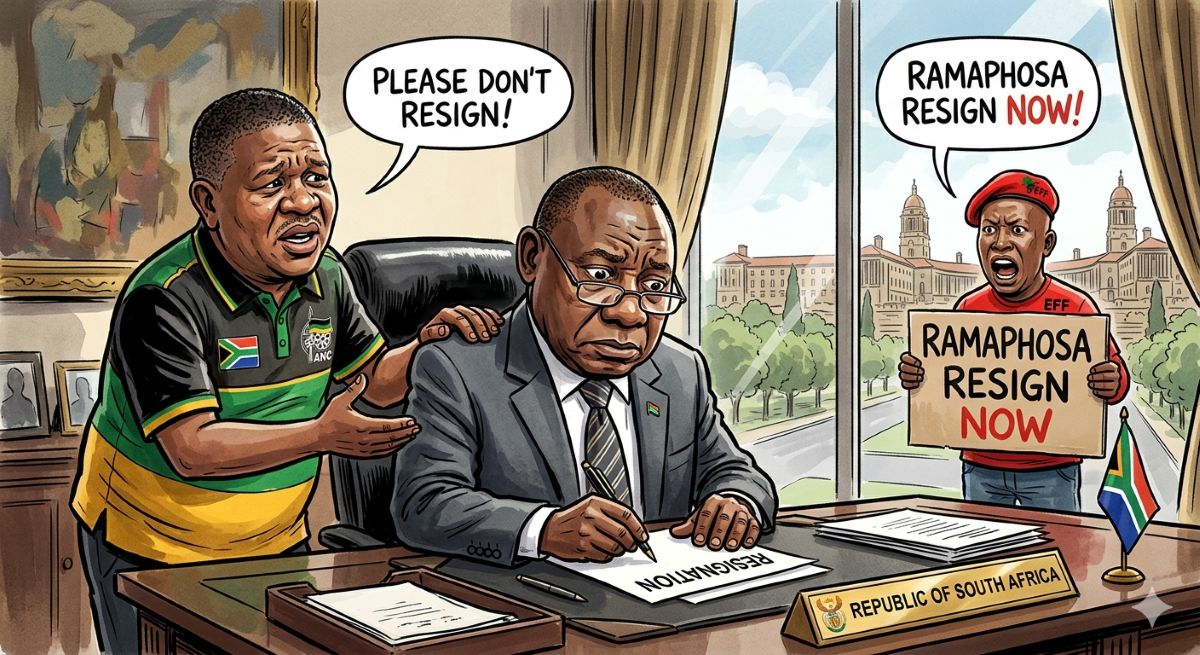
One can only imagine the amount of worry President Cyril Ramaphosa is facing, and his party the African National Congress as they are trying to find ways of defending Ramaphosa. The question now really is, should he willingly resign or be pushed out of office?
In September 2008, the country experienced its first resignation from the country’s President, President Thabo Mbeki was recalled by the ANC due to in-house power struggles with Jacob Zuma and allegations of political interference on corruption charges laid against him. Mbeki, decided to leave office by his volition and kept his dignity intact.
Just about 10 years later, President Jacob Zuma, who was facing immense pressure from the ANC to resign and a vote of no confidence in parliament, finally resigned with immediate effect in February 2018. He somehow also left with his dignity relatively intact.
Since the advent of democracy, the former and late president Nelson Mandela remains the only elected president from the ANC who finished his term in office; since then, the party has been riddled with scandals and factionalism, thus far, none of the presidents after Mandela have finished their terms, and it seems Ramaphosa will follow suit.
The ANC and Ramaphosa are now facing serious pressure from opposition parties calling for Ramaphosa’s resignation. The uMkhonto weSizwe Party has added a different dimension to the equation, calling for a vote of no confidence against Ramaphosa, which is much easier to attain than an impeachment. A vote of no confidence requires a 50+ 1 majority vote, while impeachment requires two thirds majority (66%) votes.
Being pushed out of office has its own devastating effects, not only on the individual but also on the party itself, especially during election year as this may send a very wrong message to the masses that the party protects those who are corrupt, and that the law has eyes, it favours some and discriminates against some.
An impeachment is far punishing than a vote of no confidence, with impeachment, the president will face hard questions from impeachment committee members, they are going to grill him and investigations will be done and will reveal certain matters that might and will destroy his reputation and that of the ANC. The DA has already said based on the evidence, they will not protect Ramaphosa should he be found guilty.
An impeachment is far riskier than a vote of no confidence. A vote of no confidence may be debated in parliament; however, this may require the ANC to defend its own. Which is also a risk as the debate takes place; compelling arguments will be made by the opposition, and since the ConCourt said the previous vote was unconstitutional and invalid, it is worrisome on how the ANC is going to vote.
The EFF has the ANC and President Cyril Ramaphosa on checkmate; currently, the best option seems to be a resignation; however, the EFF says even if he resigns, he will still face impeachment. Risking impeachment and or a vote of no confidence, is a risk for the ANC as this might also expose the cracks within the party, as some within the party might vote in favour of the impeachment or the vote of no confidence, which will be very embarrassing for the ANC.
The question is on what cause of action will the ANC take? Will they recall their president or risk impeachment or vote of no confidence and risk their reputation at the same time? Will Ramaphosa resign or not?