
 By
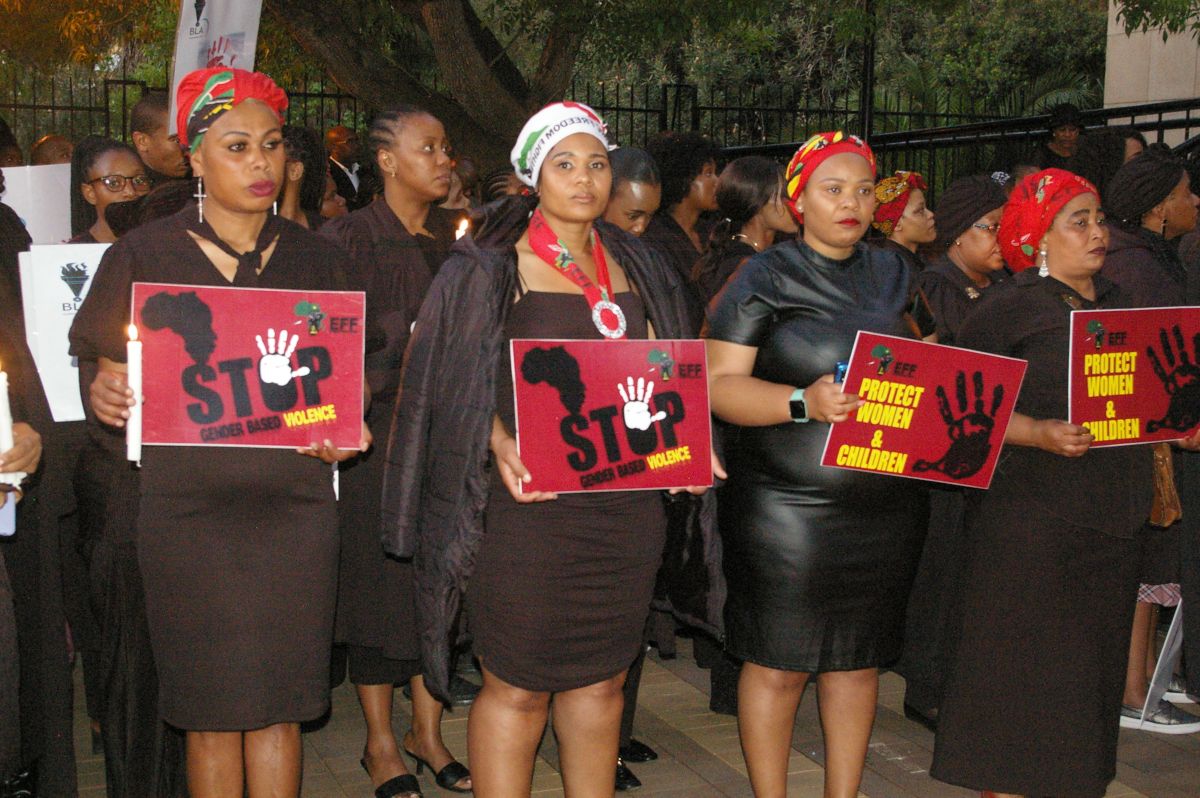
By JOHANNESBURG — In a scathing critique of state machinery and law enforcement efficacy, the Economic Freedom Fighters (EFF) have slammed the South African Police Service (SAPS) and the administration of President Cyril Ramaphosa following the grim discovery of five women’s bodies in the vicinity of Kempton Park, Ekurhuleni.

The statement, issued on Monday, September 14, 2026, casts a harsh spotlight on systemic failures in handling missing persons cases, institutional victim-blaming, and an alleged lack of political will to properly resource the fight against gender-based violence (GBV).
A Pattern Ignored Until Public Pressure Mounts
The horrific string of discoveries has reignited national anxieties over the safety of women in public spaces. Among the victims was missing runner Elizabeth ‘Tsontso’ Moselakgomo, whose disappearance triggered a widespread public search.
Only after intense public scrutiny and civic mobilization did police responses escalate, eventually pointing toward the horrifying possibility of a serial killer operating in the area.
The EFF has raised pointed questions regarding the timeline of the SAPS’s awareness. According to the party, multiple bodies had reportedly been discovered in the area prior to any comprehensive, coordinated intervention by law enforcement.
“Kempton Park SAPS must publicly account for when it became aware of each discovery, what action was taken following each incident, and why the response intensified only after public attention was drawn to the disappearance of a possible victim and the possibility of a recurring pattern emerged,” the statement reads.
The party rejected what it describes as a pervasive policing culture that treats the disappearance of women as an “non-urgent ordinary matter” until families, communities, and public pressure force authorities into action. Every missing woman, the party argues, must be treated as a potential victim of violence from the outset, triggering immediate and heavily resourced investigations.
Challenging the Culture of Victim-Blaming
Beyond the failures of SAPS, the EFF’s critique extends deep into societal structures, taking direct aim at the institutionalized culture of victim-blaming. Women navigating South Africa are routinely met with unsolicited advice on self-preservation: instructions on what to wear, where to walk, what time to travel, and whether they consume alcohol.
Political analysts note that this rhetoric places the profound burden of crime prevention onto the victims rather than addressing the perpetrators of crime. The EFF underscored this sentiment, stating: “Women do not cause men to rape them, murder them, sexually assault them, stalk them, intimidate them or abuse them financially, emotionally or physically.”
The statement frames this culture as inseparable from a broader societal environment that tolerates the objectification and aggression of women as expressions of normative manhood—while forcing women to restrict their fundamental freedoms.
The Myth of Public Space Danger vs. Domestic Reality
Highlighting the sheer scale of the crisis, the party pointed to alarming recent crime statistics. SAPS data from the previous quarter records 9,233 cases of rape, with over 40% of these horrific incidents occurring within the homes of the victims or perpetrators.
This statistical reality dismantles the narrative that danger exists solely in dark alleys or isolated public fields. For many South African women, the gravest threat lurks behind closed doors, perpetrated by partners, family members, or acquaintances. Consequently, telling women to simply avoid certain public spaces fails to address the structural and domestic epicenters of gender-based violence.

A Direct Attack on Executive Leadership
The political crosshairs of the statement ultimately fixate on the highest office in the land. The EFF expressed utter dismay at President Cyril Ramaphosa, accusing him of a “lack of will to actually fund the necessary reforms and support” mandated under the National Strategic Plan on Gender-Based Violence and Femicide (GBV-F).
Accusing the executive of rhetoric over substance, the party asserted that declaring GBV a national crisis means little when unaccompanied by concrete, well-funded interventions or reassuring policy execution from the administration and its ministers.
As communities in Ekurhuleni mourn the lives cut short in Kempton Park, the political pressure is mounting on law enforcement and national leadership to move beyond platitudes. For the families of the five women and millions of South African citizens living in fear, the demand is clear: systemic accountability, proactive policing, and a fundamental overhaul of how the state protects the most vulnerable.