
 By
By JOHANNESBURG — There is cautious celebration within the corridors of the Gauteng Provincial Legislature this week, following the release of the province’s 1st Quarter Crime Statistics for the 2026/27 financial year.

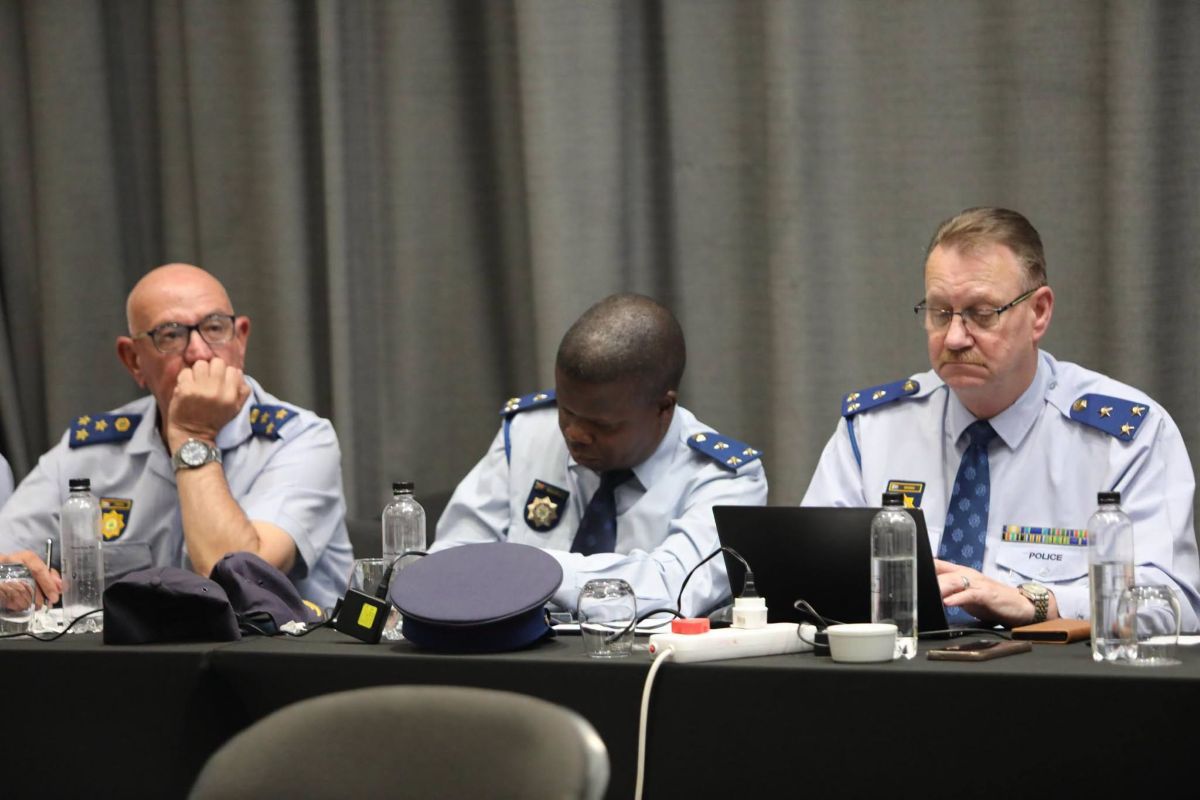
Covering the period from April to June 2026, the data presented by Acting Provincial Police Commissioner Major General Fred Kekana reveals a notable downward trajectory in several major crime categories across South Africa’s economic heartland.
Leading the positive indicators is a significant 10.7% reduction in murder. Law enforcement and oversight bodies alike have hailed this drop as meaningful progress in the ongoing battle to preserve human life. Additional relief was noted across the board, with Gender-Based Violence and Femicide (GBVF) declining by 9.1%, contact-related crimes dropping by 3.2%, property-related crimes falling by 2.7%, and other serious crimes registering a slight dip of 0.6%.
Yet, behind the spread-sheet metrics and falling percentages, a stark reality remains. The Gauteng Provincial Legislature’s Portfolio Committee on Community Safety was quick to issue a stern warning: falling numbers must not breed complacency, nor should they create a false sense of security.
“Behind every percentage point is a human life, a family and a community,” the Committee stressed, emphasizing that true success cannot be measured by paper statistics alone, but by whether ordinary residents feel safe in their homes, on public streets, and at transport hubs.
The Deadly Surcharge of Illegal Firearms
While the murder rate has plummeted by over ten percent, the weapon of choice in Gauteng’s violent underworld continues to cast a long, bloody shadow.
During the review period, firearms played a devastating role, appearing in a staggering 652 murder cases. While law-enforcement operations managed to recover 282 firearms—including 22 rifles and nine shotguns—the sheer prevalence of illegal and uncontrolled weaponry remains the province’s primary security threat.
The Committee made it clear that the recent dip in homicides must be coupled with an aggressive, relentless campaign to strip communities of illicit arms. Intelligence-driven operations targeting firearm trafficking networks and unlawful possessors are no longer optional; they are a critical lifeline.
In a major development welcomed by safety advocates, the South African Police Service (SAPS) is slated to establish a dedicated Firearm Unit. This specialized unit—long championed by the Committee—aims to trace, recover, and systematically dismantle illegal firearm networks, offering renewed hope for a future “Gun-Free Gauteng”.
Boots on the Ground: Operation Shanela Yields Results
Much of the credit for the province’s crime reduction has been funnelled toward visible policing efforts, most notably through the sustained execution of Operation Shanela.
The high-density operations resulted in an overwhelming 38,564 arrests during the quarter. Among them were 14,256 undocumented migrants, alongside high-impact apprehensions that pulled 148 suspected murderers and 279 alleged robbers off the streets. The Committee maintains that targeted operations, coupled with thorough, unyielding criminal investigations, must remain the bedrock of Gauteng’s anti-crime strategy.

The Honeydew Crisis: An Unacceptable Outlier
Despite the broader provincial narrative of declining crime, a glaring exception threatens to undermine public trust: the Honeydew Police Station.
Ranked as the worst-performing police station in Gauteng and the fourth worst-performing nationwide, Honeydew represents a localized crisis that lawmakers say can no longer be tolerated. A provincial average pointing downward offers little comfort to residents living under the siege of persistently high crime rates in that policing precinct.
In response, the Committee has demanded an immediate, specialized intervention at Honeydew to dissect the root causes of its systemic failure and deploy a measurable turnaround strategy. Furthermore, lawmakers have resolved to bring accountability directly to the community through an upcoming Imbizo—a public engagement bringing together residents, community policing forums (CPFs), and law enforcement to forge practical, grassroots solutions.
Maintaining the Momentum
As Gauteng looks toward the remainder of the 2026/27 financial year, the message from the Portfolio Committee is unambiguous: the momentum must be sustained.
While the 10.7% drop in murders proves that progress is possible, the path ahead requires an unyielding partnership between aggressive policing, specialized firearm units, and active community participation. For the residents of Gauteng, the ultimate test will not be found in quarterly reports, but in the quiet assurance of safe streets and secure homes.