 By
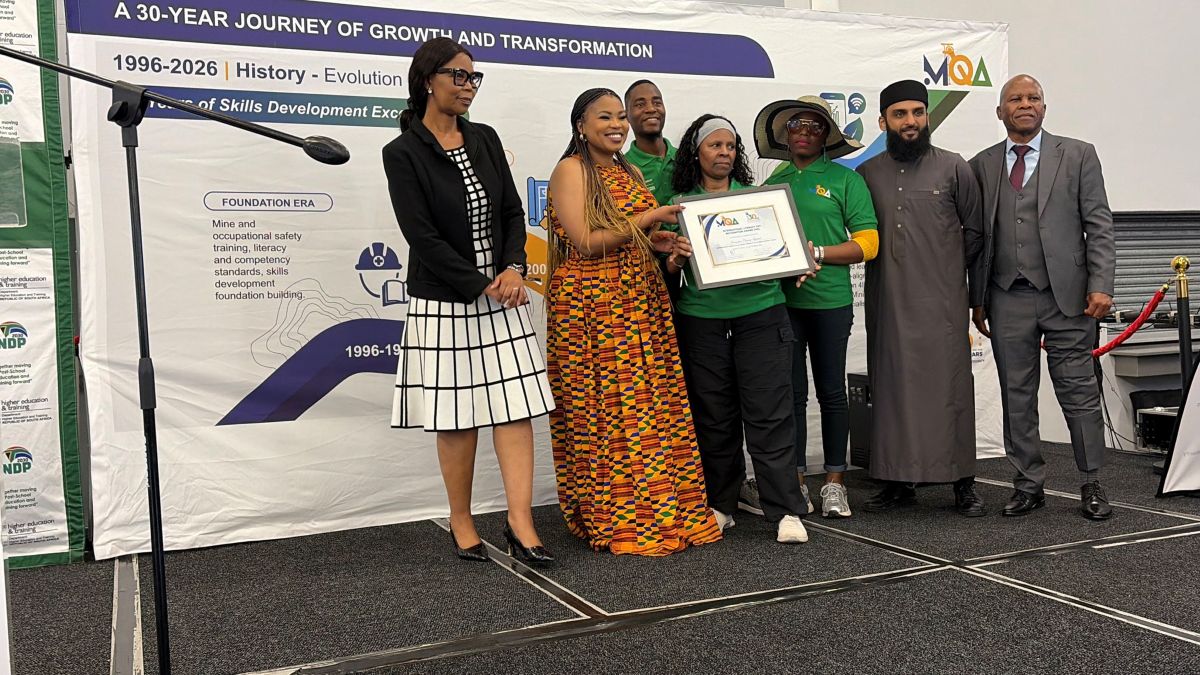
By POLOKWANE — For over a century, South Africa’s economic narrative has been inextricably bound to the immense geological wealth locked beneath its soil. Yet, as the Mining Qualifications Authority (MQA) marked its landmark 30th anniversary alongside International Literacy Day at The Ranch Resort in Polokwane, a compelling counter-narrative took centre stage: the true wealth of the nation lies not merely in its mineral reserves, but in the cognitive capital, adaptability, and resilience of its people.

Delivering keynote remarks at the milestone celebration, Deputy Minister of Mineral and Petroleum Resources Phumzile Mgcina laid bare a stark economic reality. As the global commodities landscape undergoes a seismic shift driven by automation, artificial intelligence, digitalisation, and green energy transitions, South Africa’s foundational mining economy faces an existential crossroads.
The central thesis is clear: mineral wealth cannot translate into sustainable, inclusive macroeconomic development without a radical, forward-looking reconfiguration of the country’s human capital.
Three Decades of Bridging the Skills Gap
Established three decades ago, the MQA has served as a cornerstone for work-based skills development, navigating a turbulent era of sector-wide transformation. Over the past 30 years, the authority has consistently reinforced the industry’s skills pipeline, collaborating closely with mining houses, organized labour, training providers, and government structures.
However, economic journalists observing the sector note that the next thirty years will demand an entirely different calibre of strategic intervention. The traditional profile of the mining worker—rooted in manual labour and legacy extraction techniques—is rapidly dissolving. In its place emerges a high-tech ecosystem requiring a sophisticated matrix of competencies.
“The mining industry of tomorrow will not be the same as the mining industry of yesterday,” Deputy Minister Mgcina cautioned industry leaders, labour representatives, and graduates gathered in Polokwane.
The Technological Imperative versus Foundational Realities
To maintain global competitiveness, South Africa’s mining houses are increasingly adopting automated extraction systems, predictive data analytics, and digital monitoring tools. While these technologies promise enhanced safety, operational efficiencies, and reduced environmental footprints, they simultaneously threaten to exacerbate structural unemployment and deepen inequality if the workforce is left behind.
The economic challenge is dual-pronged. On one end of the spectrum, the sector urgently requires advanced technical expertise: specialized artisans, technicians, engineers, scientists, digital specialists, and entrepreneurial innovators capable of operating within modern smart-mine frameworks. On the other end—and perhaps most critically—lies the imperative of foundational competence.
Without robust baseline capabilities in literacy, numeracy, and digital literacy, a significant portion of the workforce risks disenfranchisement in a digitized labour market. Continuous learning and adaptability are no longer optional career accessories; they are fundamental economic survival tools.
Adult Education and Training (AET) as an Economic Catalyst
A central pillar of Mgcina’s address was the strategic prioritization of Adult Education and Training (AET). Far from being viewed as a remedial afterthought, AET is increasingly recognized by economists as a vital catalyst for inclusive growth and labour market mobility.
An adult learner returning to the classroom environment is an asset equipped with years of tacit workplace knowledge, invaluable life experience, and deep resilience. When structured training interventions combine this lived experience with formal literacy and numeracy frameworks, the economic return on investment multiplies.
The recognition ceremony held during the anniversary event underscored the profound socioeconomic impact of second chances. By validating AET programme delivery and celebrating learners who have successfully navigated these pathways, the Department of Mineral and Petroleum Resources (DMPR) signalled that sector transformation must concurrently mean human transformation. Inclusion is not merely a moral obligation; it is a macroeconomic prerequisite for social stability and broad-based wealth generation.
Forging a Resilient Skills Ecosystem for the Next 30 Years

As South Africa navigates ongoing fiscal pressures, high unemployment rates, and the complex demands of a global green transition, the alignment between educational policy and industrial strategy has never been more vital.
The transition toward sustainable mining practices and green energy technologies—such as the minerals required for battery storage and renewable infrastructure—places South Africa at the heart of global supply chains. Capitalizing on this position requires a collaborative tripartite compact involving government, industry employers, and organized labour.
The mandate moving forward is unambiguous. The MQA’s next chapter must move beyond reactive training models to build an anticipatory skills ecosystem. By embedding continuous literacy and digital up-skilling directly into the operational DNA of South Africa’s mining houses, the sector can ensure that technological disruption drives empowerment rather than exclusion.
Ultimately, Deputy Minister Mgcina’s message in Polokwane serves as a timely reminder for policymakers and market analysts alike: modernizing an economy begins with illuminating the minds of its workforce. In an era defined by rapid technological change, literacy is the ultimate currency, and human capability remains South Africa’s most valuable asset.