 By
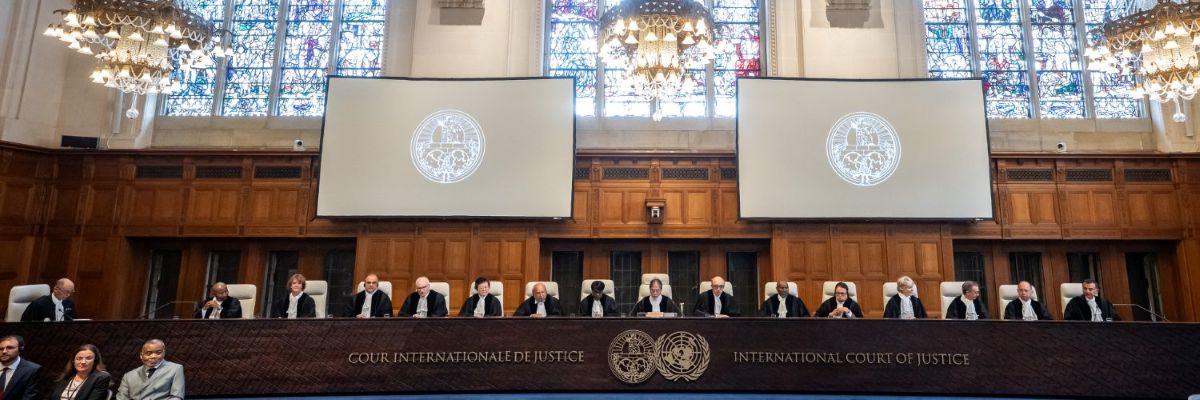
By THE HAGUE — In a major diplomatic and legal maneuver aimed at enforcing international law, South Africa has formally submitted a comprehensive dossier to the International Court of Justice (ICJ) detailing Israel’s continued non-compliance with binding Provisional Measures Orders.

The filing, delivered on 25 August 2026, seeks to assist the ICJ’s dedicated Committee of Judges in assessing compliance and formulating enforcement options for the full bench. Pretoria’s latest legal action underscores growing frustration over the international community’s failure to halt nearly three years of devastating military operations in the Gaza Strip.
Submitted under Article 11 of the ICJ’s rules on Internal Judicial Practice, the dossier directly targets Israel’s refusal to adhere to three emergency orders issued by the World Court. Those rulings established that Palestinians in Gaza face a real, imminent risk of irreparable harm under the 1948 Genocide Convention.
Gaza Conflict Human Toll (As of August 2026)--------------------------------------------------Total Fatalities: 73,407+Total Injured: 174,335+Impacted Population: >10% of Gaza populationSurvivors with SevereConflict-Related Injuries: ~46,000--------------------------------------------------Source: South Africa ICJ Submission Data / DIRCOHighlighting Systemic Non-Compliance
The core of Pretoria’s filing argues that Israel has systematically flouted the ICJ’s emergency mandates. The dossier presents a bleak accounting of conditions on the ground, citing statistics that show over 10% of Gaza’s entire population has been either killed or injured since October 2023.
Among the surviving population, an estimated 46,000 people—including thousands of children—are suffering from severe, lifelong conflict-related injuries such as amputations, traumatic brain injuries, and spinal cord damage.
Pretoria also challenged the effectiveness of the so-called “ceasefire,” documenting that Israeli forces have continued to kill an average of one Palestinian child per day since its announcement. The submission further highlights severe health crises across the enclave, noting a more than three-fold increase in Palestinian miscarriage rates in 2026 alone—a direct consequence of severe deprivation, lack of essential medicine, and broken healthcare infrastructure.
“Surviving Palestinians in Gaza are further traumatised, herded into an ever-shrinking sliver of territory and subjected to unbearable conditions of life,” the submission states, highlighting acute shortages of clean water, adequate healthcare, and basic resources necessary for human survival.
Allegations of Detention Abuses and Media Blockades
Beyond artillery and aerial bombardment, South Africa’s dossier details severe human rights violations against detainees. The document asserts that Israeli military forces have arbitrarily detained and deported Palestinians to detention centers, subjecting them to systematic torture, sexual and gender-based violence, and cruel or degrading treatment.
To prevent these actions from reaching the global public, the submission argues, Israel has executed an intentional informational blackout. Pretoria accuses the Israeli military of targeted actions against journalists—killing local Palestinian reporters while barring foreign journalists and UN-mandated investigative bodies from entering the Gaza Strip.
A Pattern of Multilateral Engagement
This latest filing is part of a sustained multi-front diplomatic campaign by South Africa to utilize UN mechanisms:
- May 2024, February 2025, & September 2025: Submitted public dossiers to the UN Security Council demanding state-level enforcement of ICJ orders.
- October 2025: Submitted dedicated dossiers on engineered starvation in Gaza to the UN General Assembly and the Economic and Social Council (ECOSOC).
- August 2026: Delivered the non-compliance dossier under Article 11 to the ICJ’s monitoring committee.
The Integrity of International Law at Stake
South African diplomats emphasize that the legal battle extends beyond the immediate crisis in Gaza. By ignoring Provisional Measures, Pretoria argues, Israel not only deepens the destruction of Palestinian life but directly compromises the authority and protective function of the World Court itself.
If binding orders can be disregarded without consequence, the core integrity of the post-WWII legal order is fundamentally threatened. South Africa’s submission reinforces its commitment to defending multilateral institutions, insisting that third-party states carry a legal obligation under the Genocide Convention to prevent genocide and compel compliance with international court mandates.