
 By
By When Pavati Plastics Southern Africa first set out to establish a black women-led manufacturing enterprise, the goal was as clear as it was daring: build a sustainable, resilient company capable of responding to evolving market demands, pioneering new product lines, and directly replacing specialized goods that South Africa had long relied on importing.

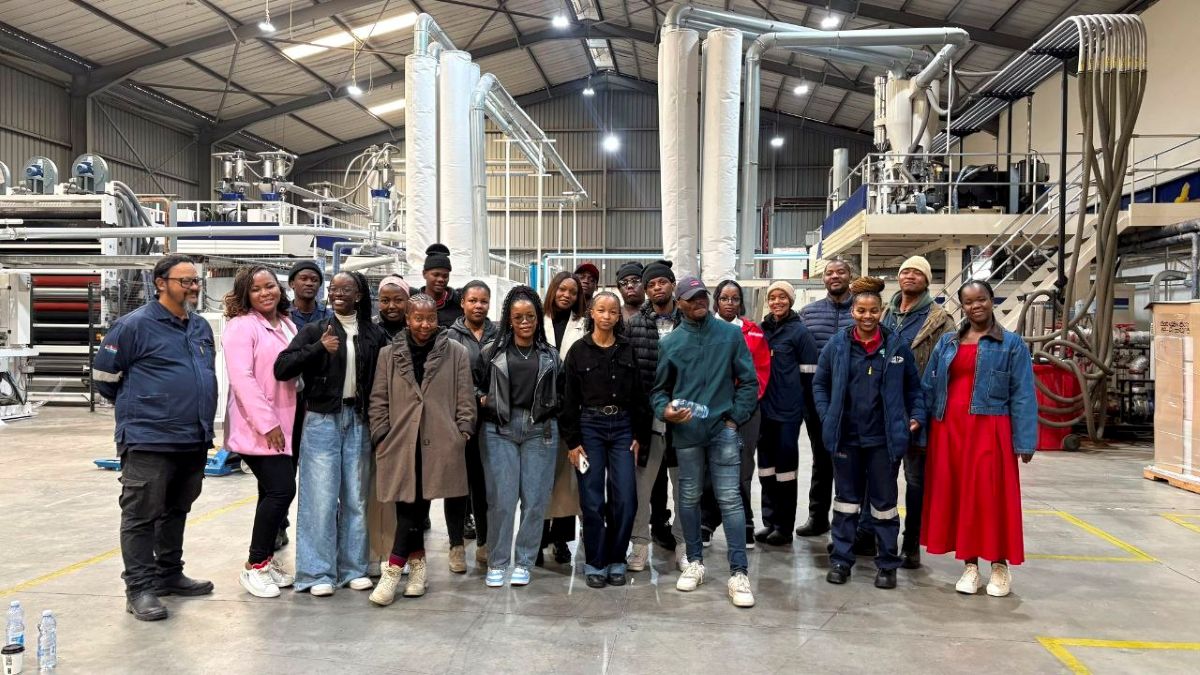
Today, that vision stands fully realized. Pavati Plastics has transformed into a 100% black-owned and black-managed industry leader, featuring 51% black women ownership. Evolving from its beginnings as a service business into a sophisticated manufacturing powerhouse, the company now boasts advanced capabilities across extrusion, high-precision printing, and specialized packaging solutions.
Transforming Vision into Industrial Might
Pavati’s trajectory offers a master-class in strategic expansion and industrial scaling. Between 2015 and 2021, the leadership team orchestrated a pivotal pivot, transitioning the business model from service-oriented operations toward high-value manufacturing. The primary focus was building local production capacity to drive import replacement across key sectors.
“Between 2015 and 2021, Pavati Plastics evolved from a service business into manufacturing,” explains Pavati Plastics Financial Director, Ms Ntombenhle Nhleko. “We were building a black-managed, sustainable packaging entity with capabilities in extrusion, recycling and specialised manufacturing. By 2021, the business had moved into a capital expansion phase focused on import replacement.”
A major turning point came in March 2021, when the Department of Trade, Industry and Competition (the dtic) approved a R50 million matching grant under the Black Industrialists Scheme (BIS) to support Pavati’s capital expansion project. The BIS program—designed to offer cost-sharing grants between 30% and 50% of qualifying costs—provided critical financial backing, allowing Pavati to establish local production lines for specialized polypropylene substrates that previously had to be sourced overseas.
This capital infusion dramatically scaled Pavati’s technical toolkit. Today, the company’s manufacturing portfolio encompasses machine and manual pallet wrap, Zip Lock coin bags, cast polypropylene (CPP), and monoaxially oriented polypropylene (MOPP).
“The investment has allowed us to expand our manufacturing capabilities and diversify our product offering,” notes Nhleko. “It has also enabled us to respond to customer requirements more effectively and pursue opportunities that were previously beyond our capabilities.”
Market-Driven Innovation and Strategic Collaboration
At the core of Pavati’s operational success is a disciplined, customer-centric product development framework. Rather than manufacturing in isolation, the company initiates its design process by deeply analyzing market demand and customer pain points.
The product lifecycle blends research with direct technical collaboration. Pavati conducts comprehensive market research and trend analyses, then works directly alongside machinery suppliers to evaluate equipment functionality and push technological boundaries. Products are developed, refined, and rigorously tested against customer specifications before receiving final approval from brand owners.
“We engage with customers to understand their packaging needs and future objectives, conduct market research and look at industry trends,” says Nhleko. “We then work with our machinery suppliers to understand the functionality of the equipment, develop and test the product and obtain approval from the customer.”
Crucially, while collaboration with customers, suppliers, funders, and regulatory bodies drives the process, Pavati ensures that all intellectual property generated from its new products remains firmly owned by the company.
Pioneering Sustainability and Award-Winning Efficiency
In modern manufacturing, industrial growth must go hand-in-hand with environmental stewardship. For Pavati, technological upgrades have served as a catalyst for sustainable operational practices.
By investing in state-of-the-art machinery, the company has lowered its energy footprint and integrated circular economy principles directly onto the factory floor. Production offcuts are systematically recycled and fed back into the manufacturing cycle, drastically minimizing waste while improving overall cost efficiency.
This commitment to green manufacturing did not go unnoticed. Pavati Plastics was named a joint winner of the prestigious Sustainability Award at the 2024 Black Industrialists Awards.
“Our company’s investment in new technology has also improved the efficiency of its manufacturing processes,” Nhleko highlights. “Our newer machinery uses less energy and allows production offcuts to be fed back into the manufacturing process. This helps us reduce waste while improving the efficiency of our operations.”
Anchoring the Future of South African Industry
Pavati’s momentum continues to accelerate. In June 2025, the Black Industrialists Financing Forum Adjudication Committee formally approved a 12-month extension of the company’s BIS project through to 31 May 2026. This approval officially recorded Pavati’s full milestone transition from 51% to 100% black ownership.
Pavati Plastics stands as a compelling model of what can be achieved when bold ambition is backed by strategic capital, strong partnerships, and persistent execution. From a local service business to a fully black-owned manufacturing enterprise, Pavati’s journey reinforces the vital role of local capacity building, technological innovation, and sustainable practice in shaping the future of South African industry.