 By
By 
SANDTON, SOUTH AFRICA — Minister of International Relations and Cooperation, Ronald Lamola, has issued a compelling call to action for the private sector to partner with governments in harnessing Africa’s vast demographic and mineral assets to drive sustainable economic growth and regional integration.
Speaking at the ABSA and DIRCO Ambassadorial Breakfast Engagement at The Maslow Hotel in Sandton, Lamola emphasized that while Africa holds unmatched economic potential, failure to properly manage its resources and youth demographic risks exacerbating economic instability and migration pressures across the continent.
The Dual Engines of Africa’s Future: Youth and Minerals
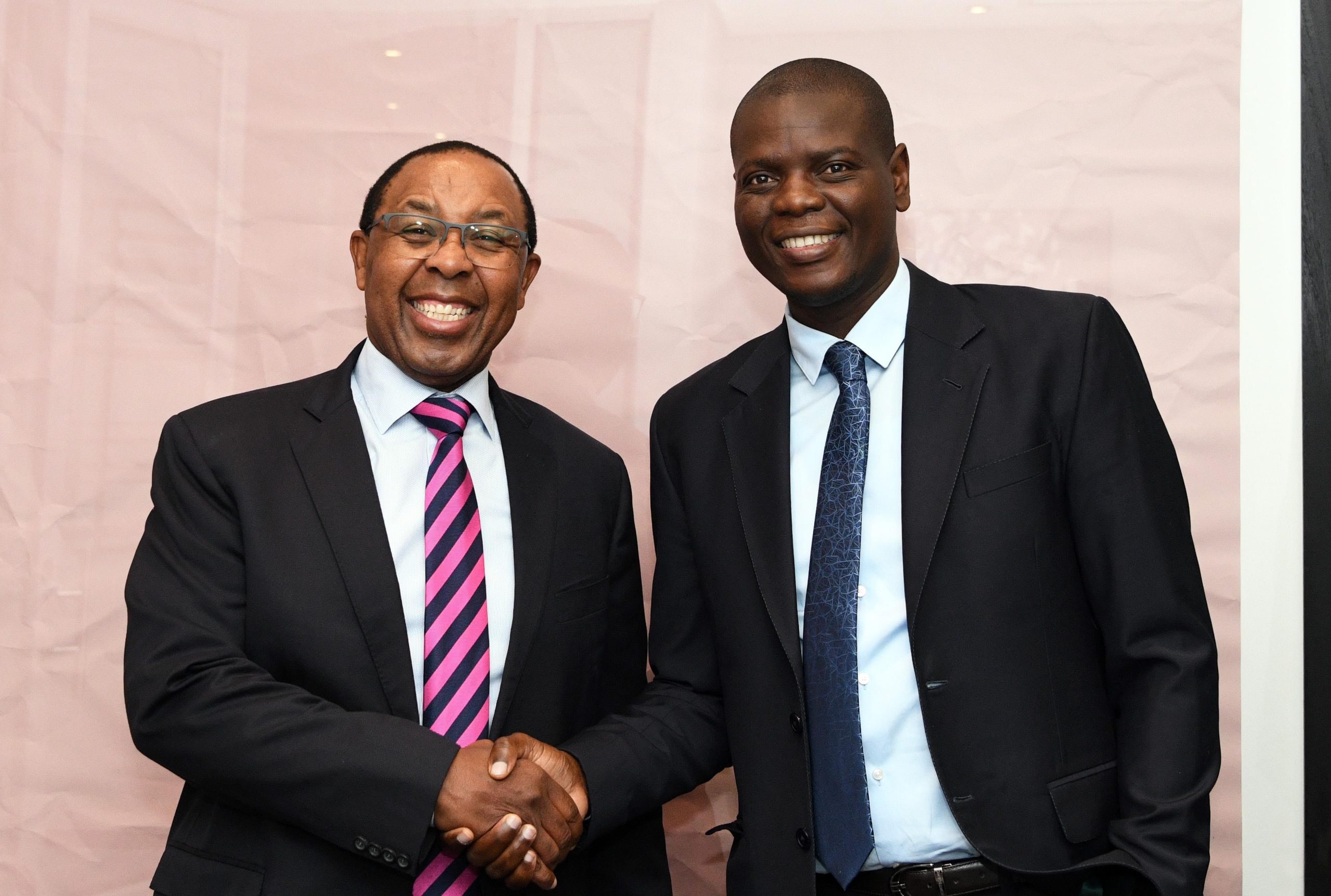
Addressing a gathering of diplomatic heads of mission, government officials, and business executives—including Absa Group Chief Executive Officer Kenny Fihla and AfCFTA Secretary-General Wamkele Mene—Lamola outlined Africa’s core economic strengths, referencing author Zainab Badawi’s assertion that “Africa holds an ace in its hand”.
The continent boasts the world’s youngest population, with a median age of 19 years and nearly 60% of its people under the age of 25. By 2030, one in every four young people globally will be African. However, Lamola warned that this demographic dividend presents both promise and peril. While a young workforce can drive innovation and productivity, Africa currently generates only about 3 million formal jobs annually against 10 to 12 million young jobseekers entering the market. This imbalance has left many disillusioned, with Afrobarometer data indicating that 6 in 10 young Africans desire to emigrate due to economic anxiety.
In addition to its demographic edge, Africa possesses an extraordinary concentration of critical transition minerals essential for the global shift toward a low-carbon economy:
- Platinum Group Metals: South Africa and Zimbabwe account for over 90% of global reserves.
- Cobalt: The Democratic Republic of Congo supplies over 70% of global output.
- Bauxite & Manganese: Guinea holds the world’s largest bauxite reserves, while Gabon is the second-largest manganese producer.
- Graphite: Mozambique and Madagascar rank among the top five global producers.
Breaking the Cycle of Raw Material Extraction
Despite this mineral abundance, Lamola cautioned that raw material extraction without local value addition fails to generate broad-based prosperity. He noted that while nearly 75% of global cobalt originates in Africa, 60% of its processing takes place in China.
To counter this historical pattern of exploitation, African governments—including South Africa, Namibia, Zimbabwe, and Malawi—are enacting policy measures to enforce local processing and beneficiation. These legislative shifts align with the African Green Minerals Strategy and the G20 Critical Minerals Framework.
Furthermore, as part of South Africa’s G20 priorities, progress is being made on cross-border financial integration. South Africa has integrated the Angolan Kwanza into its regional payment infrastructure to facilitate seamless intra-African trade.
AFRICA'S CRITICAL MINERAL DYNAMICS┌──────────────────────────────────────────────────┐│ 70%+ Global Cobalt Sourced from DRC ││ 60%+ Beneficiation / Processing in China │├──────────────────────────────────────────────────┤│ GOAL: Local Processing & Regional Value Chains │└──────────────────────────────────────────────────┘Corporate Responsibility and Intra-African Trade
Highlighting South Africa’s key role as home to half of the continent’s largest enterprises and its leading investor, Lamola posed three critical challenges to the private sector:
- Closing the AfCFTA Awareness Gap: Citing Afrobarometer’s African Insights 2026 report, Lamola noted that while over 60% of Africans support freer trade, only 13% are aware of the African Continental Free Trade Area (AfCFTA). Business and government must actively bridge this awareness deficit.
- Demonstrating Inclusive Growth: Economic integration must yield tangible benefits for ordinary citizens rather than serving only corporate and political elites.
- Upholding Labour and Migration Standards: Lamola raised concerns regarding unethical business practices where certain employers exploit irregular migration to undercut labour laws. He stressed that such practices depress wage standards, fuel domestic social friction, and jeopardize the cross-border operations of South African firms elsewhere on the continent.

Economic Outlook and Agricultural Unlocking
While economic growth in Sub-Saharan Africa is projected by the IMF to recover to 4.5%, Lamola stressed that growth from a low baseline is insufficient to alleviate poverty. He urged collaborative investment across key sectors, particularly mining, manufacturing, and agriculture.
Addressing agricultural bottlenecks, he highlighted that roughly 90% of arable land in Africa remains bound by informal land rights, hindering commercial investment and food security.
“Africa’s development cannot be achieved by governments acting in isolation, nor by business pursuing profit without regard for broader developmental outcomes,” Lamola concluded, emphasizing that public-private synergy remains essential for achieving the African Union’s Agenda 2063 vision.