
 By
By 
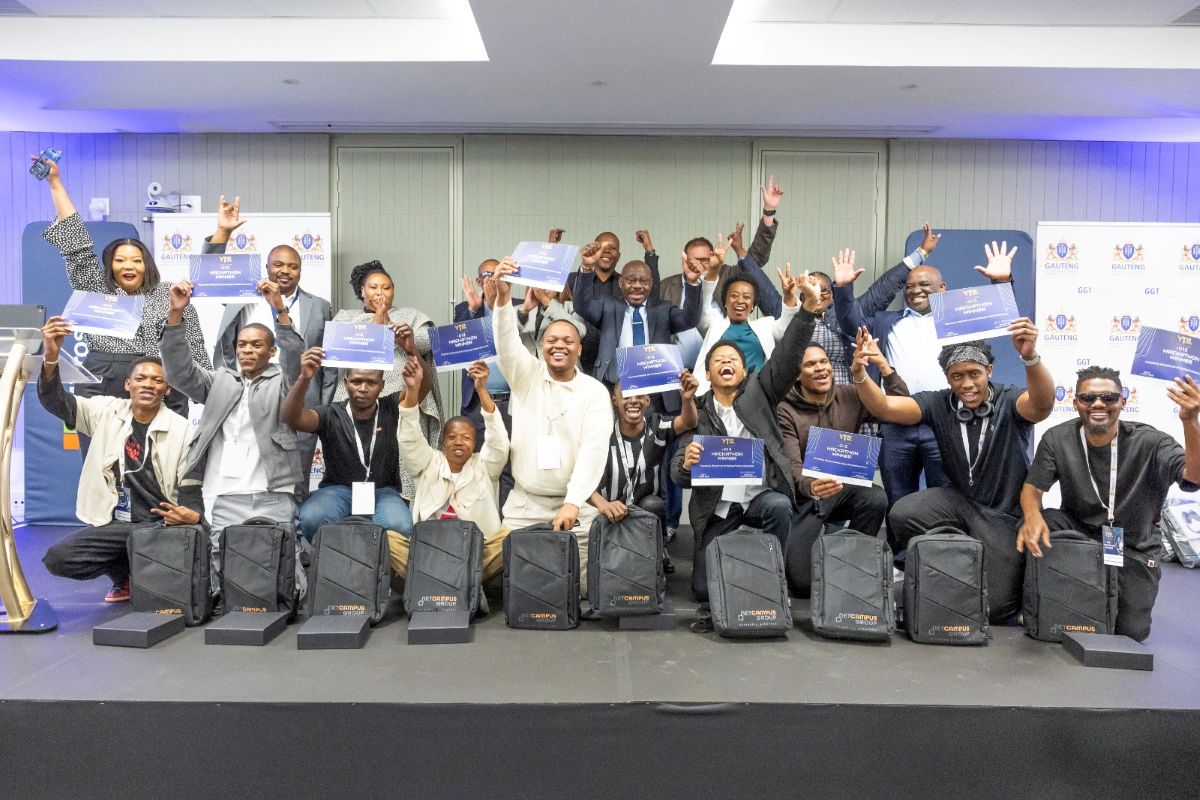
JOHANNESBURG — In a major push to cultivate South Africa’s next generation of digital talent, the Gauteng Department of e-Government has officially crowned Team Gridwise 10X from the Johannesburg Region as the overall winners of the 2026 Youth Tech Expo (YTE) G13 Hackathon.
The high-stakes final, hosted in collaboration with tech giant Microsoft South Africa at their Johannesburg headquarters, concluded after days of intense competition that pitted the province’s brightest young minds against some of Gauteng’s most deeply entrenched civic challenges.
Driving Local Innovation via Artificial Intelligence
The journey to the finals began in June, stretching across Gauteng’s regional hubs—including Johannesburg, Tshwane, Ekurhuleni, the West Rand, and Sedibeng. In partnership with Algo@Work, the hackathon challenged local learners to leverage Artificial Intelligence (AI) to architect practical, scalable solutions for critical public sector issues. Projects targeted vital areas such as:
- Infrastructure maintenance
- Water management
- Urban mobility
- Service delivery
- Crime prevention
The top regional contenders secured a spot in the two-day provincial finale. There, final teams were given access to Microsoft’s advanced AI tools and paired with veteran industry mentors to refine their prototypes into viable public sector applications.
The Leaderboard: Johannesburg Takes the Crown
Following a rigorous evaluation by a panel of industry judges, Johannesburg’s Gridwise 10X secured the top spot on the podium with a commanding score of 84.2%. They were followed closely by Tshwane’s Chromomark, while Sedibeng’s Civic Eye locked in third place.
The final standings and judges’ scores concluded as follows:
| Rank | Team Name | Region | Final Score |
| 1st | Gridwise 10X | Johannesburg CBD | 84.2% |
| 2nd | Chromomark | Tshwane | 81.6% |
| 3rd | Civic Eye | Sedibeng | 70.2% |
| 4th | SIRRS | West Rand | 63.0% |
| 5th | Aqua Guard AI | Ekurhuleni | 59.0% |
A Million-Rand Investment in Tech Talent
The financial and educational backing attached to the hackathon underscores the government’s commitment to bridging the digital divide. Collectively, the prize pool for the 50 finalists exceeds R1 million.
For their first-place finish, the 10 learners making up Gridwise 10X will receive Netcampus gift vouchers alongside entry into a fully funded, 12-month Master Tech Leadership Programme—complete with a monthly living stipend for each member.
Recognizing that long-term digital transformation requires broader capacity building, the remaining 40 finalists across the runner-up teams will not leave empty-handed. They are slated to enter a specialized skills pipeline focused heavily on Data and Artificial Intelligence, ensuring all participants exit the competition with highly marketable, future-proof skill sets.
Public and Private Sectors Align on Digital Economy
Speaking at the closing ceremony, Gauteng MEC for e-Government, Mr. Bonginkosi Dhlamini, emphasized that the event’s core mission extends far beyond standard competitive coding.

“This hackathon was never only about building apps or competing for prizes. It was about empowering young people to become problem-solvers, innovators and future leaders who will help build a smarter Gauteng,” Dhlamini noted. “Government is committed to creating opportunities that equip our youth with the skills they need to succeed in the digital economy while developing solutions that respond to the real challenges facing our communities.”
Private sector backing remains a vital component of this initiative. Lerato Mathabatha, Executive Director of Public Sector at Microsoft South Africa, highlighted the transformative power of putting enterprise-grade AI tools into the hands of the youth.
“Skilling South Africa’s youth is one of the most powerful investments we can make in this country’s future,” Mathabatha stated. “The G13 Hack Finale shows what becomes possible when young people are handed world-class AI tools and a real challenge to solve; they don’t just build solutions, they reimagine how government can serve its people.”
As municipal governments globally face modern infrastructure pressures, Gauteng’s proactive incubation of home-grown tech talent provides a clear blueprint for how public-private partnerships can foster real-world civic tech innovation.