 By
By 
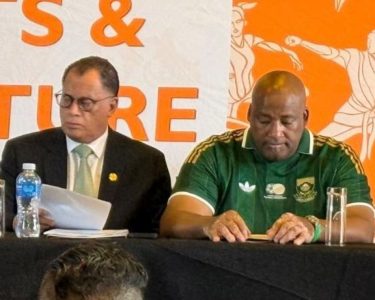
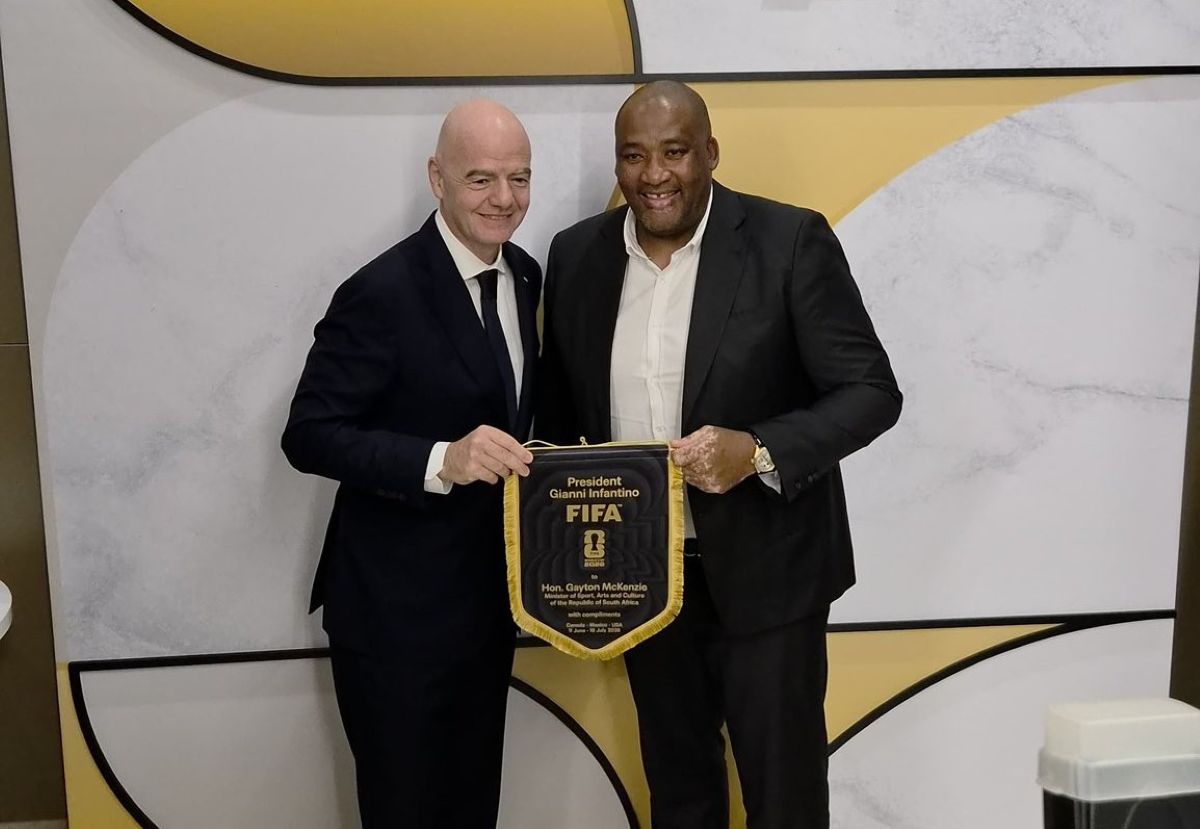
PRETORIA — Facing sharp political flak and intense parliamentary scrutiny over a R30.95 million price tag for South Africa’s multi-city footprint at the 2026 FIFA World Cup, Minister of Sport, Arts and Culture Gayton McKenzie has fired back. Outlining an itemised breakdown of delegation costs across North America, McKenzie declared that the spending was fully budgeted, alignment-tested, and vital for national branding on football’s grandest stage.
Following weeks of public debate surrounding the government’s official engagement during the global showpiece hosted across Canada, Mexico, and the United States, the Minister released a comprehensive statement detailing every rand committed by the Department of Sport, Arts and Culture (DSAC). Denying claims of extravagant self-indulgence, McKenzie asserted that the expenditure was executed strictly within statutory frameworks and served as an essential economic and cultural investment for South Africa.
The Financial Ledger: Where the R30.95M Went
The total outlay, presented in Parliament, amounted to R30,945,370.15. Far from a single executive junket, the funds financed an integrated national delegation comprising 151 government-funded participants, accompanied by private activations, commercial engagements, and cultural diplomacy initiatives across key host cities.
| Programme Item Description | Expenditure (ZAR) |
| (i) Official Trips & Travel: Minister, 2 support staff, DG, and Project Team (14 members) | R7,865,134.97 |
| (ii) SA 2010 Legends Exhibition Match: 27 participants total (Bafana Bafana 2010 legends team) | R6,706,925.00 |
| (iii) Official Hospitality Suites: Working spaces in Atlanta and Monterrey | R3,361,845.18 |
| (iv) Spectator Match Tickets: 294 official FIFA match tickets across 3 host cities | R3,011,465.00 |
| (v) Physical Presence & Activations: Design, construction, 30 artists/cultural participants, equipment, security, and logistics | R10,000,000.00 |
| TOTAL PROGRAMME EXPENDITURE | R30,945,370.15 |
Beyond state expenditure, private sector partners—including Brand South Africa, Coca-Cola, HONOR, Betway, Cell C, and Old School—funded an additional 76 participants, comprising 47 “Lucky Fans” alongside 29 journalists, podcasters, and media influencers. McKenzie confirmed that he personally solicited over R5 million in private sponsorship to subsidize the broader campaign, lowering the overall burden on taxpayers.
Diplomacy, Football, and Mopani Worms in Mexico
Defending the multi-million rand pavilion and cultural drive, McKenzie highlighted South Africa’s unique footprint as the only African nation with a dedicated exhibition pavilion at the tournament. In Mexico City’s Centro Nacional de las Artes, the Ekhaya activation introduced thousands of international visitors to South African music, crafts, and gastronomy—where local chefs even made mopani worms a popular culinary hit among Mexican festivalgoers.
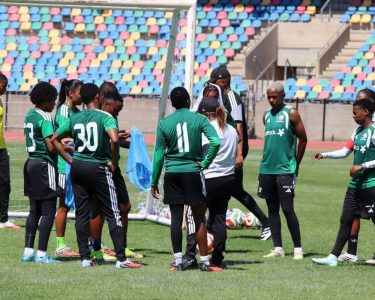
The headline sporting engagement featured a capacity-crowd exhibition match between the 2010 Bafana Bafana legends and Mexico’s 2010 squad, keeping the spirit of the iconic 2010 World Cup alive on global soil. Diplomatic engagements spanned bilateral discussions with Mexico’s Secretary of Culture, Claudia Curiel de Icaza, sports development talks with CONADE Director-General Rommel Pacheco, and direct commercial consultations with Formula 1 organizers in Mexico City to gather hosting insights for potential local Motorsport events.
Delegation Participation Summary:
- State-Funded Participants (151 total): 18 Officials (Minister, 2 support staff, Director-General, 14 project team members), 30 Artists & Cultural Participants, 27 Bafana Bafana 2010 Legends.
- Sponsor-Funded Participants (76 total): 47 Lucky Fans, 29 Journalists, Influencers & Podcasters.
The delegation’s itinerary spanned key Bafana Bafana match locations: supporting the national team against the Czech Republic in Atlanta, facing South Korea in Monterrey, and attending the knockout stage clash in Los Angeles. In LA and Atlanta, the Minister engaged local business chambers, addressed the Atlanta Chamber of Commerce, and initiated long-term cultural partnerships with the Grammy Museum and the Pan African Film Festival. Highlighted during the Monterrey leg was viral fan Thato Zondi, whom McKenzie personally invited and paid for out of his own pocket to cover her flights and accommodation.
Personal Footprint and Political Counter-Attack
Addressing opposition criticisms—particularly from the Democratic Alliance (DA)—McKenzie rejected narratives framing the spending as personal luxury. He confirmed his personal travel costs totaled R1,058,379.75 over the five-week tour, an amount that covered international flights, accommodation, and insurance, including a mandatory mid-tournament return flight to South Africa to lead the official June 16 Commemoration in Soweto.
McKenzie emphasized several cost-containment measures undertaken during his travel:
- No dedicated chauffeurs: Utilizing rental car lifts with his adviser or standard Ubers/taxis rather than expensive chauffeured fleets.
- No protocol lounges: Declining expensive state protocol airport lounges in host cities.
- Waived allowances: Refusing to claim his official daily subsistence and travel allowance (S&T) worth R55,000.
- Family costs: Clarifying that family members who joined him abroad paid entirely for their own flights and accommodation without a single cent of public funds spent.

Taking aim at political opponents, McKenzie contrasted DSAC’s mandate execution with Western Cape provincial governance, pointing out that over R800 million in unspent housing funds was returned to National Treasury by the Western Cape government over the past two financial years despite severe housing backlogs and dilapidated infrastructure in townships like the Cape Flats.
Audit Controls and Final Accounting
Reiterating full compliance with the Public Finance Management Act (PFMA) and National Treasury cost-containment directives, McKenzie stated that all departmental expenditures were pre-approved with strict separation between state and sponsored accounts. A full close-out reconciliation report is currently being compiled for presentation to Parliament’s Portfolio Committee once post-event auditing concludes.
“Spending a departmental budget on the department’s mandate is not, in itself, a wrongdoing,” McKenzie declared, inviting anyone alleging corruption or improper expenditure to submit evidence to the Auditor-General or law enforcement. “We had a rare opportunity to put South Africa in front of a global audience… We used it.”