 By
By 
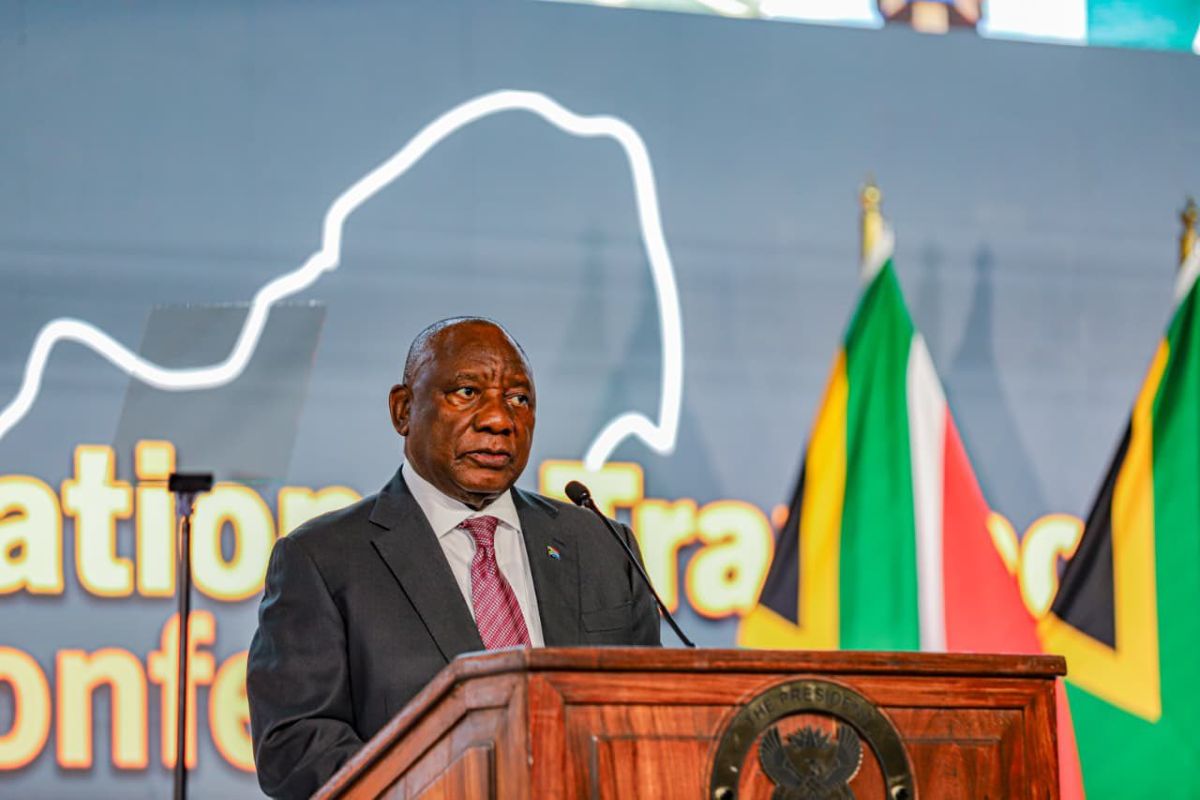
During his address at the inaugural National Transport Conference in Johannesburg on Monday, 16 March 2026, President Cyril Ramaphosa said government will be teaming up with the private sector in investing in rail freight to reduce the heavy traffic on roads.
Over the years the country has witnessed numerous accidents on the road involving heavy vehicles, to this, Ramaphosa said the government is working on reducing these accidents by shifting a significant amount of freight from road to rail. He said approximately 69 percent of all freight moves by road and places immense strain on the country’s road network and contributes to poor road safety.
“Inefficiencies in logistics are estimated to cost our economy close to R1 billion a day. That is a cost we should not – and need not – bear. The cornerstone of our reform programme is the National Rail Policy of 2022, complemented by the National Freight Logistics Roadmap of 2023.
Together, these policies seek to re-establish rail as the backbone of our logistics network. They seek to bring in new investment from private operators while keeping strategic infrastructure – our rail lines and ports – in public ownership, as assets that belong to all the people of South Africa,” said President Cyril Ramaphosa.
According to Ramaphosa, government has made significant strides regarding access to rail, which was championed by the Transnet Rail Infrastructure Management. He said to date; train slots covering 24 million tonnes a year have been conditionally awarded to 11 train operating companies.
He said government is expecting the first private operator to commence operations in April 2027.
“We have set an ambitious target of moving 250 million tonnes of freight by rail by 2029. In the past financial year, 160 million tonnes of freight were moved by rail, an increase of 5.5 percent on the previous year. Transnet’s revenue in 2024-2025 rose to R82 billion, which is nearly 8 percent higher than the year before.
To decrease backlogs and increase port volumes, Transnet has embarked on an extensive upgrading and maintenance programme. Building on the experience of our response to the energy crisis, the National Logistics Crisis Committee has brought together a range of government departments and agencies and mobilised expert support to drive the recovery of our logistics capabilities,” he said.
“Through this work we have seen breakthrough projects on the coal and iron ore corridors to improve operational performance, improved communication between Transnet and its customers, and a significant reduction in security incidents on the rail network.
These are early signs of recovery. They tell us that the interventions are working.
Passenger rail is also essential for inclusive growth. An effective passenger rail system connects communities and provides dignity to working-class South Africans. The Passenger Rail Agency of South Africa – PRASA – has revived 37 of 40 priority passenger rail corridors and introduced more than 300 locally-manufactured train sets.
We are targeting 116 million passenger journeys this financial year, on our way to 600 million trips by 2029. Reliable passenger rail lowers commuting costs and improves access to work, education and healthcare. We have launched a new Request for Information to attract private investment in rapid regional rail, rolling stock and depot modernisation,” continued Ramaphosa.