
 By
By JOHANNESBURG — In the high-stakes arena of economic development, agriculture has long been a paradox: an industry essential for food security and job creation, yet frequently shunned by commercial lenders as an unacceptably high-risk gamble. However, a strategic intervention in South Africa’s economic hub is beginning to rewrite this narrative, shifting the focus from survivalist farming to high-value industrial manufacturing.
The R100-million Revolving Blended Finance Fund, jointly established by the Gauteng Provincial Government and the National Empowerment Fund (NEF), is emerging as a critical catalyst for the province’s agro-processing sector. Launched originally at the inaugural 2025 Gauteng Agroprocessing Convention & Expo, the fund is designed specifically to bridge the funding gap for enterprises possessing robust growth potential but lacking the collateral or track records required by traditional commercial banks.
From Informal to Commercial: Capitalizing 58 Enterprises
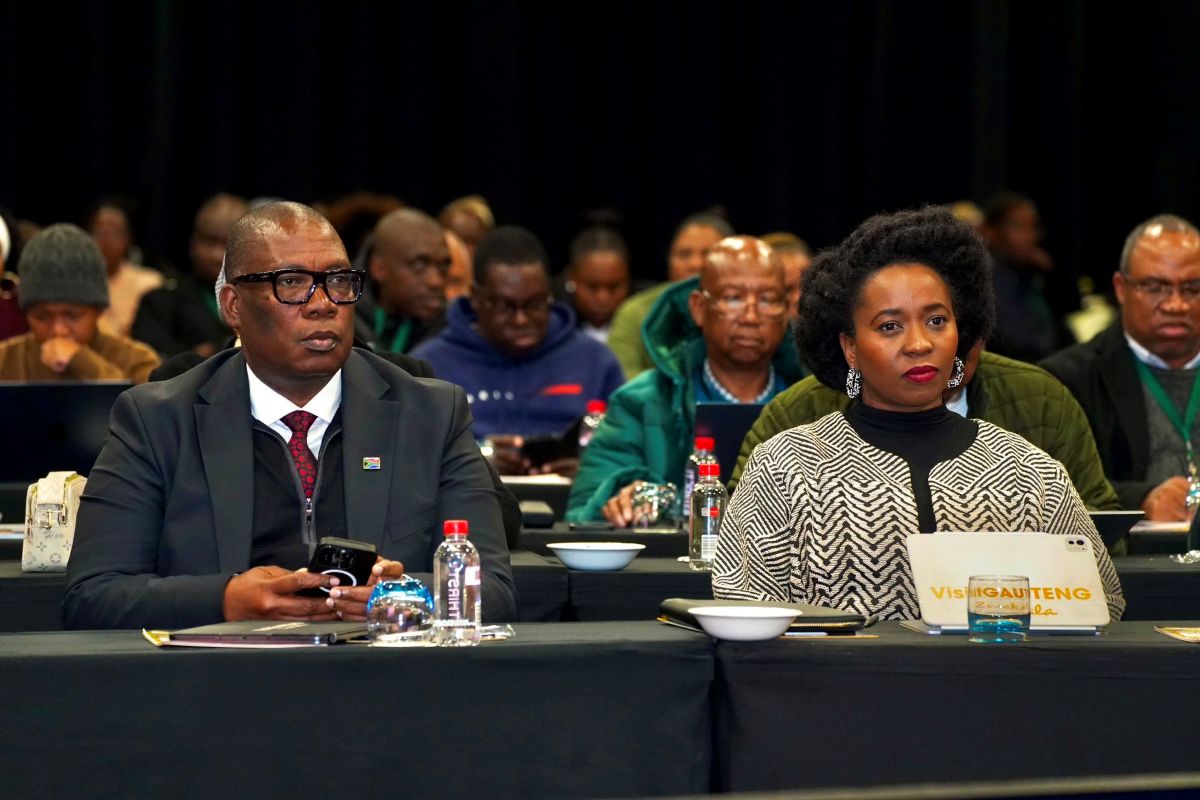
Speaking at this year’s two-day Convention & Expo at the Emperors Palace Convention Centre in Kempton Park, Gauteng MEC for Agriculture, Vuyiswa Ramokgopa, revealed tangible milestones. The fund has already injected capital into 58 Gauteng businesses, with an additional 11 projects currently undergoing rigorous financial due diligence.
The initiative targets the intersection where emerging enterprises transition from informal, small-scale production to formalized commercial manufacturing. Yet, as MEC Ramokgopa noted, capital injections are only part of the equation. For these enterprises to scale effectively, they must evolve internally.
“We want promising businesses to spend more time growing their enterprises and less time navigating red tape and avoidable barriers to growth,” Ramokgopa stated, acknowledging that the state must play an active role in easing regulatory burdens.
However, the MEC placed equal emphasis on the responsibilities of the private sector, urging businesses to become rigorously “investment-ready.” This involves establishing stronger corporate governance, tighter financial management, airtight regulatory compliance, and transparent, bankable business plans with clearly defined market strategies.
Structuring the Ecosystem: Addressing Space and Standards
Despite the influx of capital, structural bottlenecks persist in Gauteng’s industrial landscape. Two primary hurdles stand out for emerging agro-processors:
- The Infrastructure Deficit: A acute shortage of affordable, zoned industrial premises severely restricts enterprises trying to scale up from domestic kitchens or informal plots into commercial-grade factories.
- The Compliance Wall: Meeting stringent food safety standards and obtaining the certifications necessary to supply formal retail chains or penetrate export markets remains a daunting, highly complex, and prohibitively expensive process for small and medium enterprises (SMEs).
To counter the infrastructure deficit, local government structures are stepping in. Ekurhuleni Member of the Mayoral Committee (MMC) Dora Mlambo highlighted that the city has implemented a rapid land release programme. The initiative aims to provide arable land directly to local farmers while pairing the real estate with essential technical support, skills development, and market pipelines.
“The agro-processing industry is more than a component of our provincial economy; it is a vital engine for inclusive growth and job creation,” Mlambo noted, emphasizing the strategy to move township enterprises from the economic margins to the center.
De-risking through Holistic Support and Market Access
The fund’s architecture addresses a fundamental truth long championed by development finance institutions: capital without capability breeds failure.
Robert Matsila, Head of Agri Banking and Monitoring at the Land Bank, underscored the institutional reluctance to fund the agricultural space due to its inherent volatility. “Providing funding on its own is not enough; without the necessary guidance and support, entrepreneurs are often set up to fail,” Matsila warned.
传统资金融资 (Traditional Funding) ──>高风险失败 (High Risk of Failure)
综合性生态支持 (Holistic Support) ──>资本 +非财务支持 +市场准入 ──>可持续发展 (Sustainability)
The Land Bank executive argued that the true metric of success for development finance is the creation of sustainable, long-term market access. He challenged public and private financiers to leverage their own supply chains—opening up institutional and government procurement opportunities to these newly funded agro-processors.
By securing diversified public and private off-take agreements, SMEs can de-risk their operations, moving away from a dangerous reliance on single corporate contracts or continuous, non-viable state grants. “Ultimately, if businesses are not sustainable, they become dependent on grants… which is not a viable long-term solution,” Matsila concluded.
The Macro View
For Gauteng, the economic stakes are high. As the country seeks avenues for sustainable job creation and structural transformation, shifting up the value chain from primary agriculture to industrial agro-processing offers an optimal path. By turning raw agricultural commodities into processed goods within provincial borders, Gauteng retains economic value, builds industrial capacity, and creates downstream employment.
The early success of the R100-million Revolving Blended Finance Fund demonstrates that when public capital acts as a shock-absorber to de-risk private enterprise, investment follows. However, the long-term viability of Gauteng’s agro-processing boom will ultimately depend on whether the state can successfully dismantle the bureaucratic red tape and infrastructure deficits that still threaten to choke off its emerging industrial class.