
 By
By As global policymakers grapple with the urgent imperative of decarbonisation, a familiar narrative often takes root: the transition to clean energy is treated as an environmental obligation, a cost of doing business in a warming world.
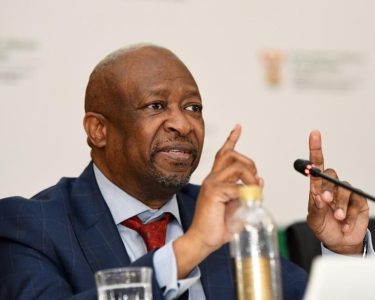
But for South Africa, the strategy driving its green energy ambitions is far more radical. According to Minister of Trade, Industry and Competition Parks Tau, green hydrogen is not the ultimate story—industrialisation is.

Speaking at the Africa Green Hydrogen Summit in Cape Town, Minister Tau laid out a compelling vision that reframes the country’s clean energy pivot. Rather than positioning South Africa as a mere provider of green electrons or raw materials for foreign markets, the government is leveraging green hydrogen as the cornerstone of a broader, long-term national reindustrialisation agenda.
Shifting from Resource Provider to Value Creator
At the core of South Africa’s economic strategy is a decisive break from historical models of resource extraction. For generations, the nation’s economic output has been heavily tied to exporting raw commodities, often missing out on the downstream economic benefits of manufacturing and advanced processing.
Tau emphasized that hydrogen is just one tool in a much larger toolkit. Alongside sustainable aviation fuel, green chemicals, green shipping fuels, advanced manufacturing, and new export industries, green hydrogen is expected to catalyse South Africa’s industrial renaissance.
“These are the opportunities that matter,” Tau stated. “These are the industries that will determine South Africa’s competitiveness in the decades ahead. Our ambition is clear. We must export more value and less raw potential. We must move up the value chain. We must become producers, not merely providers of resources.”
By moving up the value chain, South Africa aims to retain more wealth domestically, create higher-paying technical jobs, and insulate its economy against the shifting tides of global carbon border adjustments and trade preferences.

De-risking Through Strategic Investments
Ambition requires capital, and South Africa’s green industrialisation roadmap is increasingly backed by tangible financial commitments from international partners.
Through the Just Energy Transition Investment Plan (JET-IP) programme management office at the Industrial Development Corporation, the government has identified twenty-four strategic integrated projects. Several of these have already cleared pre-feasibility phases, bolstered by a €40 million injection from Germany’s Kreditanstalt für Wiederaufbau (KfW) Development Bank.
Furthermore, international financial architecture is beginning to align with these domestic ambitions. In August, Climate Fund Managers successfully closed the initial R3 billion phase of the South Africa Green Hydrogen Fund. This milestone was anchored by the European Commission via the Global Gateway commitment secured at the G20 summit.
The Global Gateway has also committed an additional R628 million in direct grants:
- R490 million dedicated to leveraging hydrogen infrastructure investment, which is projected to mobilize an impressive R10 billion more.
- R138 million allocated to assist state logistics company Transnet in greening its core operations.
These capital injections are expected to generate tens of thousands of skilled, sustainable jobs and inject billions of rand into economic activity over the coming years, directly addressing South Africa’s pressing unemployment challenges.
Lighthouse Projects and Regional Synergy
Practical execution of this industrial strategy is already underway. Through the Critical Infrastructure Programme Fund, the Department of Trade, Industry and Competition (the dtic) is actively supporting Hive Hydrogen in developing South Africa’s flagship green hydrogen project: the Coega Green Ammonia Project.
Marking a major milestone for the initiative, Hive Hydrogen has concluded its financial due diligence, unlocking R12.5 million out of a total R25 million project development funding allocation, with a secondary application for another R25 million queued for financial close. This lighthouse project serves a dual purpose: it will invigorate the regional economy of the Eastern Cape while acting as a proof-of-concept for the country’s broader Decarbonisation and Industrial Development Strategy.
However, Minister Tau stressed that South Africa cannot—and should not—pursue this transformation in isolation. Regional cooperation remains paramount through frameworks like the Africa Green Hydrogen Alliance.
“No single African country will build this economy alone, but together we can build a scale that makes Africa’s offer to the world impossible to ignore,” Tau noted.
A Defining Test for Competitiveness
South Africa’s bet on green hydrogen as an industrial catalyst represents a fundamental paradigm shift. By tying energy transition to domestic manufacturing, value addition, and infrastructural overhaul, the nation is attempting to future-proof its economy. If executed successfully, the strategy will transform South Africa from a carbon-dependent resource exporter into a globally competitive industrial powerhouse, proving that the road to net-zero can also be a highway to broad-based economic prosperity.