 By
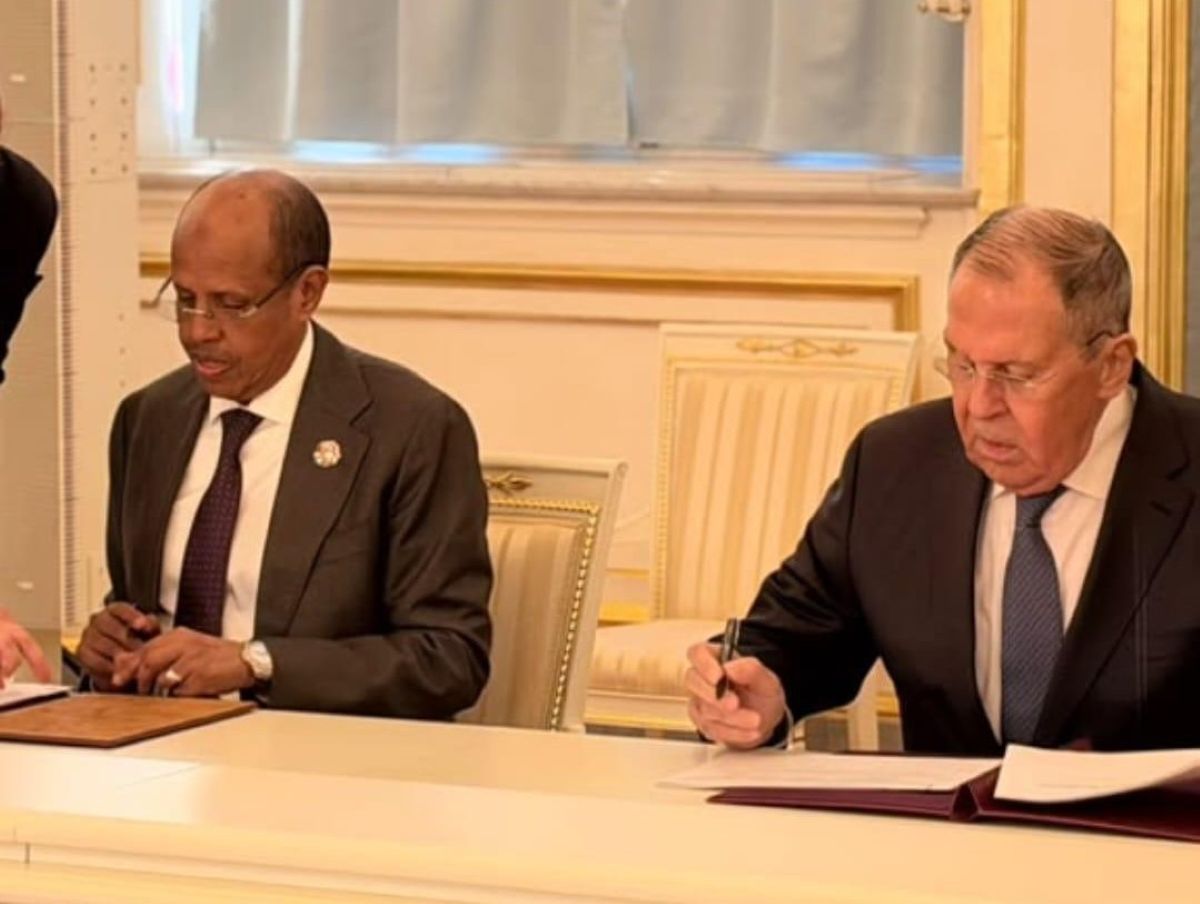
MOSCOW — In a move designed to institutionalize long-term bilateral collaboration, the Chairperson of the African Union (AU) Commission, H.E. Mahmoud Ali Youssouf, and Russian Minister of Foreign Affairs Sergey Lavrov have signed the AU Commission–Russian Federation Action Plan 2027–2029.
The signing took place on the sidelines of the 3rd Russia–Africa Summit in Moscow, establishing a comprehensive roadmap to expand diplomatic, economic, technological, and security engagement between the continental body and Moscow.
Deepening a Strategic Architecture
Building directly upon the foundational Memorandum of Understanding on the Basic Principles of Relations and Cooperation, the newly minted Action Plan sets forth a structured blueprint spanning 19 distinct areas of cooperation over the three-year 2027–2029 window.
Economic and diplomatic analysts note that the framework is structured to transition broader political declarations into actionable sector-specific initiatives. Crucially, the agreement emphasizes sustained political dialogue, institutional coordination, and alignment on multilateral agendas, particularly regarding cooperation within United Nations frameworks.
While the framework establishes a robust architecture for cooperation, the document explicitly notes that it serves as a cooperative policy guide and does not create binding rights or obligations under international law.
Pillars of Growth: Technology, Energy, and Trade
At the core of the 2027–2029 Action Plan is an aggressive focus on the “new economy”—specifically science, technology, and innovation. The framework targets high-growth technological frontiers, including artificial intelligence (AI), digital transformation, cybersecurity, and space technology.
Noteworthy economic and developmental initiatives outlined in the plan include:
- Advanced Early-Warning Systems: Joint research and development focused on AI-enabled predictive models to identify conflict risks, public health emergencies, and natural disasters before they escalate.
- Macro-Economic and Trade Integration: Broadened cooperation encompassing energy systems, transport infrastructure development, agricultural productivity, water resources management, and climate change adaptation.
- Financial and Investment Links: Expanded frameworks for trade, investment, and financial cooperation, alongside targeted capacity-building, academic partnerships, and technical expertise development across AU Member States.
Security, Peace, and Regional Stability
Economic growth and market expansion remain inextricably tied to continental stability. Consequently, peace and security continue to serve as vital pillars of the partnership.
Proposed collaborative activities under the Action Plan focus heavily on counterterrorism, combating transnational organized crime, expert exchanges, and fortifying institutional capacities. These security measures are strategically aligned with the AU’s flagship “Silencing the Guns in Africa by 2030” initiative, providing external backing for home-grown continental peace architectures.
Human Capital and Sustainable Development
Beyond hard infrastructure and macroeconomic trade, the agreement allocates significant attention to human capital development and social resilience. The framework incorporates provisions for:
- Public Health and Humanitarian Affairs: Coordinated responses to medical emergencies and humanitarian challenges.
- Education and Youth: Enhanced academic exchanges, technical training, and youth engagement programs.
- Culture and Heritage: Child protection initiatives, sports exchanges, and the preservation of African cultural heritage.
Outlook: Alignment with Agenda 2063
As geopolitical dynamics shift, the AU Commission and the Russian Federation are positioning this partnership to support Africa’s long-term integration and development milestones under Agenda 2063: The Africa We Want.
By balancing technological modernization, infrastructure investment, and security cooperation, the 2027–2029 Action Plan offers a multi-dimensional template for how continental institutions intend to leverage international partnerships to achieve sustainable economic transformation.