 By
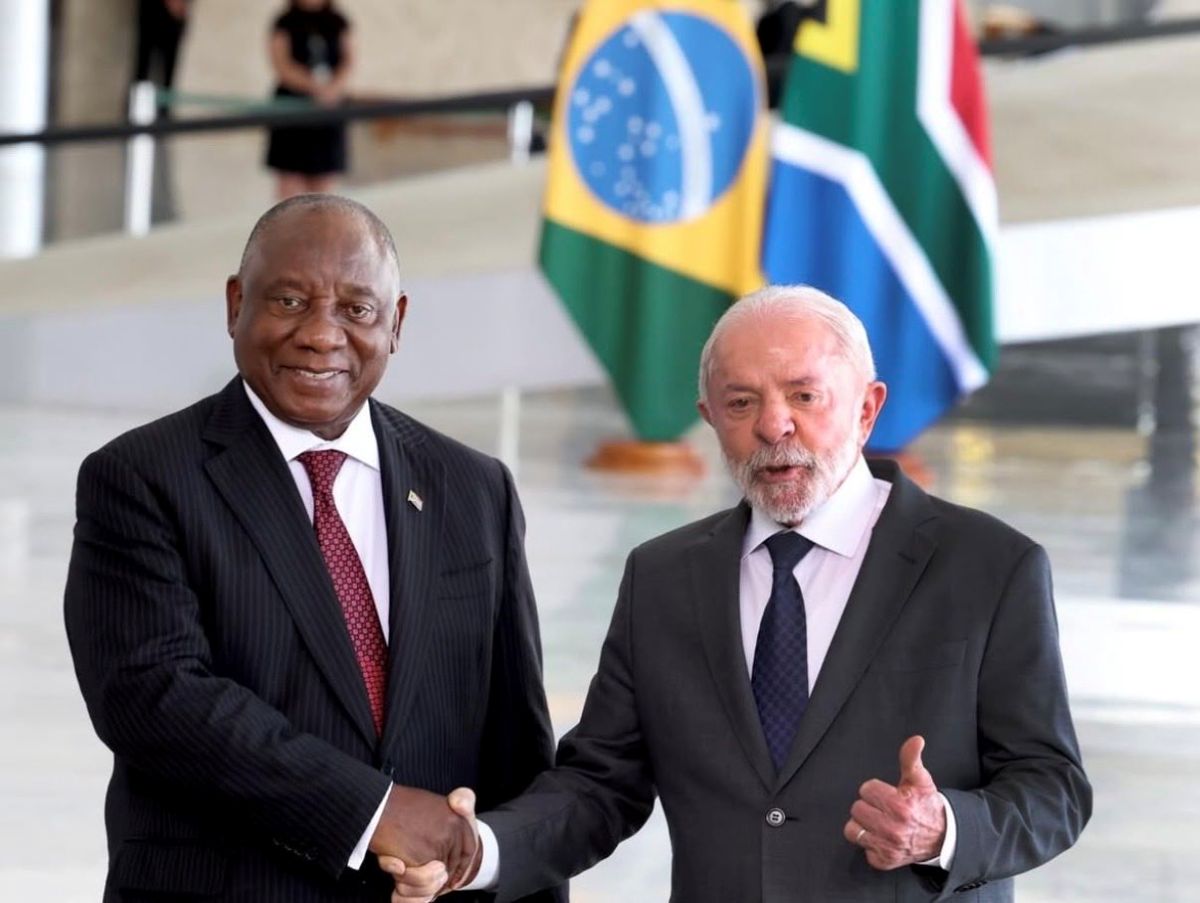
In a decisive political development resonating far beyond South America, South Africa’s Economic Freedom Fighters (EFF) have formally extended their congratulations to Luiz Inácio Lula da Silva on his electoral victory in Brazil.
For progressive movements worldwide, Lula’s triumph over the far-right political machinery represents more than just a routine democratic transition; it is viewed as a vital firewall against the global erosion of democratic institutions and a historic setback for right-wing populism.
A Mandate for the Working Class and Environmental Defence
Lula’s return to power places the priorities of the working class and marginalized communities back at the heart of the Brazilian state. Historically recognized for transformative social policies, Lula’s previous administration achieved critical milestones that fundamentally reshaped the nation’s socio-economic landscape.
These included the substantial expansion of the Bolsa Família social assistance program, tangible reductions in poverty and unemployment, and the revival of aggressive government intervention to safeguard the Amazon rainforest.
According to the EFF, these historic achievements underscore a fundamental principle of progressive governance: active state intervention is indispensable when combating systemic inequality and defending the material interests of ordinary citizens.
At a time when economic polarization is intensifying globally, Lula’s platform offers a blueprint for how state capacity can be harnessed to uplift the vulnerable.
Rejecting the Shadow of Bolsonaro
The significance of Lula’s victory is sharply magnified by what it averted. Brazil’s recent political history under former President Jair Bolsonaro left deep scars on the country’s democratic fabric, culminating in alarming challenges to the 2022 election outcomes that threatened the nation’s democratic foundations.
In this latest electoral showdown, the far-right mantle was carried forward by Flávio Bolsonaro. The EFF characterizes the younger Bolsonaro’s platform as a direct continuation of his father’s divisive legacy—one defined by open hostility toward the working class, systemic environmental deregulation, and the consolidation of far-right authoritarian power.
Had it succeeded, the Bolsonaro camp’s agenda—featuring severe public spending cuts, regressive security measures, and an uncritical alignment with external powers like Donald Trump’s United States—would have severely compromised the welfare and sovereignty of the Brazilian people.
Furthermore, the Bolsonaro movement’s foreign policy orientation, heavily influenced by Christian Zionist forces and deep ties to Israel and the United States, was viewed by international leftists as a dangerous departure from independent diplomacy.
Lula’s victory is thus celebrated as a major roadblock to imperialist influence and external economic pressure. For nations within the Global South, Brazil’s reaffirmation of an independent foreign policy—particularly through its active strengthening of BRICS—remains a cornerstone of multi-polar global geopolitics.
Looking Ahead: The Road to Economic Freedom
As Lula assumes his renewed mandate, the international left is watching closely. The expectations from allied organizations like the EFF are high: they are calling on the Brazilian president to use this political capital to aggressively confront lingering inequalities, drastically improve the daily material conditions of workers and the poor, and fiercely defend national sovereignty against external meddling.
Ultimately, the defeat of the Brazilian far-right serves as an inspiring testament to the resilience of popular will. As the EFF noted in its congratulatory message, the Brazilian people have once again proven that democratic institutions, when backed by mobilized citizens, can successfully push back against the tide of reaction.
The challenge now lies in translating this hard-fought electoral victory into concrete, lasting gains for the working class and securing genuine economic freedom.
What are your thoughts on the impact of Latin American political shifts on global progressive movements? Let us know in the comments below.