 By
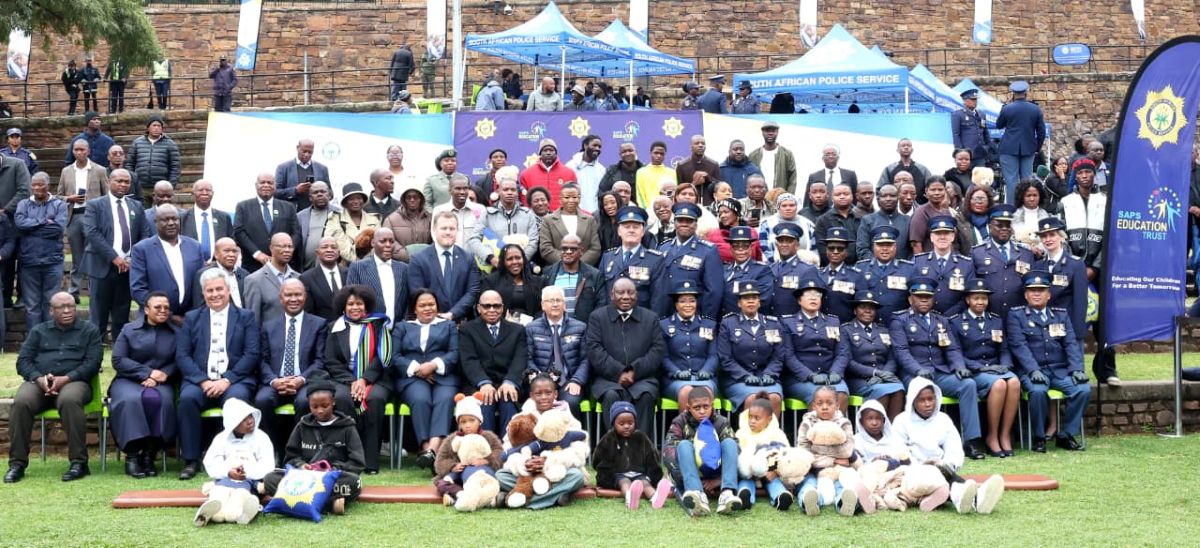
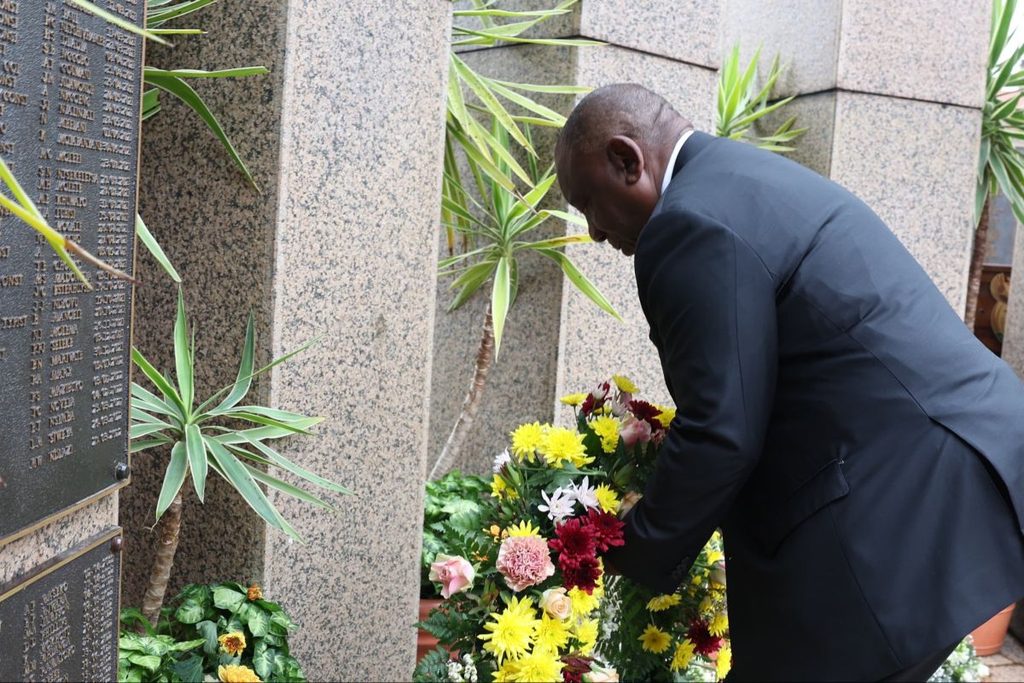
By TSHWANE — Facing a nation grieving the loss of front-line law enforcement officers amidst heightened public scrutiny of the state’s security institutions, President Cyril Ramaphosa delivered a poignant call for institutional accountability, social partnership, and civic responsibility at the South African Police Service (SAPS) National Commemoration Day at the Union Buildings on Sunday.

Commemorating the lives of 12 police officers killed in the line of duty during the 2025/2026 financial year, President Ramaphosa framed police safety not merely as an operational challenge, but as a mandatory national covenant. He warned that attacks on law enforcement constitute a direct assault on the constitutional framework and state sovereignty of the Republic.
“When criminals target a police officer, they are attacking the integrity of the State, the rule of law, and the constitutional order. They are not just attacking an individual—they are attacking the people of South Africa.”
A Human Toll Behind the Statistics
Addressing an audience comprising senior government officials, police leadership, civil society representatives, and bereaved families, the President emphasized that behind the official statistics lie permanently disrupted household narratives. Of the 12 officers honoured on the official Roll of Honour, nine were stationed in Gauteng, with one officer each from North West, KwaZulu-Natal, and Mpumalanga.
Among those lost was a mother of three from Temba Police Station—the sole female officer commemorated this year—as well as seven husbands and fathers of young children. Highlighting the devastating personal toll, Ramaphosa noted poignant instances including a widow who was pregnant at the time of her husband’s death and another family left to raise seven-month-old twins. The youngest officer killed was just 25 years old.
Reflecting on the dangerous conditions surrounding these casualties, Ramaphosa observed that several members were killed while responding to business robberies, transporting awaiting-trial prisoners, or conducting routine sector patrols in their communities.
Roll of Honour Breakdown (2025/2026)
- · Total Fallen Officers: 12 members
- Provincial Distribution: Gauteng (9), North West (1), KwaZulu-Natal (1), Mpumalanga (1)
- Key Demographics: 1 female officer (Temba Police Station), 7 fathers of young children, youngest officer aged 25
Operational Reforms and Civic Duty
While acknowledging a significant reduction in police fatalities over recent years due to enhanced operational protocols, Ramaphosa stressed that “even one life lost is one too many.” He pointed to the implementation of the SAPS Police Safety Action Plan, themed ‘Think First – Act Safe: Every Call, Every Time’, which standardizes proactive interventions, station security, and governance across national and provincial commands.
However, the President asserted that law enforcement measures alone cannot curb violent crime. He urged communities to serve as an active “protective architecture” around police officers by sharing intelligence, refusing to harbour criminals, and rooting out local corruption. Furthermore, Ramaphosa advocated for long-term social investments in early childhood development, school safety, and youth sports to build resilience before young people succumb to organized criminal networks.
Corporate Responsibility & Legacy Funding
In his address, President Ramaphosa issued an explicit appeal to corporate South Africa to step up its support for the South African Police Service Education Trust (SAPSET). Established in 2010, SAPSET has raised over R25 million to support 2,215 children of fallen officers, enabling dependents to complete tertiary education up to Master’s and PhD levels.
Ramaphosa called on the private sector to establish sustainable scholarship frameworks and long-term donations to ensure that the families of slain officers remain supported by the broader South African society.
Judicial Inquiry & Institutional Renewal
The President directly confronted the ethical and operational crisis currently confronting the police service, acknowledging the unprecedented public scrutiny arising from revelations at the ongoing Judicial Commission of Inquiry. Rather than breeding defensiveness or paralysis, Ramaphosa insisted that judicial revelations must serve as a decisive catalyst for systemic reform.
“At this moment, the SAPS is operating under unprecedented public scrutiny… This must not result in paralysis. Instead, it must be a catalyst for renewal. The best response to scrutiny is not defensiveness—it is performance. The best response to criticism is not denialism—it is professional conduct, measurable results, and safer communities.”
Calling for a renewed social contract between law enforcement and citizens, the President instructed officers to earn public trust “station by station, community by community,” urging the SAPS to build a service that is competent, disciplined, and rooted in constitutional integrity.