By
By 
PRETORIA – In what is being hailed as a landmark turning point for South African biosecurity and public-private cooperation, the Department of Agriculture has concluded a historic settlement agreement regarding the management of the country’s Foot-and-Mouth Disease (FMD) outbreak.
The agreement, finalized on Thursday, 9 July 2026, successfully concludes a lengthy and high-stakes legal battle. The negotiations brought together the Minister of Agriculture, Mr. Willie Aucamp, alongside the three primary applicants in the case—Sakeliga, the South African Agri Initiative (SAAI), and Free State Agriculture—as well as other co-respondents.
Empowering Farmers Through Voluntary Vaccination
The core breakthrough of the settlement fundamentally alters how FMD will be managed on the ground. Under the new terms, owners and managers of cloven-hooved livestock are now permitted to perform voluntary vaccination of their herds. However, this newfound autonomy comes with strict responsibilities. To maintain national biosecurity integrity, all vaccinations must strictly align with defined legal prescripts and conditions, including rigorous livestock traceability and mandatory reporting protocols.
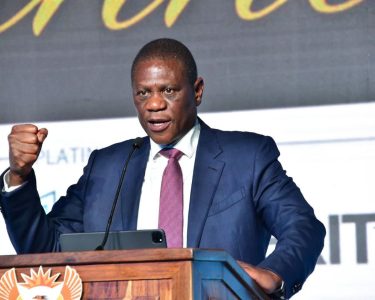
Speaking after the media briefing in Pretoria, Minister Aucamp emphasized the profound economic implications of the resolution.
“Today’s settlement is not only a win for the parties involved in the case but is a win for all South African farmers as this sector contributes significantly to the country’s job creation efforts and GDP,” Minister Aucamp stated.
Breaking the Monopoly on Vaccine Imports
Perhaps the most significant structural shift arising from the negotiations is the government’s decision to decentralize the supply chain for critical veterinary biologicals.
In a decisive move to accelerate the national response, Minister Aucamp announced that the Department of Agriculture and Onderstepoort Biological Products (OBP) have expressly relinquished their sole rights to the import and distribution of FMD vaccines.
“We now need to enable the private sector to import at scale,” Aucamp explained, underscoring that the state cannot tackle an agricultural crisis of this magnitude in isolation. By opening the doors to private sector logistics and procurement, the department aims to alleviate historical supply bottlenecks and ensure that potent, regulatory-compliant vaccines reach farming communities rapidly.
A Unified Front for Agricultural Stability

The cooperative spirit of the announcement marks a stark departure from the adversarial tone that frequently characterizes state-industry legal disputes. The applicants—Sakeliga, SAAI, and Free State Agriculture—expressed their strong appreciation for the successful conclusion of the negotiations and formally committed to working hand-in-hand with the Department to navigate the ongoing FMD crisis.
Minister Aucamp lauded the litigants for their “positive spirits and solutions-driven approach” throughout the intense negotiation process.
While the agricultural sector has widely welcomed the announcement, the Minister was careful to temper immediate celebrations with practical realism, noting that this milestone represents “only the first step.” The immediate priority for the Department of Agriculture, OBP, and organized agriculture bodies will now pivot to the efficient, nationwide rollout of these new regulatory mechanisms and distribution channels.
For South African livestock producers, the settlement delivers much-needed policy certainty and a powerful set of tools to protect their livelihoods, signalling a collaborative, modernized approach to safeguarding the nation’s agricultural economy.