
 By
By 
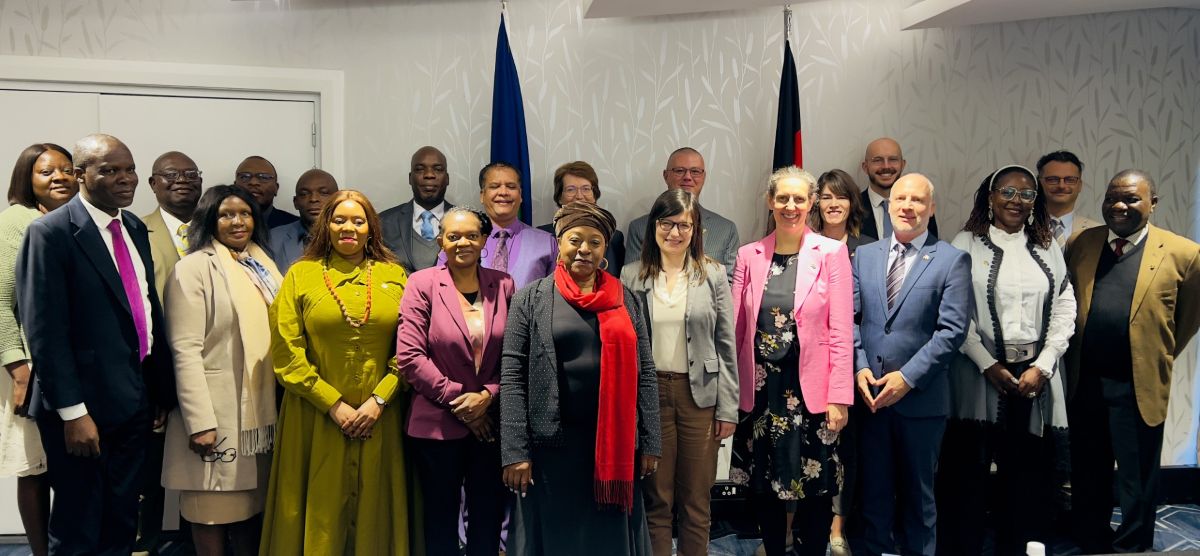
GABORONE — In an era defined by fragmenting global supply chains, heightened geopolitical friction, and accelerating climate risks, regional blocs are increasingly forced to re-evaluate their strategic alliances. It is against this complex economic backdrop that the Southern African Development Community (SADC) and the Federal Republic of Germany convened in Gaborone, Botswana, on June 3, 2026.
The high-level meeting served a critical dual purpose: reviewing current developmental benchmarks and mapping out a comprehensive, strategic trajectory ahead of the pivotal 2027 Bilateral Negotiations.
For SADC, the engagement represents a vital mechanism to insulate the region from external shocks while driving internal structural transformation. For Germany, it reinforces a long-standing foreign policy and economic thesis: that regional integration remains the most effective antidote to global volatility.
Aligning Vision 2050 with Global Realities
At the heart of the discussions was a rigorous alignment of SADC’s core mandates with Germany’s development cooperation frameworks. SADC Deputy Executive Secretary for Regional Integration, Ms. Angéle Makombo N’Tumba, anchored the region’s position within its primary blueprints: Vision 2050 and the Regional Indicative Strategic Development Plan (RISDP 2020–2030).
“Our regional agenda is built on peace, security, and democratic governance,” Ms. Makombo N’Tumba affirmed, pointing to a recently concluded Medium-Term Review of the RISDP designed to accelerate implementation while protecting core regional priorities.
From an economic journalism perspective, the emphasis on the RISDP review is telling. It signals that SADC is acutely aware of the ticking clock on its 2030 targets and is actively seeking to streamline bureaucracy, de-risk project pipelines, and optimize incoming technical and financial assistance. The foundational pillars outlined by SADC remain heavily geared toward structural economics:
- Industrialisation and Regional Value Chains: Shifting the region away from raw commodity dependence.
- Infrastructure Development: Bridging the logistics and energy deficits that historically stifle intra-African trade.
- Human Capital Development: Equipping the region’s expanding youth demographic with competitive skills.
- Crosscutting Resilience: Directly integrating gender equity, youth empowerment, climate change mitigation, and disaster risk management into macro-planning.
Germany’s Strategic Commitment to “Regional Solutions”
Representing Europe’s largest economy, Ms. Johanna Hauf, SADC Focal Point at the German Federal Ministry for Economic Cooperation and Development (BMZ), delivered a message of continuity and stability. At a time when European budgets are under immense domestic strain, Hauf’s reaffirmation of Germany’s commitment to Africa’s Agenda 2063 and the UN Sustainable Development Goals (SDGs) carries significant weight.
“Germany remains a reliable partner, even in times of economic uncertainty and geopolitical tension,” Hauf stated, emphasizing Berlin’s belief in “regional solutions to global challenges.”
Germany’s explicit priorities—alleviating poverty, addressing structural inequality, safeguarding the rule of law, and fostering inclusive economic growth—suggest that future capital allocations will not merely target infrastructure, but will be strictly tied to institutional strength and governance safeguards.
The 2027 Pipeline: Trade, Infrastructure, and Eco-Capitalism
The true litmus test of any diplomatic partnership lies in its operational portfolio. The Gaborone meeting confirmed that the 2027 negotiation cycle will deploy targeted, well-funded interventions across two primary domains: Regional Economic Integration and Transboundary Natural Resources Management.
Key Interventions and Economic Frameworks
| Programme / Initiative | Strategic Focus & Economic Objective |
| CESARE (Cooperation for the Enhancement of SADC Regional Economic Integration) | Accelerating trade integration, building robust regional value chains, driving industrialisation, and promoting women’s economic empowerment. |
| Quality Infrastructure for Trade II | Harmonising industrial standards, technical regulations, and metrology to eliminate non-tariff barriers and strengthen consumer safeguards. |
| PPDF (Project Preparation and Development Fund) | Providing the technical expertise and seed capital needed to turn raw infrastructure concepts into bankable assets capable of attracting private equity. |
| KAZA IV TFCA & Climate Resilience | Managing shared natural resources sustainably, protecting biodiversity, and leveraging eco-tourism as a regional economic driver. |
A notable evolution in the partnership is the proposed establishment of a Climate Fund Facility. As Southern Africa grapples with severe climate-induced macroeconomic shocks—ranging from prolonged droughts affecting agriculture to extreme weather disrupting transport corridors—securing direct access to climate finance is no longer an environmental luxury; it is a fiscal necessity.
Bridging the Gap: From Regional Policy to National Reality
One of the historical critiques of regional blocs has been the “implementation gap”—the friction that occurs when sweeping regional treaties fail to domesticate into national laws. SADC and Germany are actively trying to correct this narrative through the SADC National Regional Linkages (SNRL) programme.
The SNRL focuses heavily on coherence, ensuring that individual member states align their national development plans directly with SADC’s broader regional goals. If successful, this framework will ensure that German-backed regional initiatives yield measurable, localized economic dividends—such as job creation, stabilized supply chains, and enhanced municipal infrastructure.
The Horizon
As both delegations look toward the formal 2027 Negotiation Cycle, the stakes are undeniably high. In a volatile global economy, the SADC-Germany partnership offers a textbook study in modern economic diplomacy. By shifting away from traditional aid dynamics and focusing heavily on industrialisation, trade standardization, and climate resilience, the two partners are building a highly pragmatic framework.
Through dialogue, diplomacy, and targeted institutional funding, this strategic roadmap aims to ensure that when the 2027 cycle commences, it will deliver tangible, long-term structural transformation for the people of Southern Africa.